




The Dawn of a New Space Economy
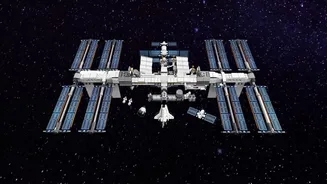
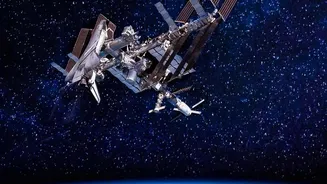
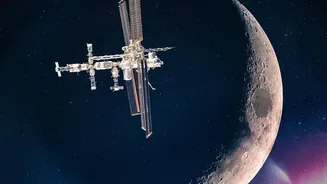
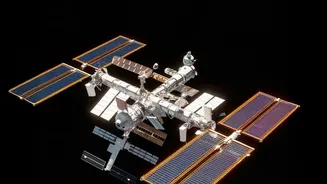
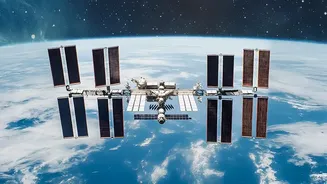
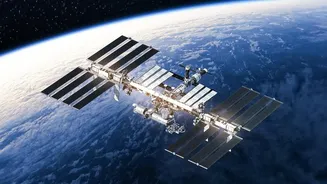
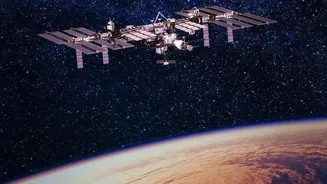
The era of the government-owned space station is drawing to a close. With the International Space Station (ISS) scheduled for decommissioning around 2030, NASA is actively fostering a transition to a new model: commercially owned and operated destinations
in low-Earth orbit (LEO). Through its Commercial LEO Destinations (CLD) program, NASA is providing funding and technical support to several private companies, aiming to become just one of many customers in a bustling orbital ecosystem. This strategic shift is designed to ensure a continuous US presence in LEO without the massive overhead of owning and operating the hardware. The goal is to stimulate a vibrant commercial economy in space, driven by private investment and innovation.
Building the 'Business Parks' of Orbit
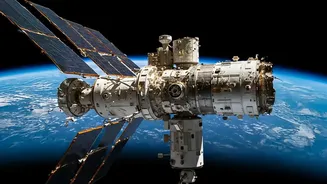
Several companies are at the forefront of this new industrial revolution in space. Axiom Space is developing Axiom Station, a series of modules that will initially attach to the ISS before detaching to become a free-flying commercial outpost. This allows Axiom to begin operations and generate revenue while its full station is being completed. Another major player is the Starlab venture, a partnership between Voyager Space and Airbus, which is developing a single-launch station designed to host hundreds of experiments annually. Meanwhile, a collaboration between Blue Origin and Sierra Space is working on Orbital Reef, envisioned as a 'mixed-use business park' in space, offering services for research, manufacturing, and even tourism. Sierra Space is contributing its innovative Large Integrated Flexible Environment (LIFE) habitat, an inflatable module that launches in a compact form and expands in orbit to provide a spacious, multi-level environment.
The Unique Power of Microgravity
But why go to all the trouble of building laboratories in space? The answer lies in microgravity. The near-weightless environment of LEO alters fundamental physical and biological processes in ways that are impossible to replicate on Earth. Without gravity, sedimentation and convection are virtually eliminated, allowing for the creation of more perfect crystals and unique metal alloys. For pharmaceutical and biotech companies, this is a game-changer. In microgravity, protein crystals—essential for designing new drugs—can grow larger and with greater uniformity, providing clearer insights into their structure. Cells also behave differently, forming 3D structures that more closely mimic how they exist in the human body, which is invaluable for disease modeling and testing new therapies for conditions like cancer.
The Business Model for a Lab in the Sky
Commercial space station operators are not just selling access to a unique environment; they are offering full-service, turnkey solutions. Their customers—which range from pharmaceutical giants and materials science startups to academic institutions and other nations' space programs—can pay for everything from payload development and integration to mission planning and on-orbit astronaut time. This 'space-as-a-service' model significantly lowers the barrier to entry for organisations that could never afford their own space program. For a private company, the potential return on investment is enormous. Developing a new drug or a next-generation semiconductor material in space could lead to breakthrough products on Earth, justifying the cost of orbital research. Some station concepts even plan to integrate advanced capabilities like AI-driven experiment monitoring and orbital data centers to maximise efficiency and data output for their clients.
An Industrial Revolution Above the Clouds
The first modules for these new commercial outposts are slated to launch in the coming years, with stations like Starlab and Axiom Station aiming to be operational before the ISS is retired. This represents more than just a continuation of the work done on the space station; it signals a fundamental shift in how humanity uses space. Instead of a single, government-run laboratory, the future of LEO looks more like a diverse industrial park with multiple platforms catering to different commercial needs. This transition is critical for creating a sustainable, self-sufficient space economy where innovation in orbit can directly fuel progress and create entirely new industries back on Earth. The era of private research in space is no longer science fiction; it is the next frontier of business.