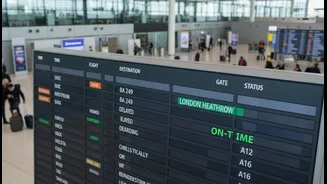









Understanding On-Time Performance (OTP)
On-Time Performance, or OTP, is the single most important metric for airline reliability. It measures the percentage of flights that arrive at their destination gate within 15 minutes of the scheduled time. A flight is only considered 'delayed' by most official
bodies once it passes this 15-minute mark. An airline with an OTP of 85% means that 85 out of every 100 of its flights arrived on time. This simple number is a powerful tool for predicting how likely your flight is to stick to its schedule, and it’s a key differentiator for airlines. A reputation for punctuality signals operational efficiency and respect for passengers' time.
Where to Find Reliable Data
Finding trustworthy OTP data is easier than you think. In India, the Directorate General of Civil Aviation (DGCA) publishes monthly reports on the performance of domestic airlines, though it typically focuses on major metro airports. For a global perspective, aviation analytics firms like Cirium and OAG publish monthly rankings of airlines and airports worldwide. These reports are often covered by major news outlets. Additionally, many airline websites and apps now display on-time statistics for specific flights when you are booking, although you may have to click on 'flight details' to see it. Dedicated flight tracking apps and websites also provide real-time and historical data.
Choosing the Right Airline
Not all airlines are created equal when it comes to punctuality. According to recent DGCA reports, IndiGo and Akasa Air have consistently been top performers for domestic travel in India, often with OTPs above 80%. Air India has also shown significant improvement, recently ranking fourth globally for on-time arrivals in June 2026 with an OTP of nearly 87%, according to Cirium. When choosing your carrier, look beyond just the ticket price. A slightly more expensive flight on an airline with a proven track record for punctuality can be a wise investment, saving you from the potential cost and stress of a long delay.
Timing Is Everything
The time of day you choose to fly has a huge impact on your chances of a delay. Flights scheduled early in the morning are generally the most punctual. This is because the air traffic system is less congested, and the aircraft is often at the airport overnight, ready for the first departure. As the day progresses, delays begin to accumulate in a cascading effect; a late-arriving aircraft from a previous flight is one of the most common causes of delays. Bad weather and air traffic control restrictions later in the day also contribute to the problem. If your schedule is flexible, booking the first or second flight of the day on your chosen route is one of the safest bets for an on-time departure.
Consider Your Airport and Route
Just as some airlines are more punctual than others, so are some airports. Major hubs like Mumbai and Delhi often face congestion that can lead to delays, especially during peak hours. Recent data from May 2026 showed that while Chennai International Airport had an excellent on-time performance, Mumbai's airport had the worst among India's ten busiest. When booking, consider if there are alternative airports or routes. Sometimes, flying into a secondary, less congested airport can lead to a smoother journey. Researching the OTP of not just the airline but the specific airport can give you a more complete picture of your travel plan's reliability.