





The Traditional Monsoon Challenge
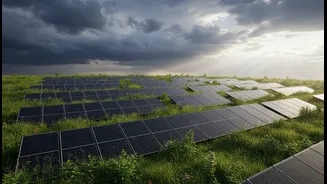
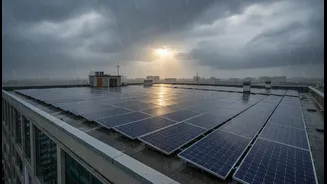
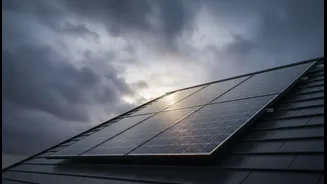
India's ambitious solar energy goals have always faced a formidable, four-month-long hurdle: the monsoon. Traditionally, the heavy cloud cover that blankets much of the country from June to September is seen as a major impediment to solar power generation.
Solar panels perform at their peak under bright, direct sunlight. When thick clouds block the sun, the amount of direct radiation hitting the panels can plummet. On heavily overcast days, solar energy output can fall to just 10-25% of its capacity. This has led to a widespread belief that the monsoon season is simply a period of low productivity that must be endured, impacting the overall annual yield of solar farms and rooftop installations across the nation.
A New Understanding of Cloudy Light
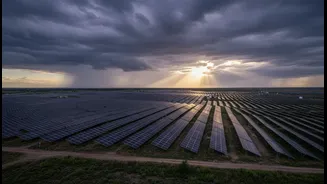
The story, however, is more complex than just direct sunlight. Solar panels don't actually shut down on cloudy days. They can also generate electricity from what is known as diffuse radiation—sunlight that has been scattered by clouds, dust, and other particles in the atmosphere. While less intense than a direct beam, this scattered light comes from the entire sky, not just a single point. The surprising part is how effectively modern technology is becoming at harnessing this diffuse light. Some research has even pointed to an 'edge of cloud' effect, where panels can experience a temporary boost in performance as sunlight is magnified when passing the edge of a moving cloud. This changes the perception of clouds from being just an obstacle to a complex variable that can be managed.
Smarter Technology for Greyer Skies
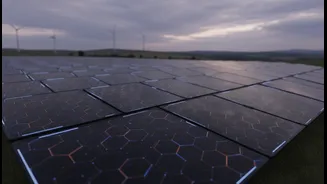
The real game-changer lies in technological advancements specifically suited for these conditions. Chief among them are bifacial solar panels. Unlike traditional monofacial panels that only capture light from the front, bifacial panels have a transparent back, allowing them to absorb reflected and diffuse light from the rear side as well. Studies have shown that bifacial panels perform particularly well in diffuse light conditions, with some showing a higher energy gain on cloudy days compared to sunny days. One Indian study noted that while overall power is lower during monsoon, the 'bifacial gain'—the extra energy produced from the rear side—can be higher. This makes them uniquely suited to India’s overcast monsoon months, potentially boosting energy yield by 5-20% annually depending on conditions.
The Unexpected Benefits of Rain and Cooler Weather
Beyond just light, the monsoon brings two other surprising advantages: cleaning and cooling. Throughout the dry, dusty pre-monsoon months, a layer of grime can accumulate on panels, reducing their efficiency. The monsoon rains provide a regular, free cleaning service, washing away this dust and allowing the panels to absorb light more effectively once the sun is out. Furthermore, like most electronics, solar panels function more efficiently in cooler temperatures. The intense heat of the Indian summer can actually cause panels to lose efficiency. The cooler, rainy weather of the monsoon provides a more optimal operating temperature, helping to offset some of the losses from reduced direct sunlight.
What This Means for India's Energy Future
This evolving understanding and new technology are critical for India's clean energy ambitions. Instead of viewing the monsoon as a four-month write-off, project planners can now design more resilient solar systems that maintain more consistent power generation year-round. By strategically deploying advanced technologies like bifacial panels and building systems designed to maximise diffuse light capture, the seasonal dip in solar production can be significantly cushioned. This leads to better grid stability, more reliable power for consumers, and a more accurate financial forecast for solar investments. The monsoon may never be the peak season for solar energy, but it's increasingly clear that it's no longer the liability it was once thought to be.