
What Exactly is Friselle?
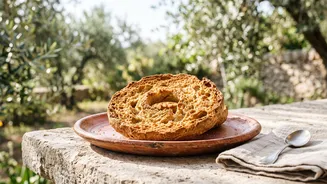
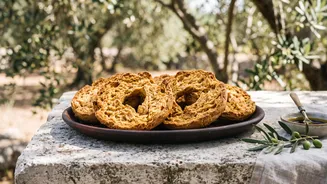
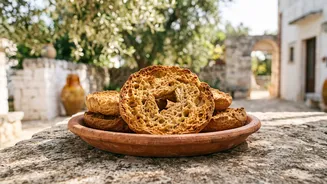
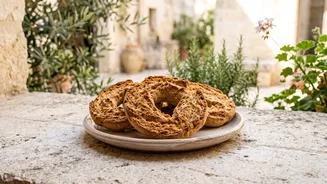
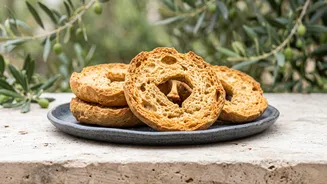
At first glance, a frisella might look like a rustic, oversized bagel that has been left out for a week. Made from simple ingredients like durum wheat flour, water, salt, and yeast, this southern Italian staple is defined by its texture: jaw-breakingly
hard. But this isn't a mistake; it's by design. The bread is intentionally baked twice to remove almost all moisture, a process that gives it an extraordinary shelf life. The result is a porous, crunchy ring that serves as a durable canvas for a variety of fresh toppings. While often associated with Puglia, the 'heel' of Italy's boot, similar versions are found in nearby regions like Campania and Calabria.
A History Baked in Necessity
The origins of friselle are practical and ancient, dating back centuries. This was the food of necessity for people who needed provisions that wouldn't spoil on long journeys. It was a staple for fishermen spending days at sea and for farmers working in remote fields. Some historians even call it the 'bread of the Crusaders', as it was ideal for soldiers and pilgrims on long voyages. The ring shape was also functional; it allowed sailors to thread the friselle onto a rope for easy storage and transport on board ships. Before refrigeration, this twice-baked bread was a perfect solution for food preservation, a testament to southern Italian resourcefulness.
The Art of the Second Bake
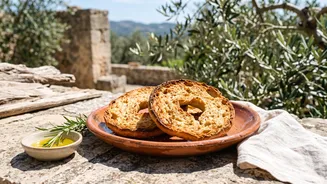
The secret to friselle's longevity lies entirely in its preparation. First, the dough is shaped into rings and baked until cooked through. Then, while still warm, each ring is cut horizontally, creating two thinner halves with a rough, porous interior. These halves are returned to the oven for a second, longer bake at a lower temperature. This process, known as 'biscottato' (twice-cooked), thoroughly dries out the bread, removing the moisture that would otherwise lead to mould and spoilage. When stored in a cool, dry, and airtight container, friselle can last for many months, some bakers claiming they are good for up to a year.
The Ritual of Preparation
Because they are so hard, friselle are never eaten dry. The essential step before serving is a quick soak in water, a ritual known as 'sponzare'. Traditionally, sailors would have simply dipped them in seawater. Today, a bowl of cold fresh water is used. A frisella is submerged for just a few seconds—long enough to soften the interior but leave the outside with a satisfying crispness. Over-soak it, and you'll have a mushy mess; under-soak it, and you risk a trip to the dentist. Getting the timing right is part of the art. Once soaked, the now-receptive bread is ready for its toppings.
From Simple Snack to Summer Delicacy
The classic way to serve friselle is quintessentially Puglian: topped with chopped fresh tomatoes, a generous drizzle of extra-virgin olive oil, salt, and a sprinkle of oregano. The porous surface of the frisella soaks up the tomato juice and olive oil, creating a perfect blend of soft and crunchy textures. This simple combination is considered one of the ultimate summer dishes in the region, best enjoyed when tomatoes are at their peak ripeness. But its versatility doesn't end there. Friselle can be topped with almost anything you would put on bruschetta, from mozzarella and basil to tuna, olives, or bean salads, making it a year-round pantry hero.