


The Constant Tug of Orbital Decay
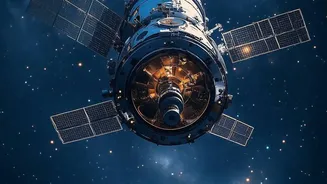
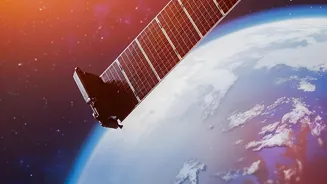
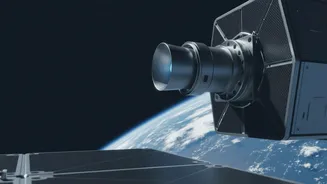
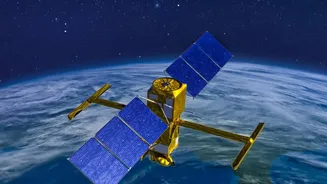
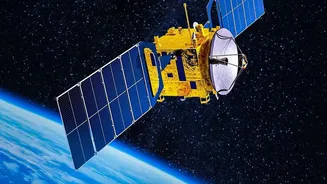
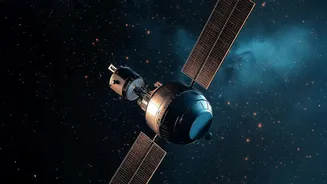
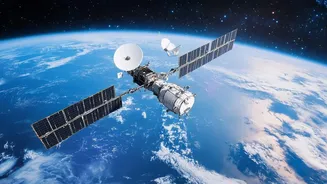
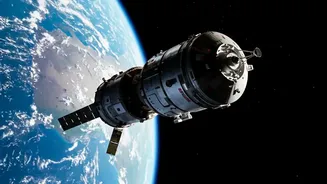
Satellites in Very Low Earth Orbit (VLEO), typically below 400 kilometres, face a persistent challenge: atmospheric drag. Though the air is incredibly thin, it’s dense enough to slow a satellite travelling at over 28,000 km/h. This constant friction causes
its orbit to decay, forcing it to fire thrusters to maintain altitude. Historically, the amount of on-board propellant, usually heavy and expensive xenon gas, has been the primary factor limiting a satellite's operational life. Once the fuel runs out, the mission is over, and the multi-million-dollar asset eventually burns up on re-entry. This fundamental limitation has significant business implications, dictating mission duration and replacement costs for Earth observation and communications constellations.
A Revolutionary Concept: Breathing the Air
Air-breathing electric propulsion (ABEP) offers a paradigm-shifting solution. First conceptualized in the early days of the space age, the technology has seen a resurgence of interest from major space agencies and commercial ventures. The core idea is brilliantly counterintuitive: instead of fighting atmospheric drag, use the very particles that cause it as a propellant. By collecting the sparse molecules of nitrogen and atomic oxygen in the upper atmosphere, a satellite could theoretically generate continuous thrust to counteract drag, enabling it to stay in orbit for as long as its electronic systems function, not just until its tank runs dry.
How It Works: From Air to Thrust
The mechanics of an air-breathing system involve three main steps. First, a specially designed intake, or scoop, collects the rarefied atmospheric gases. This is a major technical challenge, as the intake must efficiently capture and compress these particles without adding excessive drag itself. Second, the collected gas is channelled into a thruster where it is ionized, meaning its atoms are given an electric charge, turning the gas into a plasma. Finally, this plasma is accelerated by electric and magnetic fields and expelled at high velocity, generating thrust that pushes the satellite forward and compensates for drag. The entire system is powered by solar panels, making it a sustainable, in-situ resource utilization technology.
The Pioneers and Their Progress
Several international players are advancing this technology. The European Space Agency (ESA) has been a key driver, successfully test-firing a prototype in 2018 that demonstrated the concept's viability. The test, conducted in a vacuum chamber simulating an altitude of 200 km, proved that an engine could ignite and operate using an atmospheric gas mixture. Similarly, the Japan Aerospace Exploration Agency (JAXA) has been developing its own Air-Breathing Ion Engine (ABIE). Commercial companies and research consortia, such as those funded by the EU's Horizon 2020 programme and the UK Space Agency, are also pushing the technology forward, recently achieving milestones in thruster design.
The Business Case for Perpetual Flight
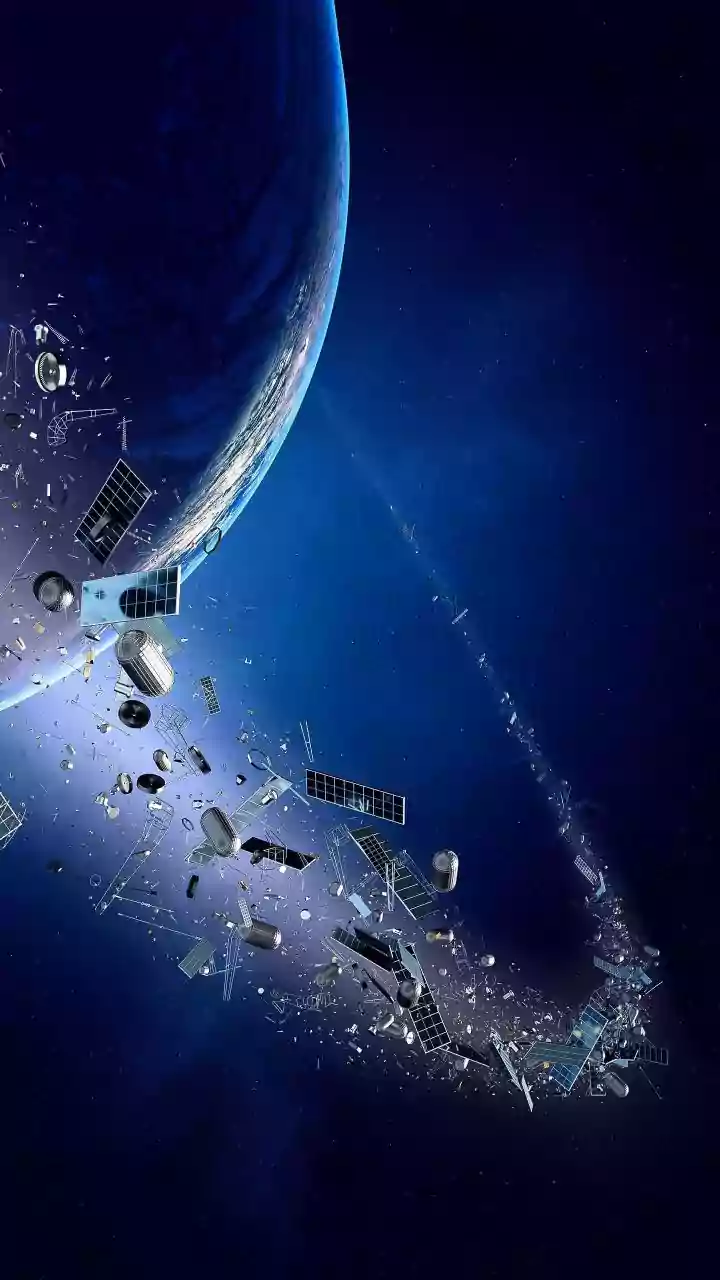
The implications of mastering ABEP are enormous. For businesses operating satellite constellations, it means potentially unlimited mission lifetimes. This dramatically changes the economic model, reducing the need for costly replacement launches. Furthermore, operating in VLEO offers significant advantages, including higher-resolution imagery for Earth observation companies and lower latency for communication networks. This technology could also enable reusable 'space tugs' that could reposition other satellites or even help in the active removal of space debris, a growing concern for orbital safety. The ability to stay aloft indefinitely opens up a new class of long-duration scientific and commercial missions.
Challenges on the Horizon
Despite its promise, air-breathing propulsion is still an immature technology facing several hurdles. A primary issue is the corrosive nature of atomic oxygen, which is a major component of the atmosphere at VLEO altitudes and can degrade spacecraft materials over time. Designing cathodes and other thruster components that can withstand this environment is critical. Another challenge is optimizing the efficiency of the intake and thruster systems. The density of available 'fuel' is extremely low and varies with solar activity, so the system must be highly efficient to generate net positive thrust. Ground testing is also complex, as it is difficult to perfectly replicate the VLEO environment on Earth.