
Kicking Up Dust for Science
The primary goal of observing a high-speed impact on the Moon is to analyze the material thrown up from the surface. This cloud of dust and rock, called an ejecta plume, contains material from beneath the top layer of lunar soil, or regolith. This is a rare
chance for scientists to get a look at what lies just under the Moon's weathered surface without having to land a probe and dig. By using spectrometers to analyze the light passing through the plume, researchers can determine its chemical composition from afar. This process reveals the ingredients of the lunar subsurface, offering clues about the Moon's formation and history.
The Search for Lunar Water
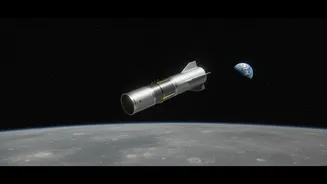
One of the most exciting prospects is the search for water ice. Scientists have long theorized that permanently shadowed craters at the Moon's poles could act as "cold traps," preserving water ice for billions of years. A rocket stage crashing into one of these dark regions would excavate this potentially frozen material, tossing it up into sunlight where it can be detected. This method was proven successful in 2009 with NASA's LCROSS mission, which intentionally crashed a Centaur rocket stage into the Cabeus crater and confirmed the presence of a significant amount of water ice. Finding accessible water is a top priority for future human exploration, as it could be used for drinking water, breathable air, and rocket propellant.
Creating a Purposeful Moonquake
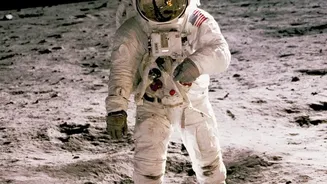
An impact also serves as an artificial moonquake, providing a known source of seismic energy. During the Apollo era, astronauts left behind a network of seismometers that recorded thousands of natural moonquakes and several deliberate impacts from spent rocket stages. By studying how the seismic waves from these impacts travel through the Moon, scientists can build a picture of its internal structure, including the thickness of the crust and the properties of its mantle and core. Unlike natural moonquakes, an artificial impact has a known time, location, and energy, which makes the resulting seismic data much easier to interpret.
Studying the Crater Itself
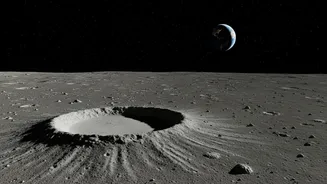
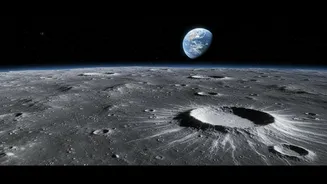
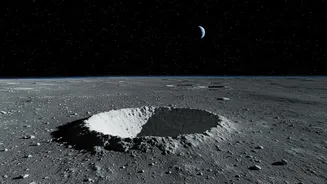
After the dust settles, the newly formed crater becomes an object of study. Orbiting spacecraft, like NASA’s Lunar Reconnaissance Orbiter, can image the crater in high resolution, providing fresh insights into the physics of impact cratering. The size, shape, and features of the crater reveal information about the physical properties of the lunar regolith—how compacted or loose it is, for instance. Since the Moon has no atmosphere or weather to erode its surface, craters are preserved for millions of years, acting as a historical record of the solar system. Studying a new, man-made crater helps calibrate our understanding of natural ones.
A History of Helpful Collisions
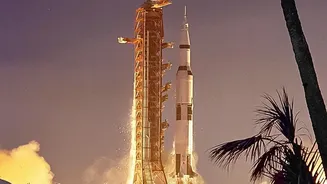
Using impacts for science is not a new concept. The Apollo program deliberately crashed the upper stages of its massive Saturn V rockets onto the lunar surface to generate seismic data. More recently, the LCROSS mission was designed specifically as an impact experiment. There have also been unintentional impacts, such as a Chinese rocket booster in 2022 and a SpaceX Falcon 9 upper stage in mid-2026, which scientists also used as opportunities to learn. Each collision, planned or not, offers a chance to refine tracking techniques and study the pristine lunar environment in a new way.