




An Unexpected Find in a Museum Drawer
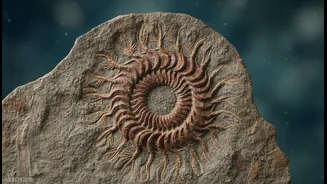
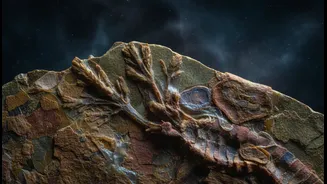
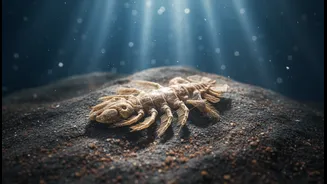
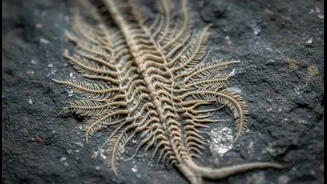
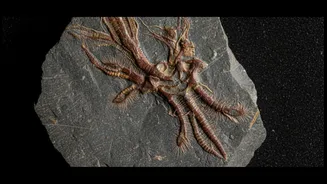
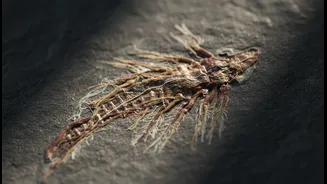
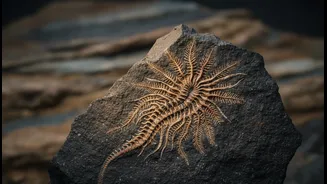
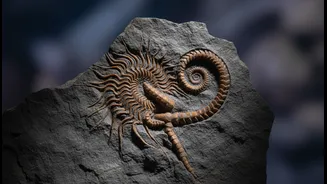
The story begins not in a remote quarry, but in a small museum in Montreal, Canada. Paleontologists studying the collection came across a specimen of a crinoid named Dendrocrinus simcoensis. Crinoids, ancient relatives of modern starfish, are sometimes
called 'sea lilies' and their fossils are quite common. However, this particular fossil, which had been sitting in the museum's collection, was anything but ordinary. Upon closer inspection, researchers realized they were looking at something incredibly rare: preserved soft tissues.
The Rarity of Soft Tissue Preservation
Most fossils consist only of hard parts like bones, shells, or teeth. Soft tissues such as skin, organs, and, in this case, tube feet, are the first parts of an animal to decay after death. For them to be preserved, a unique set of circumstances is required. The animal must be buried rapidly in fine mud, cutting off oxygen and stopping the process of decay almost immediately. This creates a kind of natural vacuum-seal, allowing minerals to fossilize the delicate structures. Finding such a specimen is a paleontological jackpot; this is only the second time soft tissues have ever been found in a crinoid fossil, and this new find is the oldest by a significant margin.
A Window into an Ancient Lifestyle
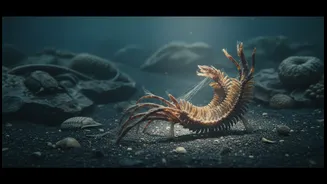
The preserved soft tissues belonged to the crinoid's tube feet, which are crucial for understanding how the animal lived. In their modern relatives, these appendages are used for feeding and navigating water currents. By comparing the ancient fossil to living crinoids, scientists can piece together how these 450-million-year-old creatures behaved. The analysis, published in the journal Royal Society Open Science, revealed that this ancient crinoid likely fed and acted very differently from its modern cousins, providing a vital new data point in their evolutionary history.
Why This Discovery Matters
This discovery is more than just a fascinating oddity. It provides a direct look into one of Earth's earliest complex ecosystems. The Ordovician period, when this crinoid lived, was a time of massive evolutionary radiation, when the foundations of modern-style ecosystems were being built. Fossils with soft-tissue preservation offer a much more complete picture of the life forms from this era than skeletal remains alone. Each discovery helps fill in major gaps in our knowledge of how life on Earth evolved. As one of the lead researchers, Dr. Lena Cole, stated, preservation like this is truly "one in a million."