






The aroma of besan roasting in ghee is the scent of celebration. But making besan ladoo that melts in your mouth can be tricky. This guide simplifies the process, ensuring your homemade mithai is perfectly soft and delicious every time.
The Magic of Three Core Ingredients
At its heart, besan
ladoo is a beautiful alchemy of just three main ingredients: besan (gram flour), ghee, and sugar. The quality of these components directly impacts the final taste and texture. For the best results, use fresh besan that doesn't have a bitter or stale smell. A fine besan will yield a smoother ladoo, while a coarser variety, often called 'ladoo besan', will give a more grainy, traditional texture. Pure ghee is essential for the rich, nutty flavour and aroma that defines this sweet. While you can use regular granulated sugar that has been powdered in a grinder, many traditional recipes recommend 'boora' or 'tagar', a type of porous sugar that gives the ladoos a lighter, melt-in-the-mouth quality without being overly dense.
The Art of Roasting: Patience is Key
The most crucial step in making soft besan ladoos is the roasting of the flour. This is not a process to be rushed. In a heavy-bottomed pan, melt the ghee over a low to medium-low flame. Add the besan and begin stirring continuously. Initially, the mixture will be lumpy and thick, but as you continue to roast, it will loosen and become more liquid. The goal is to cook the besan evenly until the raw floury smell is replaced by a deeply nutty and aromatic fragrance, and the colour changes to a beautiful golden brown. This can take anywhere from 15 to 30 minutes, depending on the quantity and the pan. Under-roasted besan will taste raw and pasty, while over-roasted besan will be bitter. Your nose is your best guide here; when the kitchen fills with that unmistakable nutty scent, you are on the right track.
Perfecting the Sweetness and Texture
When you add the sugar is just as important as how you roast the besan. Adding sugar to a hot besan mixture is a common mistake that causes the sugar to melt, resulting in a runny, greasy mixture that won't form proper ladoos. Once the besan is perfectly roasted, remove the pan from the heat and transfer the mixture to a separate bowl or plate to help it cool down faster. Let it cool until it is just warm to the touch—you should be able to handle it comfortably. At this stage, add your powdered sugar and any flavourings like ground cardamom. Mix everything thoroughly, using your hands to ensure the sugar is evenly incorporated. The mixture might seem dry at first, but the residual warmth will help the ghee bind everything together.
Shaping Your Ladoos with Ease
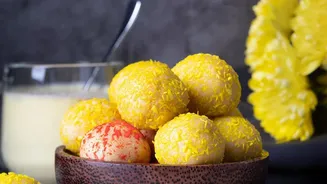
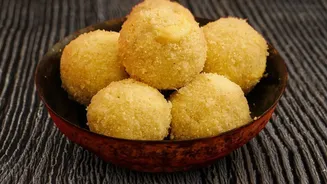
Once the sugar is fully mixed in, it's time to shape your ladoos. Take a small portion of the warm mixture into your palm and press it together firmly, then roll it between your palms to form a smooth, round ball. If you plan to add nuts like chopped almonds or pistachios, this is the time to mix them in. If the mixture feels too dry and crumbly to hold its shape, add a teaspoon or two of warm, melted ghee to help it bind. Conversely, if the mixture is too soft and greasy, you can place it in the refrigerator for 15–20 minutes to allow the ghee to firm up slightly before you try shaping again. Once shaped, you can garnish the ladoos with a sliver of pistachio or almond.
Troubleshooting Common Problems
Even with a simple recipe, things can go awry. Here are fixes for common issues:
Ladoos taste raw: This means the besan was under - roasted. Unfortunately, this can't be fixed after the fact. Next time, roast for longer on low heat until the nutty aroma is very strong.
Ladoos are hard: This is usually due to not using enough ghee, causing the mixture to be too dry. You can sometimes salvage this by breaking the ladoos, adding a little more warm ghee, and reshaping them.
Ladoos won't hold their shape: This happens when there's too much ghee, or if the sugar was added when the besan was too hot. Chilling the mixture in the fridge for a short while is the best first step to fix this.
Ladoos stick to the roof of your mouth: This can happen if any besan is very fine and slightly under - roasted. Using a coarser 'ladoo besan' or adding a tablespoon of semolina (sooji) during roasting can help improve any texture.