






Your Body Has a Clock
Deep inside every cell in your body is a tiny, ancient clock. This is your circadian rhythm, a 24-hour internal cycle that governs everything from your sleep-wake patterns to hormone production and, crucially, your metabolism. This internal clock is designed
to work in sync with the daily cycle of light and dark. For most of human history, we ate during the day and fasted at night. Modern life, with its electric lights, late-night work, and midnight snacks, has thrown this delicate system into disarray, leading to what scientists call 'chronodisruption'. Research suggests this mismatch between our internal clocks and our eating habits can contribute to weight gain and metabolic problems.
The Power of an Early Start
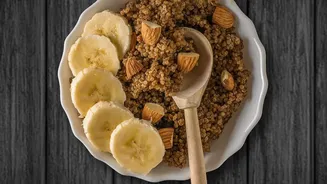
The old saying about breakfast being the most important meal of the day is gaining significant scientific backing. Eating a meal in the morning effectively kick-starts your metabolism, telling your body that plenty of energy is available for the day ahead. Studies show that our bodies are simply better at processing food earlier in the day. One study found that eating a majority of daily calories before 1 p.m. helped improve blood sugar levels in people with prediabetes and obesity. Conversely, skipping breakfast can signal to your body that it needs to conserve energy, potentially slowing your metabolic rate. People who eat breakfast regularly also tend to have a lower body mass index (BMI) and are less likely to overeat later in the day.
The Problem with Late-Night Dinners
As your body prepares for rest in the evening, your metabolism naturally slows down. Eating a large meal late at night forces your digestive system to work overtime when it should be winding down. Research from Johns Hopkins University found that eating dinner at 10 p.m. instead of 6 p.m. resulted in higher blood sugar levels and reduced fat burning overnight, even when the meal was identical. Other studies confirm that late eating is associated with increased hunger, a slower metabolism, and changes in fat tissue that promote fat storage. Over time, this habit can increase the risk of weight gain, obesity, and type 2 diabetes.
Finding Your Window: Time-Restricted Eating
One of the most popular applications of chrononutrition is time-restricted eating (TRE), a form of intermittent fasting. Instead of focusing on what to cut out, TRE focuses on when to eat by limiting your daily food intake to a specific window, typically between 8 to 12 hours. The goal is to create a longer daily fasting period, which gives your body more time to repair and reset. Research, much of it pioneered by Dr. Satchin Panda at the Salk Institute, shows that aligning our eating window with our circadian rhythms can synchronize the clocks in our various organs, from the liver to the gut. This alignment has been linked to benefits like weight loss, improved insulin sensitivity, and lower blood pressure.
How to Sync Your Meals with Your Clock
Adopting the principles of chrononutrition doesn't require a radical overhaul. It's more about making small, strategic shifts. Try to consume the majority of your calories earlier in the day, when your metabolism is most active. If you're used to eating a small breakfast and a large dinner, consider flipping that pattern. Aim to make breakfast and lunch your main meals and have a lighter dinner. It is also beneficial to establish a consistent daily eating window and stick to it, even on weekends. Finally, try to finish your last meal at least two to three hours before you go to sleep to give your body ample time to digest before its nightly repair cycle begins.