




The wrist roller is a classic tool for building powerful forearms and a crushing grip. But moving incorrectly can lead to pain and injury. This guide explains how to get the benefits while safely navigating your range of motion.
What is African Wrist Rolling?
The term 'African wrist
rolling' can refer to two concepts. One is a traditional, equipment-free exercise involving circular wrist motions to improve flexibility and blood flow. The other, more common in gyms, uses a tool called a wrist roller—a handle with a cord and a weight attached. The user holds the handle with arms extended and rotates their wrists to roll the weight up and down. This article focuses on the weighted version, which is highly effective for building the muscles in your forearms, specifically the flexors and extensors that control wrist and hand movements.
The Real-World Benefits
Strengthening your forearms and grip isn't just for show. It has direct practical benefits. A stronger grip improves performance in almost every lifting exercise, from deadlifts to pull-ups, where grip is often the first thing to fail. It also enhances your abilities in sports like climbing, martial arts, and tennis. Beyond the gym, a strong grip helps with everyday tasks and can reduce the risk of certain strain-related injuries by making your wrists more stable and resilient. Stronger forearm muscles help to support the wrist joint, taking pressure off smaller, more vulnerable ligaments and tendons.
Understanding 'Painful Range of Motion'
It is crucial to distinguish between the burn of muscle fatigue and sharp joint pain. A 'painful range of motion' refers to any movement that causes sharp, stabbing, or aching pain within the wrist joint itself, not just the feeling of a tired muscle. Pain is your body’s signal that you are stressing a joint or tendon beyond its current capacity. Forcing movements in this range can lead to inflammation, tendonitis, or aggravate underlying conditions like carpal tunnel syndrome. The goal of exercise is to challenge muscles, not to damage joints. If you feel pain, you must stop and reassess.
How to Perform the Exercise Safely
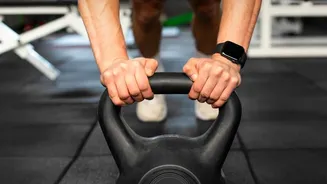
Proper form is non_negotiable. Stand with your feet shoulder_width apart, holding the wrist roller with both hands and an overhand grip. Extend your arms straight out in front of you, parallel to the floor. Your body should remain stationary; only your wrists and forearms should move. Slowly and with control, rotate your wrists to roll the rope up, lifting the weight. Once the weight reaches the handle, reverse the motion just as slowly, controlling the descent. Do not let the weight just drop; the lowering phase is a critical part of the exercise.
Key Mistakes to Avoid
Many common errors can lead to pain and reduce the exercise's effectiveness. The most frequent mistake is using too much weight too soon. This encourages you to use momentum, swinging your arms or body to lift the weight instead of isolating the forearms. Another error is performing the movement too quickly, especially on the way down. This negates much of the muscle‐building tension. Finally, ensure your wrists stay in a neutral alignment as much as possible, avoiding excessive bending that can strain the joints.
Tips for Staying Pain‐Free
To ensure a safe and effective workout, always warm up your wrists with gentle rotations and stretches before you begin. Start with a very light weight, or even no weight, to perfect your form. Focus on achieving a full, but comfortable, range of motion. Do not push into any position that causes sharp pain. Keep the movement slow and controlled in both directions. It's also wise to limit wrist rolling sessions to two or three times per week to allow for adequate recovery and prevent overuse injuries.