




Mastering the Moonlight
The single most important factor for a successful stargazing trip is the lunar calendar. A full moon can be 25 to 40 times brighter than a moonless night, washing out all but the brightest stars and making the Milky Way completely invisible. Your goal
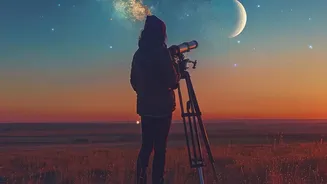
is to plan your trip around the new moon. This is the phase when the moon is not visible in the night sky, creating the darkest possible conditions. The ideal window for stargazing is the five-day period centered on the new moon date. A crescent moon can also work, as it sets early in the evening, leaving the rest of the night dark for observation. Before you book anything, search for a 'lunar calendar' for your travel year and pick dates when the moon is less than 10% illuminated for the best experience.
Navigating Seasonal Cloud Cover
Once you have your new moon dates, the next step is to choose a location with clear skies. India's weather is dominated by the monsoon, which brings heavy cloud cover to most of the country between June and September. For this reason, the best general stargazing season for most of India is from October to March, when the air is dry and stable. However, the high-altitude deserts of the Himalayas are a major exception. Places like Ladakh and Spiti Valley lie in a rain shadow, meaning they receive very little monsoon rain and offer exceptionally clear skies from May to September, precisely when the rest of the country is clouded over. Therefore, your destination choice is tied to the time of year. Aim for the Himalayas in the summer and other regions in the winter.
Hanle, Ladakh: India's Premier Dark Sky Reserve
For the ultimate stargazing experience, Hanle in Ladakh is unmatched. It is home to India's first official Dark Sky Reserve, an area protected from light pollution. Situated at a breathtaking altitude of over 4,500 metres, the dry, thin air provides some of the clearest and darkest skies on the planet, earning it a Bortle-1 rating—the highest possible score for sky darkness. On a clear, moonless night here, the Milky Way is so bright it can cast a faint shadow. The best time to visit is from May to September. Local communities have been trained as 'Astronomy Ambassadors' to guide visitors, making it a world-class astro-tourism destination.
Spiti Valley, Himachal Pradesh: The High-Altitude Desert
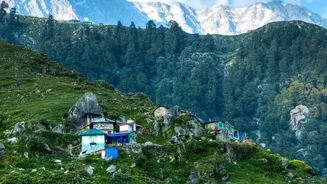
Like Ladakh, Spiti Valley is a cold desert in the Himalayas, offering pristine, dark skies thanks to its high altitude and remote location. Villages like Kibber, Langza, and Komic are popular bases for stargazers, sitting above 12,000 feet where there is minimal atmospheric distortion or light pollution. The best months for a visit are from May to October, with August and September often providing the driest and clearest nights. The region's accessibility via road from Manali or Shimla makes it a popular alternative to Ladakh for experiencing a truly dark sky.
Rann of Kutch, Gujarat: A White Desert Canvas
For a completely different landscape, the vast salt flats of the Rann of Kutch offer an unending horizon perfect for stargazing. With minimal light pollution, the expansive white desert provides a surreal backdrop for the night sky, especially during the winter months from October to March. The dry winter air ensures excellent visibility, and on a moonless night, the Milky Way is easily visible to the naked eye. Several operators in the region offer guided stargazing experiences, often combining them with the cultural richness of the Rann Utsav.
Coorg, Karnataka: Stars Over the Western Ghats
You don't always have to travel to the extremes of the country for a good celestial show. Coorg, nestled in the Western Ghats, offers surprisingly dark skies away from its main towns. Surrounded by coffee plantations and rolling hills, the region has pockets with low light pollution perfect for a weekend getaway. The best time to visit for stargazing is from October to March, after the monsoon has cleared the atmosphere of dust and haze. While not as dark as Hanle or Spiti, it is one of the best and most accessible options in South India.
Essential Tips for Your Trip
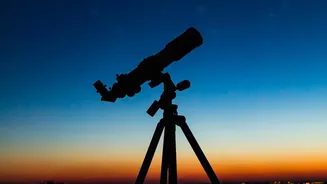
To make the most of your stargazing adventure, a few simple preparations go a long way. First, allow your eyes at least 20-30 minutes to fully adapt to the darkness; avoid looking at your phone screen during this time. If you need light, use a headlamp with a red-light setting, which doesn't disrupt your night vision. You don't need a telescope to start; a good pair of binoculars can reveal stunning details of the moon's craters, star clusters, and the Andromeda Galaxy. Finally, download a stargazing app like Stellarium to your phone to help you identify constellations and planets.