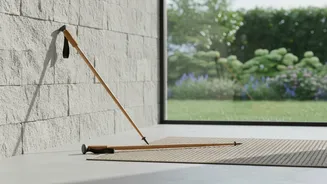




What is Nordic Walking?
Imagine turning a simple walk into a full-body workout. That’s the magic of Nordic walking. Originally developed as a summer training method for cross-country skiers, this activity uses specially designed poles to engage your upper body as you walk. By
pushing off with the poles, you work your arms, shoulders, chest, and core muscles, complementing the work your legs are already doing. This transforms a regular stroll into a more comprehensive exercise that engages up to 90% of your body's muscles, compared to just 50% with regular walking. This increased muscle engagement means you burn more calories—up to 46% more, according to some studies—and get a better cardiovascular workout without necessarily feeling like you’re working harder.
The Shift to Everyday Fitness
In recent years, there has been a noticeable shift away from high-impact, high-intensity workouts that promise quick transformations but often lead to burnout and injury. People are increasingly seeking sustainable, enjoyable, and low-impact activities that fit into their daily lives. Nordic walking perfectly captures this trend. It's an accessible activity for people of all ages and fitness levels, from seasoned athletes to those recovering from an injury or managing chronic conditions. Because it's low-impact, it places less stress on joints like your knees and hips, making it a safer alternative to running while still offering significant cardiovascular benefits. One study even found Nordic walking improved functional capacity in patients with coronary artery disease more than high-intensity interval training (HIIT).
The Power of Gradual Training
The philosophy behind Nordic walking's success is rooted in a powerful concept: gradual training, also known as progressive overload. This principle involves slowly and steadily increasing the demands on your body over time. Instead of making sudden, drastic jumps in intensity, you make small, manageable changes—like adding a few more repetitions, increasing weight slightly, or extending your workout by five minutes. This approach allows your muscles, tendons, and joints to adapt and grow stronger without being overwhelmed, significantly reducing the risk of injury. It's the opposite of the all-or-nothing mindset, focusing on building a solid foundation for long-term, sustainable progress.
A Perfect Match for a Smarter Workout
Nordic walking and gradual training are a perfect match. The activity is inherently scalable, making it an ideal vehicle for applying the principles of progressive overload. A beginner can start on a flat, even surface, focusing on mastering the basic arm and leg coordination. As they get more comfortable, they can gradually increase the challenge by walking faster, tackling hills, extending their distance, or using more forceful pole plants to engage the upper body more intensely. This methodical progression ensures that the body is always challenged just enough to stimulate improvement but not so much that it causes strain or injury. It’s a smart, controlled way to build both strength and endurance.
More Than Just a Walk
The benefits of this combination extend beyond just physical fitness. Studies show that Nordic walking is associated with reductions in 'bad' LDL cholesterol, fat mass, and waist circumference, while increasing 'good' HDL cholesterol. The rhythmic nature of the movement, often done outdoors, also provides significant mental health benefits, helping to reduce symptoms of depression and anxiety. By providing more points of contact with the ground, the poles also increase stability, making it a great option for older adults or those with balance issues. It’s an exercise that improves cardiovascular health, tones muscles, enhances flexibility, and boosts mental well-being all at once.