
The Foundation: Rice and First Curries
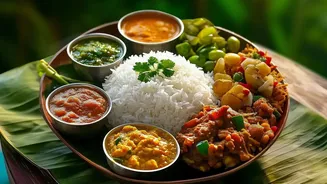
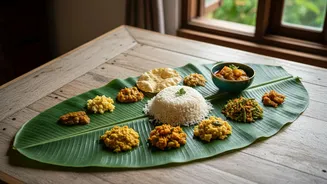
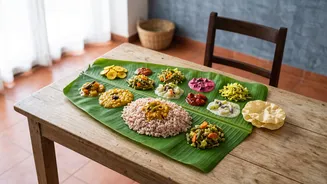
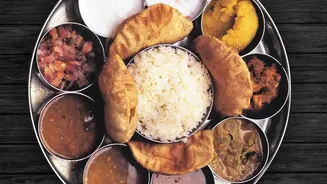
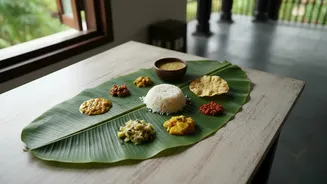
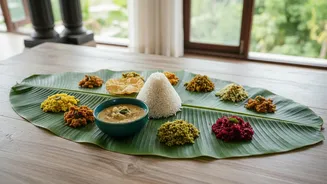
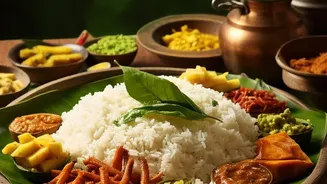
The centerpiece of any Sadya is rice, specifically Kerala's own red matta rice. This robust, nutty-flavored rice is the canvas upon which all other flavors are painted. The meal traditionally begins with a serving of Parippu, a simple but comforting curry
made from moong dal (split green gram) or toor dal (pigeon peas). A spoonful of melted ghee is drizzled over the parippu and rice, creating a rich and aromatic first course that is often enjoyed with a crispy pappadam. Following this gentle start is the ubiquitous Sambar, a tangy and flavorful lentil-based stew packed with a variety of vegetables like drumstick, pumpkin, and carrots. Its complex blend of spices and tamarind is a staple of South Indian cuisine and essential to the Sadya.
The Star Sides: Avial and Thoran
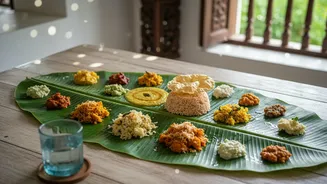
No Sadya is complete without Aviyal, often considered the queen of the feast. It's a magnificent medley of mixed vegetables cooked in a thick, luscious sauce of ground coconut and yogurt, finished with a fragrant drizzle of fresh coconut oil and curry leaves. This dish embodies the spirit of the harvest, bringing together a bounty of produce in one harmonious preparation. Alongside the creamy Aviyal, you'll always find a Thoran. This is a dry vegetable stir-fry where finely chopped vegetables like cabbage, beans, or beetroot are cooked with grated coconut, mustard seeds, and green chillies. Its lighter texture provides a wonderful contrast to the richer, saucier curries on the banana leaf.
The Tangy and Cooling Accompaniments
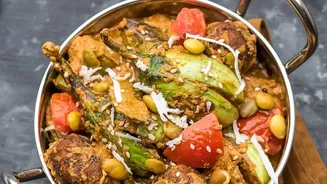
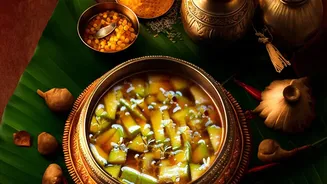
To balance the array of flavors, a Sadya includes several yogurt-based dishes. Pachadi and Kichadi are two such essentials that might seem similar but have distinct characters. Pachadi is a sweet and sour yogurt-based curry, often made with fruits like pineapple or vegetables like beetroot, where the ingredients are ground into a paste. Kichadi, on the other hand, is milder and features vegetables like cucumber or okra that are typically chopped, in a yogurt base seasoned with mustard seeds. Another key tangy component is Pulissery or Moru Curry, a light and cooling buttermilk or yogurt curry that helps cleanse the palate. These dishes provide a refreshing counterpoint to the spicier elements of the meal.
The Flavor Bursts: Pickles and Crisps
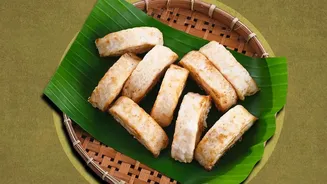
A Sadya leaf is dotted with small but potent accompaniments that pack a punch. Inji Puli (also called Puli Inji) is a dark, sticky, and intensely flavored sweet and sour chutney made from ginger, tamarind, green chillies, and jaggery. It is said to aid digestion and is a unique flavor bomb that ties the whole meal together. No Sadya would be the same without Achar, or pickles, with mango and lime being the most common varieties. For texture and crunch, there must be Pappadam, a large, airy crispbread, and Upperi (banana chips), along with Sharkara Varatti, which are banana chunks coated in a thick layer of jaggery and spices.
The Sweet Finale: Payasam
The feast concludes on a sweet, celebratory note with Payasam, the traditional dessert. A Sadya often features at least two types. One is typically milk-based, like the popular Semiya Payasam (vermicelli pudding) or Palada Payasam (made with rice flakes, or 'ada'). The other is a jaggery-based Pradhaman, which uses coconut milk for its richness. Varieties like Parippu Pradhaman (made with moong dal) and Pazham Pradhaman (made with ripe plantains) are classic choices, offering deep, caramel-like sweetness and fragrance from cardamom and ghee. Serving payasam signals the grand, satisfying end to the incredible banquet.