








The 'Cabin-Ready' Myth
That “cabin-size” or “carry-on friendly” sticker on a new piece of luggage is more of a marketing suggestion than a guarantee. Luggage manufacturers aim to create products that fit most airlines, most of the time. However, there is no single, universally
enforced standard for cabin baggage. Airlines set their own rules, which can change based on the aircraft, route, and even the specific fare you’ve purchased. Budget carriers, in particular, are often stricter with size and weight to manage cabin space and generate ancillary revenue. What is sold as a standard cabin bag might easily exceed the precise dimensions allowed by many Indian domestic airlines, leading to costly surprises.
Know Your Numbers: Major Indian Airlines
For domestic economy travel in India, the rules are fairly consistent but require attention to detail. Most major carriers have converged on a similar weight limit, but dimensions can vary slightly. A small difference can be enough to get your bag rejected at the gate. As of mid-2026, the standard for most economy class domestic travel includes a 7 kg weight limit for your main cabin bag. Air India, IndiGo, and Vistara all specify dimensions that add up to a linear total of 115 cm (e.g., 55 cm x 35 cm x 25 cm). Akasa Air also follows the 115 cm linear total and 7 kg weight limit. It’s also common for airlines to allow one additional small personal item, like a laptop bag or a purse, but this is subject to strict enforcement and the item must fit under the seat in front of you.
How to Measure Your Bag Correctly
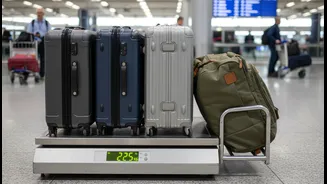
Airlines measure everything. When they check your bag’s size, their measurement includes parts of the bag you might forget. For an accurate measurement at home, use a tape measure and include the wheels, handles (both side and top, even when compressed), and any bulging external pockets. The bag must fit completely within the metal sizer at the airport. For weight, a simple digital luggage scale, available online for a few hundred rupees, is a worthwhile investment. It can save you from having to repack frantically at the check-in counter or pay steep overweight fees. Remember to weigh your bag after it's fully packed.
International Flights: A Different Game
If you are flying abroad, do not assume domestic rules apply. International allowances vary dramatically. While some full-service carriers like Emirates or Qatar Airways might allow a similar 7 kg in economy, their dimensions might differ. On flights to North America, airlines often use a “piece concept,” where you are allowed one or two bags of a specific weight. Always check the specific rules for your ticketed airline and destination. If your journey involves connecting from a domestic to an international flight on different airlines, the strictest baggage policy of the two will usually apply for your cabin bag.
The High Cost of Getting It Wrong
Failing to meet cabin baggage requirements is not a minor inconvenience; it can be expensive. If your bag is deemed oversized or overweight at the gate, you will almost certainly be forced to check it into the hold. Airport excess baggage fees are notoriously high, often charged per kilogram. In India, these fees can be ₹550 per kilogram or more. Beyond the financial cost, there's the stress and delay of having to repack or argue at the gate. Pre-booking any potential excess baggage online is always cheaper than paying at the airport counter.