




What Are Stellar Nurseries?
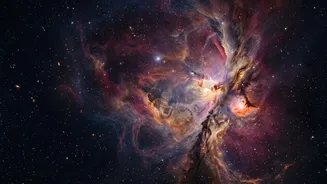
Imagine a cosmic factory, sprawling across light-years, where the only products are new suns. That’s essentially what a stellar nursery is. These are immense clouds of cold gas and dust, primarily hydrogen, floating in interstellar space. They are often
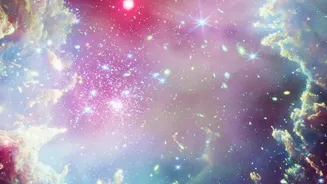
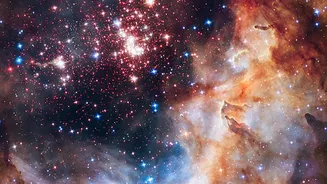
called molecular clouds. Within these nebulae, gravity works its slow magic. It pulls clumps of gas and dust together into increasingly dense pockets. As a clump collapses, the material at its core heats up under immense pressure, eventually becoming a glowing protostar—a baby star. These nurseries don’t just create single stars; they often give birth to entire clusters at once, providing the raw materials for future solar systems. Understanding these regions is fundamental to understanding not just how stars are born, but how galaxies themselves grow and evolve over billions of years.
Webb's Infrared Superpower
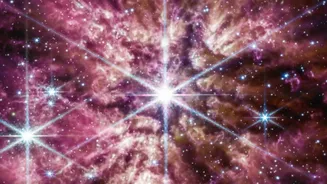
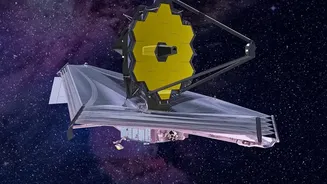
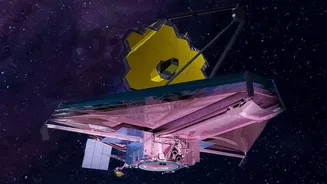
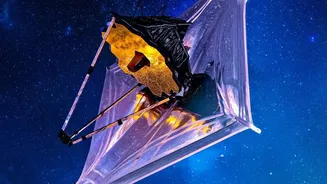
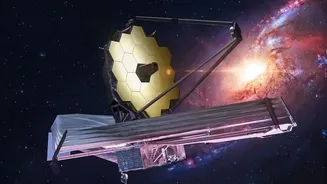
So, if these nurseries are so full of activity, why have they been so hard to see? The answer is dust. The same dust that fuels star birth also acts like a thick cosmic fog, scattering and absorbing visible light. To a telescope like Hubble, which primarily sees in visible light, many of these star-forming regions look like dark, impenetrable voids. This is where the James Webb Space Telescope (JWST) has a revolutionary advantage. Webb is engineered to see the universe in infrared light. Infrared wavelengths are longer than those of visible light, allowing them to slip past the tiny dust particles instead of being blocked. This ability to peer through the dusty veil transforms opaque cosmic clouds into transparent windows. It allows astronomers to witness the earliest, most fleeting moments of star formation that were previously completely hidden from view.
The Spectacular 'Cosmic Cliffs'
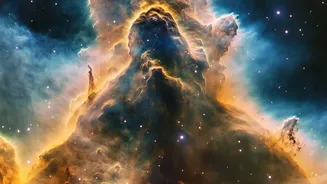
One of the most breathtaking demonstrations of Webb's power is its image of a region called NGC 3324 in the Carina Nebula. Dubbed the 'Cosmic Cliffs', the image looks like a craggy mountain range on a starry night but is actually the edge of a giant, gaseous cavern. This cosmic landscape, located about 7,600 light-years away, was carved out by intense ultraviolet radiation and powerful stellar winds from massive, hot young stars located just out of frame. The blistering radiation is slowly eroding the wall of the nebula, creating dramatic pillars of gas and dust that resist it. For the first time, Webb's image revealed hundreds of previously hidden stars and even the tell-tale jets of material being shot out by protostars deep within the cloud. What appears as 'steam' rising from the celestial mountains is actually hot, ionized gas and dust streaming away from the nebula under the relentless blast of radiation.
Rewriting the Story of Star Birth
These detailed images are more than just pretty pictures; they are a goldmine of scientific data that is helping to rewrite our understanding of the universe. By observing active regions like the 'Cosmic Cliffs' or Sagittarius B2, the most prolific star-forming cloud in our galaxy, scientists can get a more accurate census of the stars being born. They can study how the energy from massive stars influences the next generation of star formation around them—sometimes triggering it, other times blowing the necessary material away. Because planets are formed from the disks of dust and gas that swirl around newborn stars, studying these cradles of creation provides direct insight into the origins of planetary systems, including our own. Every element forged in these stellar furnaces contributes to the cosmic web of life, making the study of these distant nurseries a journey into our own history.