






A New Frontier in Old Remains
For centuries, archaeologists and palaeontologists have studied ancient bones and teeth to understand human history, migration, and diet. But a new frontier of science is now plumbing these same remains for something far smaller and more elusive: the molecular
ghosts of ancient diseases. Fields like paleogenomics and paleoproteomics are allowing scientists to extract and reconstruct the genetic or protein signatures of pathogens that caused devastating epidemics centuries or even millennia ago. By isolating fragments of ancient DNA (aDNA) or proteins from the remains of plague victims, for example, researchers can identify the exact pathogen that caused their death. This has provided definitive proof for the causes of historical pandemics, such as identifying Yersinia pestis as the bacterium behind the Black Death.
Technology Unlocks the Past
This backward glance is only possible due to recent technological leaps. High-throughput DNA sequencing and sophisticated mass spectrometry are the keys that unlock these ancient biological archives. DNA is a fragile molecule that degrades over time, shattering into tiny, damaged pieces. New methods allow scientists to piece together these fragments, filter out contamination from the surrounding environment and modern handling, and reconstruct the genomes of long-dead microbes. Similarly, paleoproteomics focuses on proteins, which can survive for much longer than DNA. By analyzing the proteins present in ancient dental pulp or bone, scientists can not only identify pathogens but also detect the host's immune response, revealing who had an active infection. This provides a much clearer picture of disease not just as a presence, but as a process.
Charting the Evolution of a Killer
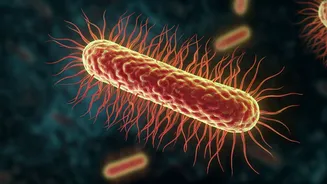
One of the most-studied ancient pathogens is Yersinia pestis, the bacterium that causes plague. Through ancient DNA, scientists have traced its evolution for over 5,000 years. The earliest known strains were less dangerous than the one that caused the Black Death. Over millennia, it acquired new genetic tools that allowed it to become more virulent and spread via fleas, turning it into the terrifying agent of bubonic plague. By comparing genomes from different outbreaks—such as the Plague of Justinian, the Black Death, and the Third Pandemic of the 19th century—researchers can track how the bacterium mutated, spread, and adapted. This evolutionary timeline helps answer key historical questions about where pandemics originated and why they eventually disappeared from regions like Europe.
Why Ancient Diseases Matter Today
This is more than just morbid curiosity. Understanding the long-term evolutionary dance between humans and pathogens provides critical insights for modern public health. By seeing which mutations made a pathogen more successful in the past, scientists can better anticipate how current diseases might evolve. This knowledge can inform the development of new vaccines and treatments. For example, studies on ancient human genomes have revealed how past pandemics, like the plague, exerted selective pressure on our own DNA, leaving some modern populations with genetic variants that influence immunity. The field of paleovirology is also uncovering the 'fossil record' of viruses embedded in animal and human genomes, revealing the deep history of everything from Hepatitis B to viruses related to Ebola, and showing how our ancestors co-evolved with these threats for millions of years.