





The New Study Buddy
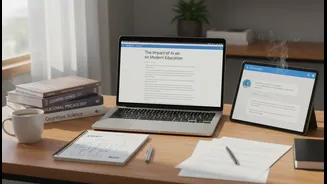
Before a research paper reaches a professor’s desk, many students are now adding a final, digital layer of review: an AI check. This practice involves using tools like Grammarly, QuillBot, and even ChatGPT to refine grammar, clarify sentence structure,
and ensure overall coherence. For many, it’s a way to manage overwhelming workloads and reduce anxiety about minor errors. Students report using these tools to simplify complex topics, summarize articles, and get instant feedback when they feel stuck, much like a digital tutor available 24/7. This isn’t necessarily about getting AI to do the work, but rather using it as a sophisticated proofreader to catch mistakes that tired human eyes might miss, ensuring their ideas are presented as clearly as possible.
Beyond a Simple Spellcheck
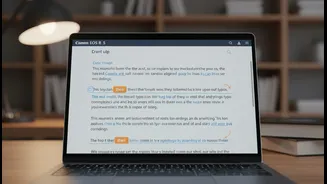
Modern AI writing assistants have evolved far beyond basic spell-checking. Powered by advanced machine learning, they can analyze context, suggest stylistic improvements, and ensure a consistent tone throughout a document. These tools can identify awkward phrasing that is grammatically correct but reads poorly, or flag when a sentence's complexity might confuse a reader. This level of feedback can be invaluable, helping students, particularly non-native English speakers, improve their writing accuracy and confidence. The goal for many is to get help with the mechanics of writing, freeing them up to focus on bigger-picture elements like the strength of their argument and the quality of their research.
The Educator's Dilemma
While students see a helpful tool, educators often see a complicated new challenge. The line between using AI for assistance and using it for cheating can be blurry. A significant majority of faculty express concern that overreliance on AI can undermine the development of critical thinking, originality, and deep engagement with course material. Many institutions are now scrambling to develop clear policies on acceptable AI use. These policies often vary from one professor to another, creating a confusing landscape for students. Some instructors ban AI tools outright, while others encourage their use for specific tasks like brainstorming or checking citations, provided the usage is disclosed. The core concern is preserving academic integrity while preparing students for a future where AI is a common workplace tool.
Walking the Academic Tightrope
The debate raises a crucial question: where does helpful editing end and academic dishonesty begin? Using AI to fix typos and grammatical errors is one thing, but using it to generate ideas, rephrase large sections of text, or build an argument can cross the line into plagiarism. Many students themselves agree that using AI to complete an assignment is a form of cheating. However, the pressure of heavy workloads can tempt some to lean too heavily on these tools. As a result, many educators are shifting their focus. Instead of trying to detect and ban all AI use, which is notoriously difficult and prone to false positives, they are focusing on teaching responsible AI habits. This includes guiding students on when to use AI as a supportive tool and when independent thought is essential, strengthening their digital literacy for the long term.