





The Marketing Words You Can Mostly Ignore
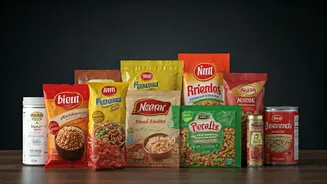
The front of a snack packet is prime real estate for marketers. It’s filled with appealing words like “natural,” “healthy,” “farm-fresh,” and “organic.” However, many of these terms have loose or unregulated definitions in India. For example, “natural”
can be used on products with artificial ingredients. In June 2026, the Food Safety and Standards Authority of India (FSSAI) flagged numerous brands for using misleading claims like "100% Natural" and "Healthy" without proper justification. A truly organic product must carry the green ‘Jaivik Bharat’ logo. Without it, the word “organic” is just a marketing buzzword.
The Ingredient List: Your Source of Truth
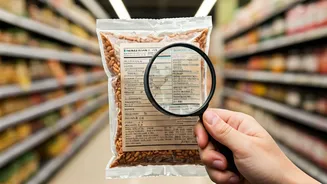
The single most important part of any food label is the ingredient list. According to FSSAI regulations, all ingredients must be listed in descending order of their weight. This means the first one or two ingredients are what make up the bulk of the product. If you see sugar, refined flour (maida), or palm oil listed first, you’re holding a snack that is likely high in empty calories. It’s also crucial to look for hidden sugars. Manufacturers often use multiple types of sweeteners to keep “sugar” from appearing first on the list. Be on the lookout for names like glucose syrup, high-fructose corn syrup, dextrose, maltodextrin, and invert sugar.
Decoding the Nutrition Facts Panel
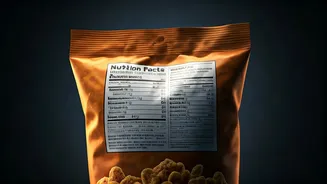
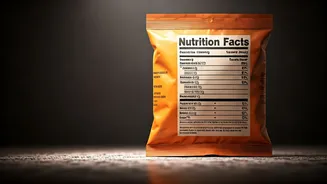
The nutrition panel provides a breakdown of key nutrients per 100g/100ml and often per serving. The first thing to check is the serving size, which manufacturers often make unrealistically small. A packet of biscuits might list a serving as two pieces, but most people eat more, unknowingly consuming double the calories, sugar, and fat listed. Pay close attention to three key numbers: total sugar, sodium, and saturated fat. As a general rule, a snack is considered high in sugar if it has over 15g per 100g, and high in sodium if it exceeds 600mg per 100g. Many savoury Indian snacks like namkeens and farsan often contain surprisingly high amounts of both sugar and salt to balance the flavours.
The 'Health Halo' Trap
Many snacks create a “health halo” by highlighting one positive attribute to distract from other unhealthy ones. For instance, a packet of chips might be advertised as “baked, not fried,” but it could still be loaded with refined flour, sodium, and fat. Similarly, “diet” or “low-fat” products often compensate by adding more sugar, salt, or artificial additives to make them taste good. FSSAI recently called out products like “Zero Maida Bread” for potentially misleading consumers when other ingredients didn't fully support the healthy image. Always read the full ingredient list and nutrition panel, not just the claims on the front.
The Future: Front-of-Pack Labelling
To make healthier choices easier for consumers, India is moving towards mandatory Front-of-Pack Labelling (FOPL). Following a directive from the Supreme Court, the FSSAI is developing a system that will require warning labels on the front of packages for products high in salt, sugar, and saturated fat. This would allow you to see at a glance if a snack is unhealthy, without having to decipher the fine print on the back. While the final regulations are still being formulated, this move signals a major shift towards greater transparency in the food industry, empowering consumers to make genuinely informed decisions.