





The giant panda is famous for its bamboo diet, spending up to 16 hours a day eating. But how does a bear, with paws built for a carnivore, manage to delicately hold and strip bamboo stalks? The answer lies in a remarkable piece of evolution: a sixth digit.
An Impostor Thumb
Unlike the true opposable thumbs of primates, the panda’s sixth digit isn’t a finger at all. It’s a cleverly repurposed wrist bone known as the radial sesamoid. In most mammals, including humans, this is a tiny, unremarkable bone. But in the giant panda, it has become enlarged and elongated, projecting from the wrist to act as a support. This 'false thumb' doesn't have the same dexterity or movement as a real thumb, but it provides the crucial leverage needed. It allows the panda to press bamboo stalks against its other five digits, securing them firmly to be stripped and eaten.
The Evolutionary Dilemma
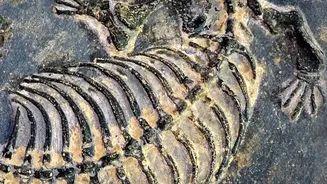
The existence of this false thumb has fascinated scientists for over a century. For an animal that evolved from meat-eating ancestors, switching to a low-nutrient bamboo diet presented a significant challenge. Their digestive systems remain inefficient, meaning they must consume enormous quantities—up to 40kg a day—to get enough energy. A secure grip is essential for this marathon eating session. Fossil evidence helps tell the story. The earliest known evidence of this false thumb comes from a 6-million-year-old panda ancestor called Ailurarctos. This discovery indicates that pandas developed this tool very early in their transition to a bamboo-exclusive lifestyle.
A Balancing Act for Survival
Interestingly, the fossil of the ancient Ailurarctos revealed that its false thumb was actually longer and straighter than that of the modern panda. This raises a question: why didn't the thumb continue to evolve and get even longer, which would seemingly make gripping bamboo easier? The answer lies in a classic evolutionary trade-off. A panda’s false thumb has a dual function: it must grip bamboo, but it must also support the animal’s substantial weight when it walks. A thumb that was too long would get in the way, digging into the ground and making movement awkward and inefficient.
The Perfect Compromise
The modern panda's shorter, hooked false thumb is the result of millions of years of this balancing act. It is short enough not to interfere with locomotion but just long enough to provide the essential grip for feeding. This makes it a perfect example of an evolutionary compromise, a solution that is 'good enough' for two conflicting needs. While their ancestors had a longer version, natural selection favoured a shorter digit that allowed for both efficient eating and walking. This adaptation, born of necessity, is one of the most striking examples of how species find ingenious ways to survive, using the anatomical tools they already possess. It’s not a perfect thumb, but it’s the perfect thumb for a panda.