








The Drive for Deeper Connections
The primary motivation for countries to invest billions in coordinating border infrastructure is economic. Seamless transport connectivity can dramatically boost trade by lowering costs and saving time. For instance, it is often cheaper for a company
in India to trade with Germany than with neighbouring Bangladesh due to transport inefficiencies. By improving connectivity, national incomes can rise significantly. Beyond trade, streamlined borders foster tourism and strengthen people-to-people ties, which are foundational to regional stability. In South Asia, where intra-regional trade accounts for a mere 5% of total trade, the potential for growth is immense. Initiatives like the Bangladesh–Bhutan–India–Nepal Motor Vehicles Agreement (BBIN-MVA) aim to unlock this potential by creating a framework for the unrestricted movement of vehicles.
A Blueprint for Cooperation
Coordination begins long before any concrete is poured. It starts with high-level diplomatic agreements that set the vision, such as a treaty or a memorandum of understanding. These agreements establish joint working groups or oversight mechanisms, comprising officials from various ministries—transport, commerce, home affairs, and foreign affairs—from all participating countries. These bodies are tasked with the complex job of harmonising technical standards, legal frameworks, and financial plans. A major challenge is that cross-border projects involve multiple levels of government and dozens of agencies, each with its own regulations. A key goal is to achieve 'Coordinated Border Management' (CBM), an approach where all agencies work together to streamline processes, share information, and enhance both efficiency and security.
Case Study: Integrated Check Posts
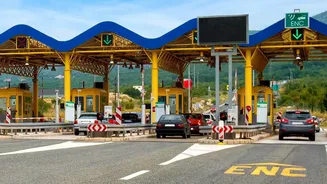
A powerful example of this coordination in action is the development of Integrated Check Posts (ICPs). An ICP is a one-stop shop at the border, consolidating customs, immigration, and security facilities for both countries within a single, modernised zone. India has been actively building ICPs with its neighbours, including at Petrapole-Benapole with Bangladesh and Raxaul-Birgunj with Nepal. These posts are designed to handle both freight and passenger movement efficiently, with facilities like warehouses, parking, and digital clearance systems. The ICP at Petrapole, India's largest, handles trade worth billions and, before the pandemic, saw over two million travellers annually. The success of an ICP depends on having 'mirror infrastructure'—equally capable facilities on the other side of the border.
Beyond Concrete and Steel
Effective border infrastructure is not just about physical buildings and roads. It also requires deep integration of 'soft infrastructure'—the policies and systems that govern movement. A cornerstone of this is the sharing of digital information. Systems like the Schengen Information System in Europe allow member states to share data on wanted persons or stolen documents, enhancing security across open borders. Similarly, transit agreements, like the one allowing India to use Bangladesh's Chittagong and Mongla ports to transport goods to its northeastern states, rely on harmonised customs protocols and digital tracking. The goal is to move towards a 'single window' system, where traders can submit all regulatory documents at a single point, dramatically reducing administrative burdens.
Overcoming Hurdles and Headwinds
Despite the clear benefits, coordinating border infrastructure is fraught with challenges. Political mistrust between nations can overshadow economic logic, leading to delays or suspensions of projects. Security is another major concern; open borders must not compromise a nation's ability to control illicit activities. Furthermore, financing these massive projects is complex, often requiring a mix of public funds, private investment, and support from international bodies like the World Bank or Asian Development Bank. Even when agreements are signed, on-the-ground issues like inadequate warehousing, narrow approach roads, and a lack of full digitisation can prevent these facilities from reaching their full potential, creating bottlenecks that undermine the entire effort.