


The Foundation: Perfecting Your Ganache
Before any decorating can begin, you must master the ganache itself. This simple, two-ingredient wonder of chocolate and cream is versatile, but its consistency is everything. The ratio of chocolate to cream determines its use. For a firm ganache that's
perfect for achieving sharp edges and a stable structure for decorating, a 2:1 ratio of dark chocolate to heavy cream is the professional standard. This means for every 200 grams of chocolate, you use 100 grams of cream. For a softer, spreadable frosting or filling, a 1:1 ratio is ideal. When preparing, chop your dark chocolate finely and place it in a heatproof bowl. Heat the cream until it just begins to simmer, then pour it over the chocolate. Let it sit for about five minutes to melt the chocolate completely before stirring gently from the center outwards until a smooth, glossy emulsion forms. Allowing this mixture to cool to a peanut butter-like consistency is key for frosting.
Achieving the Flawless Canvas
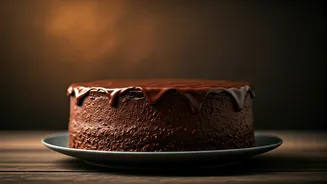
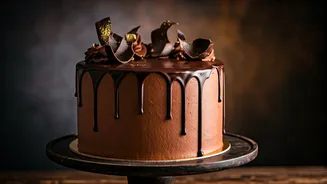
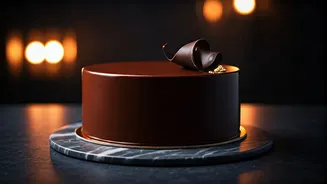
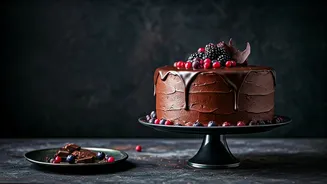
A hallmark of vintage cake design is its impeccable finish. Achieving a perfectly smooth surface with ganache provides the ideal canvas for intricate piping and embellishments. The process begins with a 'crumb coat'—a thin layer of ganache applied to the entire cake to trap any loose crumbs. After stacking and filling your cake layers, apply this initial coat and chill the cake for about 30 minutes until it's firm. For the final coat, be generous. Apply a thick layer of your 2:1 ratio ganache to the top and sides of the cake. Use a bench scraper held straight against the side of the cake, and with your other hand, turn the cake on a turntable. This motion scrapes away the excess, leaving a smooth, even surface. Fill any gaps and repeat until the sides are flawless. For sharp top edges, chill the cake until the ganache is firm, then use a warm spatula to smooth the lip of ganache from the edge toward the center.
Mastering Vintage Piping Techniques
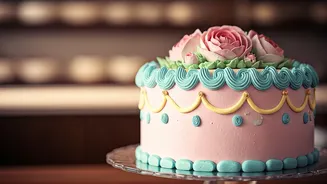
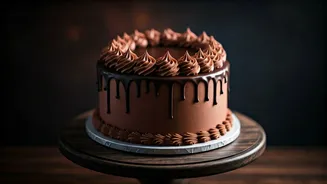
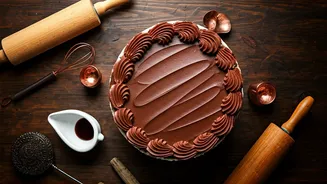
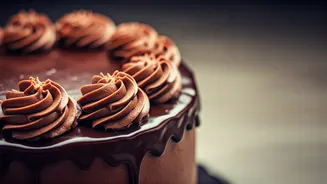
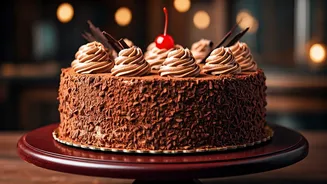
Vintage cakes are famous for their ornate piping. While traditionally done with buttercream, many classic styles can be adapted for a whipped ganache. To make whipped ganache, use a 1:1 ratio of chocolate and cream. Once the ganache has cooled completely to room temperature, whip it with an electric mixer until it lightens in color and becomes fluffy, like a mousse. This creates a stable yet light medium for piping. Techniques like the Lambeth style, characterized by over-piping and intricate string work, define vintage aesthetics. For a simpler approach, focus on classic borders. Use a star tip to create beautiful shell borders, rosettes, or swags around the top and base of your cake. Practice your designs on parchment paper first to get a feel for the pressure and consistency before committing to the cake.
Art Deco Elegance
The Art Deco period of the 1920s and '30s was defined by bold geometric patterns, sharp lines, and a touch of opulence. This style translates beautifully to cake design, especially with the dramatic backdrop of dark chocolate ganache. After achieving a perfectly smooth ganache finish, you can use stencils to create repeating patterns. Metallic gold or silver food paint can be used to add geometric lines or highlight the stenciled designs, creating a stunning contrast against the dark chocolate. Another technique is to use cake combs. These tools have serrated edges that create clean, linear textures in the ganache as you turn the cake, instantly evoking that classic Art Deco feel.
Victorian Romance
For a softer, more romantic vintage look, draw inspiration from the Victorian era. This style is all about delicate, elaborate details. Think intricate lace patterns, scrolls, and delicate floral elements. Using your whipped ganache and a small round piping tip, you can create the effect of lace by piping fine lines and dots. Ruffles are another quintessential Victorian element. A petal piping tip can be used to create cascading chocolate ruffles down the side of the cake. For an extra touch of romance, consider adding hand-molded chocolate flowers or carefully placed edible pearls. The deep color of the dark chocolate ganache makes these delicate white or pastel details pop, creating a cake that is both dramatic and exquisitely detailed.