


More Than Just a Stroll with Sticks
At first glance, it might look like hiking, but Nordic walking is its own distinct activity. Originating in Finland as a summer training method for cross-country skiers, it uses specially designed poles to transform walking into a comprehensive workout.
The technique involves actively pushing off the ground with the poles, propelling you forward. This simple addition engages your upper body, including the arms, shoulders, chest, and core muscles, turning a lower-body exercise into one that works up to 90% of your body's muscles. Unlike hiking or trekking where poles are often used for balance, in Nordic walking, they are fundamental tools for propulsion and power.
The Science of a Full-Body Benefit
The reason Nordic walking is gaining so much attention is its impressive efficiency. By recruiting the upper body, it significantly increases the physical demands compared to regular walking. Studies show it can burn up to 46% more calories, with some estimates suggesting a range of 18% to 67% depending on intensity and technique. This elevated calorie burn happens without a dramatically higher perceived effort, meaning you work harder without necessarily feeling like you are. Beyond weight management, research points to a wide array of health benefits, including improved cardiovascular health, better posture, reduced blood pressure, and lower levels of 'bad' cholesterol. It also provides a low-impact alternative to running, making it gentler on the joints while still offering a robust workout.
Why Is It Popular Again?
The renewed interest in Nordic walking can be attributed to a modern search for accessible, effective, and enjoyable forms of exercise. In a post-pandemic world, outdoor activities have soared in popularity. Nordic walking fits perfectly, offering a safe way to exercise in the fresh air. It caters to all ages and fitness levels, from beginners looking to get active to seasoned athletes seeking a new cross-training challenge. The poles also provide extra stability, which can boost confidence for older adults or those with balance concerns. Its ability to deliver a full-body workout that is both effective and sustainable makes it a practical choice for anyone looking to make fitness a priority.
How to Get Started: Poles and Technique
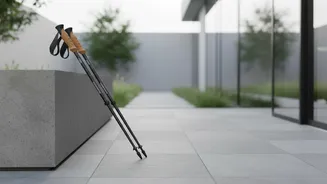
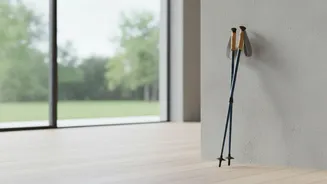
Beginning your Nordic walking journey is straightforward. The essential equipment is a pair of Nordic walking poles, which differ from trekking poles. They are lighter and come with a special glove-like strap system that allows you to push off through the strap for proper technique. Choosing the correct pole length is crucial; a common guideline is to select poles that are approximately 0.7 times your height in centimetres. The basic technique mirrors natural walking: you move your opposite arm and leg forward simultaneously. The key is to plant the pole behind you at an angle and push off firmly to propel yourself forward. While you can learn from videos, getting a lesson from a certified instructor can help you master the form and avoid common mistakes, ensuring you get the maximum benefit from your workout.
Nordic Walking vs. Regular Walking
So what is the real-world difference? While any walk is beneficial, adding Nordic poles supercharges the results. A regular walk primarily engages the 50% of your muscles that are in your lower body. Nordic walking, by contrast, activates nearly 90% of your muscles, toning your arms, shoulders, and core while you walk. This increased muscle engagement leads to a higher heart rate and greater oxygen consumption at the same pace. One study found that Nordic walkers experienced a heart rate increase of up to 33 beats per minute compared to normal walking. Ultimately, it elevates a simple, universal activity into a more powerful and holistic form of exercise.