





The Cardio Comparison
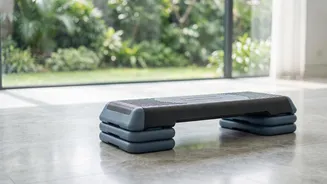
At their core, both aerobics and trampolining are excellent for cardiovascular health. Traditional aerobics, from high-energy dance classes to step routines, gets your heart pumping and improves endurance. The intensity is scalable; you can go for a gentle
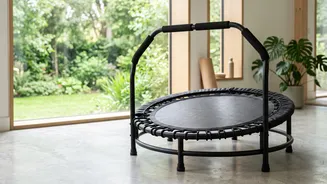
jog in place or push yourself with high-knees and jumping jacks. Trampolining delivers a surprisingly vigorous cardio workout as well. Studies have shown that rebounding places you firmly in the moderate-to-vigorous exercise zone, comparable to jogging but often feeling less strenuous. A famous 1980 NASA study even found rebounding to be more efficient than running for oxygen uptake, suggesting you get more cardiovascular benefit in less time.
Impact on Your Joints
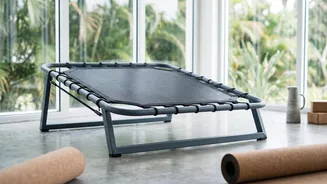
This is where the two activities diverge significantly. Many forms of aerobics are high-impact, meaning both of your feet leave the ground, leading to repetitive stress on your ankles, knees, and hips. For those with joint issues or anyone looking for a more sustainable, long-term routine, this can be a major drawback. Trampolining, on the other hand, is celebrated for being low-impact. The flexible surface of the rebounder absorbs the majority of the shock when you land, protecting your joints from jarring forces. Research indicates that rebounding can reduce the force on joints by up to 80% compared to exercising on a hard surface, making it a joint-friendly option for achieving a high-intensity workout without the associated strain.
The All-Important Balance Factor
The headline gives it away, and it’s a crucial distinction. Trampolining’s unstable surface is its secret weapon. To simply stay upright on a rebounder, your body must constantly make tiny muscular adjustments. This process actively engages your deep core and the smaller stabilizer muscles around your joints. It also sharpens your proprioception—your body’s awareness of its position in space. Consistent trampoline exercise has been shown to significantly improve balance and coordination, which can reduce the risk of falls, particularly as we age. While some aerobics routines incorporate balance challenges, it is an inherent, non-negotiable part of every single bounce on a trampoline.
Muscle Toning and Calorie Burn
Both workouts will help you burn calories, though the exact amount depends on intensity and duration. Some studies suggest rebounding can burn slightly more calories than jogging at a similar level of exertion. Where trampolining stands out is in its full-body muscle engagement. While aerobics often focuses on large leg muscles, the act of bouncing on a trampoline works the legs, glutes, core, and even upper body simultaneously. The constant need to stabilize activates deep core and pelvic floor muscles that are often neglected in traditional cardio workouts. Some sources claim that a rebounding session engages over 400 muscles.
Fun, Accessibility, and Lymphatic Flow
The 'best' workout is the one you stick with, and the fun factor is a huge part of that. Many people find the playful act of bouncing more enjoyable and less like a chore than a structured aerobics class. Plus, a mini-trampoline (or rebounder) is a compact piece of home equipment. Trampolining also offers a unique benefit: lymphatic drainage. The up-and-down motion effectively stimulates the lymphatic system, which is crucial for flushing toxins and waste from the body but has no central pump of its own. Research suggests rebounding can increase lymph flow by up to 15 times, supporting your immune system and helping to reduce inflammation.