





The Problem with Progress
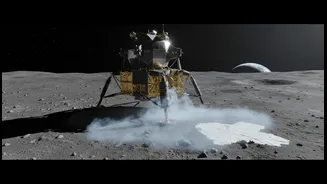
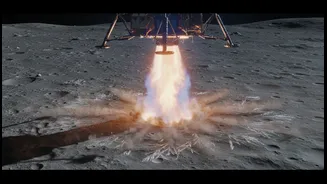
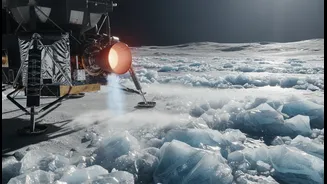
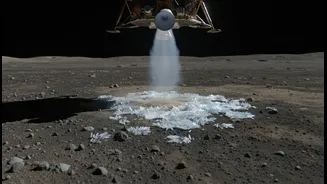
When a spacecraft lands on the Moon, it’s not a gentle affair. In the airless environment, rocket engines blast the surface with supersonic exhaust. This kicks up a high-velocity sheet of lunar dust, or regolith, that sandblasts everything in its path.
During the Apollo missions, astronauts reported that dust clouds completely obscured their view during the final moments of descent. This isn't just a hazard for landing; it's a major threat to any long-term presence. Repeated landings near a future lunar base would steadily erode structures, scientific instruments, and historically significant sites like the Apollo landing zones. The World Monuments Fund has even listed the Moon as an 'at risk' historic site, fearing damage from the new wave of public and private missions.
What Are 'Ancient Records'?
The 'ancient records' at risk are not alien libraries, but something arguably more valuable: the Moon's pristine surface itself. For billions of years, the lunar soil and ice have been a passive collector of data about the solar system. Trapped within these layers are clues about the Sun's history, particles from the solar wind, and a chemical record of impacts from comets and asteroids. Most excitingly, permanently shadowed craters near the poles contain water ice that may be billions of years old. This ice could hold secrets about the origin of water in our solar system and potentially even the building blocks of life. Each uncontrolled landing sprays exhaust contaminants and physically scours these irreplaceable records, erasing chapters of cosmic history before we ever get to read them.
A Counterintuitive Solution
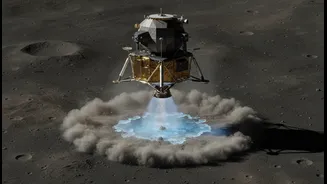
Here's where the idea gets clever. Instead of just seeing lander exhaust as a destructive problem, some scientists see a potential tool. The proposal revolves around a concept called in-situ resource utilization (ISRU), which means using local materials to solve problems. In this case, the two resources are the problematic rocket exhaust and the very water ice we want to protect. The idea is to intentionally direct a lander's plume onto an area containing ice-rich regolith. The hot exhaust gases, which are primarily composed of water, carbon monoxide, and hydrogen, would interact with the surface in a transformative way.
The Science of Sintering
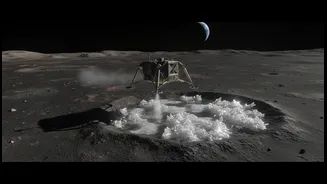
The process is called sintering. The intense heat from the rocket exhaust would momentarily melt the top layer of the ice-laced soil. As the mixture rapidly cools and refreezes in the Moon's cryogenic temperatures, it would fuse into a hard, solid mass—almost like a form of lunar cement. The result would be a durable, paved landing pad. This hardened surface would be robust enough to withstand the force of subsequent landings without kicking up a destructive storm of dust. It effectively turns the biggest problem of lunar landings into the foundation for a permanent, low-impact solution. By creating a few designated, reinforced landing zones, we can protect vast surrounding areas of scientific and historical value from being disturbed.
The Business of the Moon
This isn't just about preserving history; it's about enabling a sustainable future for the burgeoning lunar economy. As both nations and private companies like SpaceX plan bases and resource extraction operations, the Moon is poised to become a hub of activity. Water ice is a particularly valuable resource, not just for life support, but because it can be broken down into hydrogen and oxygen—the primary components of rocket fuel. Creating a lunar 'gas station' is a key goal for making deep space exploration economically viable. But if the process of landing and refueling constantly damages the infrastructure and contaminates the very ice being harvested, the entire business model fails. Creating durable infrastructure from local materials is the most practical path forward, ensuring that exploration and commercialization can coexist with preservation.