


Long before 'upcycling' became a buzzword, Indian households mastered the art of breathing new life into old textiles. These age-old traditions show how sustainability and beauty can be stitched together, turning worn garments into stunning home décor.
Kantha: The Running Stitch of Bengal
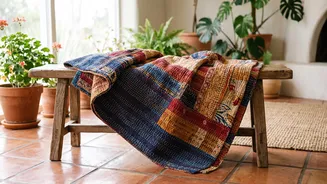
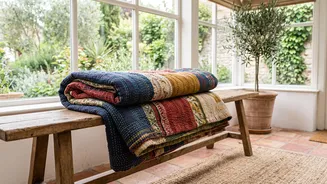
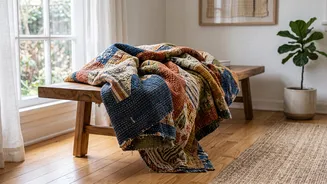
Originating from Bengal, Kantha is a testament to the power of a simple running stitch. Traditionally, women would layer old, soft cotton saris and dhotis, stitching them together to create light quilts and blankets known as Kantha. This practice, born from necessity, evolved into an expressive art form, with intricate motifs of flowers, animals, and daily life embroidered onto the fabric. Today, Kantha has found a celebrated place in modern homes. The layered textiles are repurposed into everything from vibrant cushion covers and bedspreads to unique wall hangings and table runners, each piece carrying a story within its stitches. The wrinkled, wavy texture created by the dense stitching adds a touch of rustic charm and handmade warmth to any interior.
Godhadi: Maharashtra’s Quilted Heirlooms
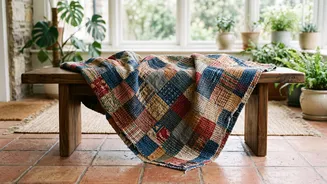
In Maharashtra, the Godhadi is more than just a quilt; it's a tapestry of memories. These thick, cosy blankets are handcrafted by rural women who piece together scraps of pre-loved fabrics, from cotton saris to family garments. The process is a communal one, with women often gathering in the afternoons to hand-stitch the layers together, turning a domestic chore into a social event. Each Godhadi is unique, reflecting the collection of fabrics used. While traditionally made for personal use as functional blankets to provide warmth, their vibrant, multi-patterned appearance makes them perfect decorative throws, floor mats, or even wall art, embodying the principles of slow, conscious design.
Chindi: Weaving Wonders from Waste
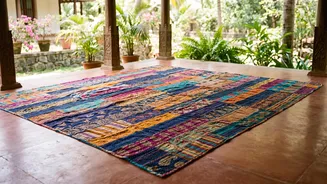
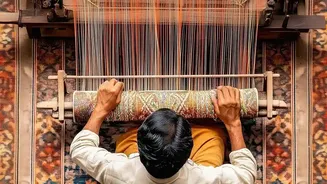
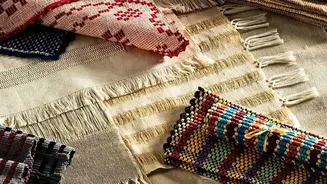
The word 'Chindi' literally means torn cloth or scrap in Hindi, and this craft is a perfect example of turning waste into wealth. Practiced across regions like Gujarat, Maharashtra, and Uttar Pradesh, Chindi craft involves braiding or weaving strips of leftover fabric from tailoring units or discarded clothing. These colourful strips are woven on looms to create sturdy and visually striking rugs and floor coverings known as durries. No two Chindi rugs are ever identical, as the colours and textures depend entirely on the scraps available. Beyond rugs, the technique is also used to create bohemian-style baskets, placemats, and pouffes, offering a cheerful and eco-friendly way to add a pop of colour and texture to your home.
Patchwork: A Mosaic of Memories
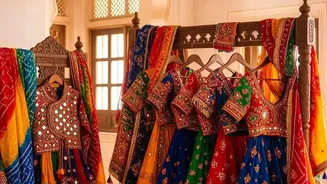
Patchwork is an ancient global craft, but in India, particularly in states like Gujarat and Rajasthan, it holds special cultural significance. Known as Khambadiya in some regions, this craft involves stitching together small pieces of different fabrics to create a larger textile. Often, these scraps come from treasured but worn-out garments like ghagras, odhnis, and bridal trousseaus, embedding personal history into the new creation. The fabrics are often embellished with traditional mirror work and embroidery. These vibrant textile mosaics are transformed into stunning and durable home décor items such as decorative cushion covers, bedspreads, wall hangings, and even upholstery for chairs and pouffes, each piece a unique collage of colour and culture.
Khesh: The Re-Woven Sarees of Bengal
A unique upcycling technique from Birbhum, West Bengal, Khesh weaving gives old cotton sarees a glorious second life. The process involves tearing old sarees into thin, continuous strips. These fabric strips are then used as the weft (horizontal threads) and woven with a new cotton warp (vertical threads) on a handloom. The resulting Khesh fabric has a distinctive, textured feel and a striped, linear pattern where flashes of the old sarees peek through. This heavy, breathable fabric is incredibly durable and is used to create bedspreads, upholstery, cushion covers, and bags. Encouraged by Rabindranath Tagore in the early 20th century, Khesh embodies a philosophy of self-reliance and honours the entire lifecycle of a material.