






The Last-Mile Litmus Test
In the world of travel, the “last mile” refers to the final leg of the journey—the stretch from the highway, airport, or train station to your actual destination. For a growing number of Indian travelers, this final step has become a critical deciding
factor. After navigating a busy work week, a smooth, hassle-free final approach to a hotel or homestay is a top priority. Time-poor but experience-seeking urbanites are increasingly unwilling to spend precious hours of their short break on bumpy, poorly maintained, or confusing local roads. This shift in preference means destinations that once thrived on their remote charm are now competing with those that offer seamless, end-to-end connectivity.
Hills Within Reach From the Capital
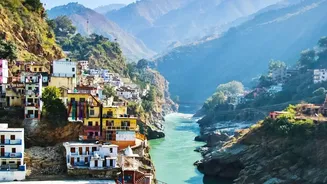
The impact of improved infrastructure is perhaps most evident in the hills of Uttarakhand. The new Delhi-Dehradun Expressway, which has drastically cut travel time from over six hours to just 2.5 hours, is a game-changer. This has transformed places like Dehradun, Rishikesh, and Mussoorie into highly accessible weekend destinations for the National Capital Region. Travelers can now leave Delhi after breakfast and be checked into their hill-station hotel by lunchtime, a previously unimaginable feat. This ease of access has led to a surge in tourist traffic, boosting local economies, hotels, and homestays that are now reaping the rewards of this simplified last mile.
Mumbai's Effortless Coastal Escapes
For Mumbaikars, the coastal town of Alibaug has been a popular getaway for years, but the journey often involved a long, traffic-snarled drive. The introduction and popularization of the Roll-on/Roll-off (Ro-Ro) ferry service has revolutionized this trip. The ferry slashes the journey from a 3.5-hour drive to a one-hour sea voyage, allowing travelers to take their own vehicles. This has made Alibaug one of the most convenient and sought-after short-break destinations from Mumbai, turning it from just a weekend spot into a viable location for even longer stays or workations. The success of the Ro-Ro service is a powerful testament to how solving the last-mile problem can unlock a destination's potential.
The Southern Drive-to-Discover Routes
This trend is not limited to the north and west. In the south, well-maintained national highways have made several destinations easily accessible for residents of Bengaluru, Chennai, and Hyderabad. The smooth drive on highways like NH 48 and NH 44 makes weekend trips to places like Pondicherry, Coorg, Chikmagalur, and Yelagiri highly appealing. The predictability of the journey, combined with the scenic beauty of the routes, allows the holiday to begin the moment one gets in the car. For time-crunched tech professionals and families, a reliable 4-5 hour drive is far more attractive than a complicated multi-modal journey involving flights and expensive local taxis.
The Connectivity Divide and What's Next
While well-connected destinations flourish, improved infrastructure can also create a 'connectivity divide'. For instance, while the Delhi-Dehradun expressway has been a boon for destinations along its path, it has reportedly impacted tourism in places like Haridwar, which some travelers now bypass. This highlights a crucial point for the tourism industry: accessibility is a double-edged sword. Looking ahead, the focus remains firmly on infrastructure. The government's continued push on building new highways, modernizing railways, and improving regional air connectivity under schemes like UDAN will continue to shape domestic travel patterns. The destinations that actively work to simplify their last-mile access will undoubtedly be the ones capturing the imagination—and wallets—of the modern Indian traveler.