


Raghurajpur: A Village Painted with Stories
Just 14 kilometres from Puri, the village of Raghurajpur is a living canvas. Recognised as a heritage crafts village, nearly every family here is involved in traditional arts. The star attraction is Pattachitra, an ancient art form of intricate scroll
painting on cloth, using natural pigments to depict mythological tales. The walls of the houses themselves are adorned with beautiful murals, turning the entire village into an open-air gallery. Visitors can walk through the lanes, watch artists meticulously create everything from detailed paintings to delicate palm-leaf engravings (Tala Pattachitra), and even try their hand at a workshop. It's a unique opportunity to sit with national award-winning artists in their homes, learn the basics of the craft, and purchase authentic art directly from its creators, ensuring your travel supports the community that preserves this heritage. The village is also the birthplace of legendary Odissi dancer Kelucharan Mohapatra and a centre for the traditional Gotipua dance.
Pipili: The Capital of Appliqué
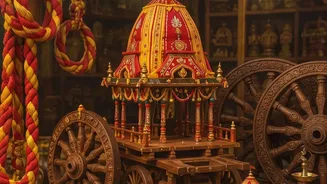
Located conveniently on the highway between Bhubaneswar and Puri, Pipili is a riot of colour. This town is globally famous for its appliqué work, known locally as 'Chandua'. This centuries-old craft involves stitching brightly coloured fabric pieces onto a base cloth to create elaborate, layered designs. Historically, this art was intrinsically linked to the Jagannath Temple, used to create the massive, decorated canopies and umbrellas for the annual Rath Yatra. Today, the main street of Pipili is lined with workshops and stores selling an incredible array of products. You will find everything from large decorative umbrellas and lampshades to handbags, wall hangings, and cushion covers, all showcasing the vibrant floral, animal, and geometric patterns of the craft. Visiting Pipili offers a chance to see artisans at work and appreciate the precision that goes into each piece.
Sadeibareni: The Ancient Magic of Dhokra
For a journey back in time, visit the village of Sadeibareni in the Dhenkanal district. Here, artisans practice Dhokra, a 4,000-year-old 'lost-wax' metal casting technique. This mesmerizing process involves creating a clay core, covering it with beeswax threads to form a detailed design, and then coating it in more clay to create a mould. Molten brass alloy is poured in, melting the wax and taking its place. Each piece is unique, as the mould must be broken to reveal the final creation. The artisans of the Situla community live in houses that double as workshops, and a walk through the village allows you to see different stages of the process. You can find beautiful figurines, tribal jewellery, lamp stands, and other decorative items that embody a rustic, timeless charm. Visiting gives you a firsthand look at a craft that connects modern Odisha to its ancient roots, stretching back to the Indus Valley Civilization.
Cuttack: The Delicate Art of Silver Filigree
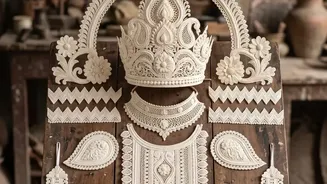
In the bustling lanes of Cuttack, Odisha's 'Silver City', you'll find the delicate and highly skilled art of Tarakasi, or silver filigree. This 500-year-old craft involves drawing pure silver into fine threads and wires, which are then expertly twisted and soldered into intricate, lace-like designs. The workshops are concentrated in areas like Nayasarak and Choudhury Bazaar, where generations of artisans continue this painstaking work. Tarakasi is used to create stunning jewellery, including pieces worn by Odissi dancers, as well as decorative items and replicas of famous monuments. The beauty of this craft is on full display during Durga Puja, when massive backdrops for the idols are created entirely from silver filigree. A visit to a Tarakasi workshop offers a fascinating glimpse into the patience and precision required to turn silver into art.
Nuapatna & Maniabandha: The Rhythm of the Loom
The neighbouring villages of Nuapatna and Maniabandha in the Cuttack district are the heartland of Odisha's famous Ikat, or 'Bandha', handloom tradition. This craft involves a meticulous tie-dye process where threads are dyed before being woven, creating soft, feathered patterns on the finished fabric. These villages have a rich history, with weavers creating ritualistic textiles like the 'Khandua' silk sarees offered to Lord Jagannath at the Puri temple. Many weavers in Maniabandha belong to a Buddhist community, and their craft is infused with spiritual motifs like lotuses and wheels, reflecting a unique cultural syncretism. Walking through these villages, you can hear the rhythmic clatter of handlooms from almost every house. It's a chance to witness how these prized textiles are made, from the dyeing of the yarns to the final weaving, and to buy beautiful cotton and silk sarees directly from the artisans who pour their heritage into every thread.