




Why Sitting Causes Discomfort
Our bodies are designed for movement. When we sit for extended periods, our hips are held in a flexed position. This can cause the muscles at the front of your hips, known as the hip flexors, to become shortened and tight. Meanwhile, the gluteal muscles in your buttocks,
which are meant to support your pelvis and stabilize your hips, become inactive and can weaken over time. This muscular imbalance—tight flexors and weak glutes—is a primary cause of stiffness, reduced mobility, and even lower back pain. The lack of movement also reduces blood flow, contributing to that feeling of stiffness and achiness when you finally stand up. Addressing this imbalance through targeted movement is key to finding lasting relief.
1. Gentle Kneeling Lunge
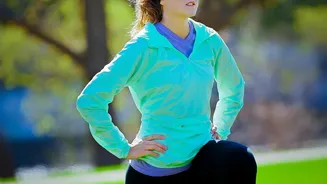
This is one of the most effective stretches for tight hip flexors. To perform it safely, start by kneeling on a soft surface, like a mat or carpet. Bring your left foot forward, creating a 90-degree angle at your left knee, with your foot flat on the floor directly under your knee. Your right knee should remain on the floor. Place your hands on your left thigh for balance. Before you lunge, gently tuck your pelvis, as if pulling your tailbone slightly under. You may already feel a stretch in the front of your right hip. From there, slowly shift your weight forward into your front foot until you feel a comfortable stretch. Avoid arching your lower back. Hold for 20-30 seconds, breathing deeply, and then switch sides.
2. Glute Bridge
The glute bridge helps to counteract the effects of sitting by activating and strengthening the gluteal muscles. Lie on your back with your knees bent, feet flat on the floor about hip-width apart, and close enough that you can touch your heels with your fingertips. Rest your arms by your sides. Squeeze your glutes and lift your hips off the floor until your body forms a straight line from your shoulders to your knees. It's important to push through your heels to engage the correct muscles. Hold at the top for a few seconds, focusing on the contraction in your glutes, before slowly lowering your hips back to the floor. Repeat this movement 10-15 times for a set.
3. Seated 90/90 Hip Rotation
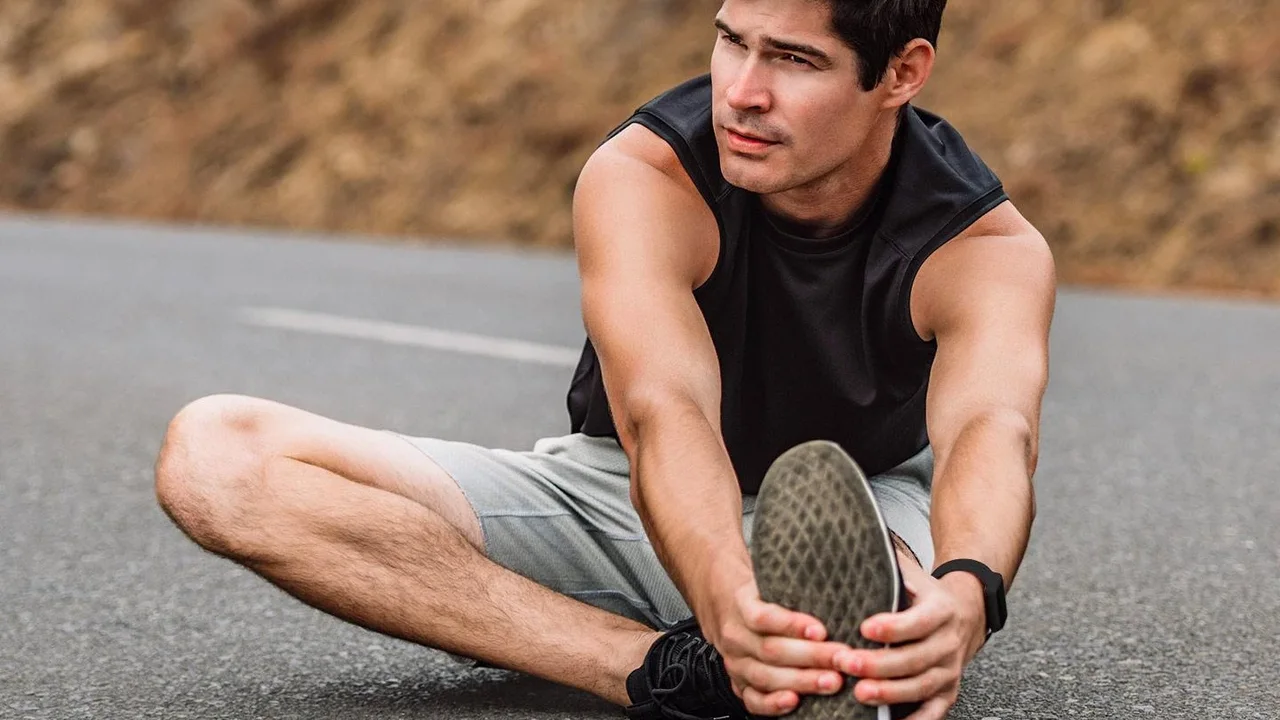
This movement is excellent for improving both internal and external rotation of the hip. Sit on the floor and position your legs in a '90/90' configuration: your front leg bent at a 90-degree angle in front of you, with your shin parallel to your body, and your back leg also bent at 90 degrees out to the side. Try to keep both sit bones on the floor as you sit up tall. From here, you can gently lean forward over your front shin to deepen the stretch in your outer hip. To add a mobility component, you can slowly rotate your torso and legs to the opposite side, transitioning into a 90/90 position on the other side. Move slowly and with control, focusing on the movement originating from the hips.
4. All-Fours Adductor Rock-Back
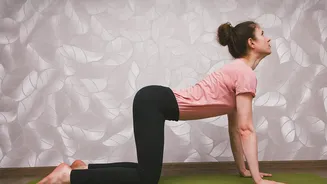
This exercise targets the inner thigh muscles, or adductors, which can also become tight. Start on your hands and knees in a tabletop position, with your hands under your shoulders and knees under your hips. Extend your right leg straight out to the side, keeping your foot flat on the floor. Keeping your back flat, slowly rock your hips backward toward your left heel until you feel a gentle stretch along your right inner thigh. Hold for a moment, then rock forward to the starting position. This dynamic movement is often more effective than a static hold. Repeat 8-10 times before switching to the other leg.