


Catch the Fading Perseid Meteors
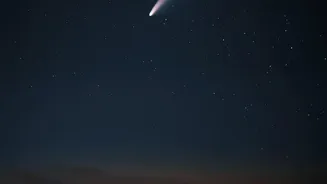
The famous Perseid meteor shower, which peaked around August 12-13, is still active until about August 24. While the number of shooting stars per hour has decreased, you still have a chance to witness these swift, bright meteors, often leaving persistent
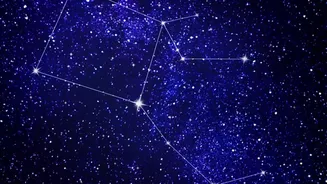
trails. For the best view, find a dark location away from city lights after midnight. Let your eyes adapt to the darkness for about 20-30 minutes and look towards the northeastern sky, near the constellation Perseus. The biggest challenge for most of India is the monsoon, but a clear night after a spell of rain can offer exceptionally transparent skies, perfect for catching the last of these celestial fireworks.
Saturn Rises in the Evening
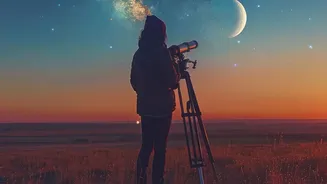
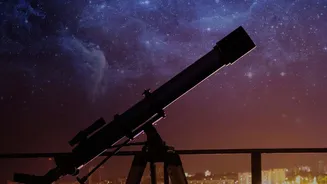
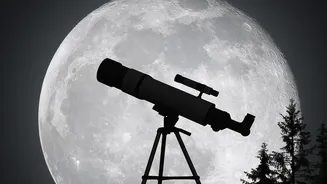
The magnificent ringed planet, Saturn, is putting on a show. While its official "opposition"—when it's at its biggest and brightest for the year—is on October 4, late August is an excellent time to observe it. The planet is now rising in the east around sunset and is visible for most of the night, shining with a steady, yellowish glow. You won't see its rings with the naked eye, but even a basic pair of binoculars will stabilise its light, and a small telescope will reveal the iconic ring system. Look for it in the constellation Aquarius. This period is the prelude to its prime viewing season, making it a rewarding target for early evening stargazing sessions.
A Parade of Planets Before Dawn
If you're an early riser, a rare planetary alignment continues to grace the pre-dawn sky until around August 18. A lineup of six planets has been visible, but for naked-eye observers, Mars and Saturn are the easiest to spot. Look towards the sky about an hour before sunrise. You will see an arc of planets stretching from the east to the south. Mars will be noticeable for its distinct reddish hue high in the eastern sky, while Saturn will be further south. Jupiter and Mercury are also part of this parade but will be very low on the eastern horizon, making them a challenge to spot against the brightening dawn.
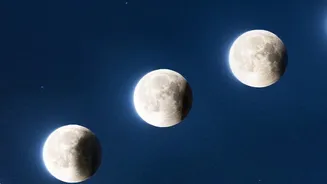
A Partial Lunar Eclipse on August 28
Mark your calendars for the night of August 28, when a partial lunar eclipse will be visible across India. This event occurs when a portion of the full Moon passes through the Earth's darkest shadow, the umbra. As this happens, you will see a noticeable dark bite being taken out of the lunar disk. Unlike a solar eclipse, a lunar eclipse is perfectly safe to view with the naked eye, binoculars, or a telescope. It’s a slow-moving, serene event that offers a great opportunity for photography. Check local timings for when the eclipse begins and reaches its maximum phase in your city, and hope for clear skies to witness this beautiful celestial alignment.
Gaze at the Milky Way’s Core
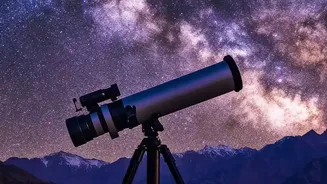
August is one of the best months to view the heart of our own galaxy, the Milky Way. On a clear, moonless night, far from urban light pollution, the galactic core appears as a dense, glowing cloud of stars and dust lanes in the southern sky, within the constellation Sagittarius. The monsoon can be a hindrance, but the breaks between rain systems can bring pristine, washed-clean skies. To find it, look for the 'teapot' shape of Sagittarius; the Milky Way's core will look like steam rising from its spout. For those in rain-shadow regions like Ladakh or the Rann of Kutch, the view is guaranteed to be breathtaking, but even a short drive away from city lights can reveal this awe-inspiring sight.