
The First Glimmer: Observation
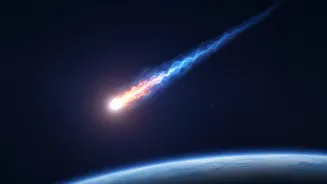
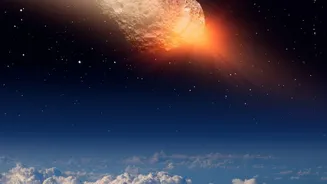
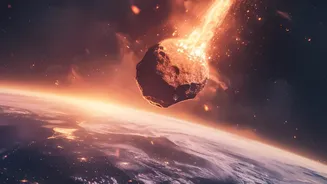
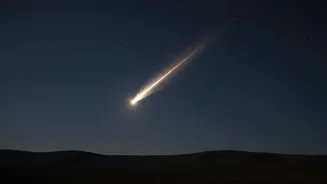
The process begins the instant a meteoroid hits Earth's atmosphere. Networks of cameras, both professional and amateur, are constantly watching the sky. Professional surveys like the Southwestern Europe Meteor Network (SWEMN) or NASA's All-sky Fireball
Network use automated stations to record these events. These systems, often equipped with high-resolution video, capture the bright trail left by the burning space rock. Even casual eyewitness accounts, dashcam footage, and smartphone videos can provide crucial data points, especially for unusually bright fireballs. Some systems even use radio waves; a transmitter sends a signal into space, and when a meteor creates an ionized trail, that signal is reflected back to receiving stations on the ground, allowing for observation even during the day or through cloud cover.
A Cosmic GPS: Triangulation
One observation isn't enough. To determine a meteor's trajectory through the atmosphere, scientists need to see it from multiple angles. This is where triangulation comes in. By using data from two or more cameras at different, known locations, astronomers can plot the meteor's path in three dimensions. Imagine two people standing miles apart, both pointing at the same airplane. By comparing their lines of sight, you could calculate the plane's exact position and altitude. The principle is the same for meteors. Using reference points like background stars or even earthly landmarks visible in the footage, scientists can precisely map the meteor's altitude, direction, and the angle at which it entered the atmosphere.
Gauging the Speed
Knowing the path is only half the battle; speed is the other critical variable. As the meteoroid plummets through the atmosphere, it decelerates due to air resistance. The cameras and sensors record this change in speed second by second. By analyzing the video frames, scientists calculate the meteor's velocity at various points along its visible path. This allows them to extrapolate its initial speed right at the moment it first encountered the upper atmosphere, before air friction began to slow it down. This initial atmospheric entry velocity is a key piece of information needed to begin the journey back in time.
Rewinding the Clock: Orbital Mechanics
This is where the real magic happens. With the precise trajectory and initial velocity determined, astronomers can effectively hit 'rewind'. They use powerful computer software and the fundamental laws of celestial mechanics, first described by Johannes Kepler and Isaac Newton centuries ago. The software performs a 'backward numerical integration'. It starts with the meteoroid's state (position and velocity) as it hit the atmosphere and calculates, step by step, where it must have been a minute, an hour, a day, and years before. The calculation must account for the gravitational pulls of Earth, the Moon, the Sun, and even other planets like Jupiter, which all would have influenced the object's path.
Finding a Cosmic Address
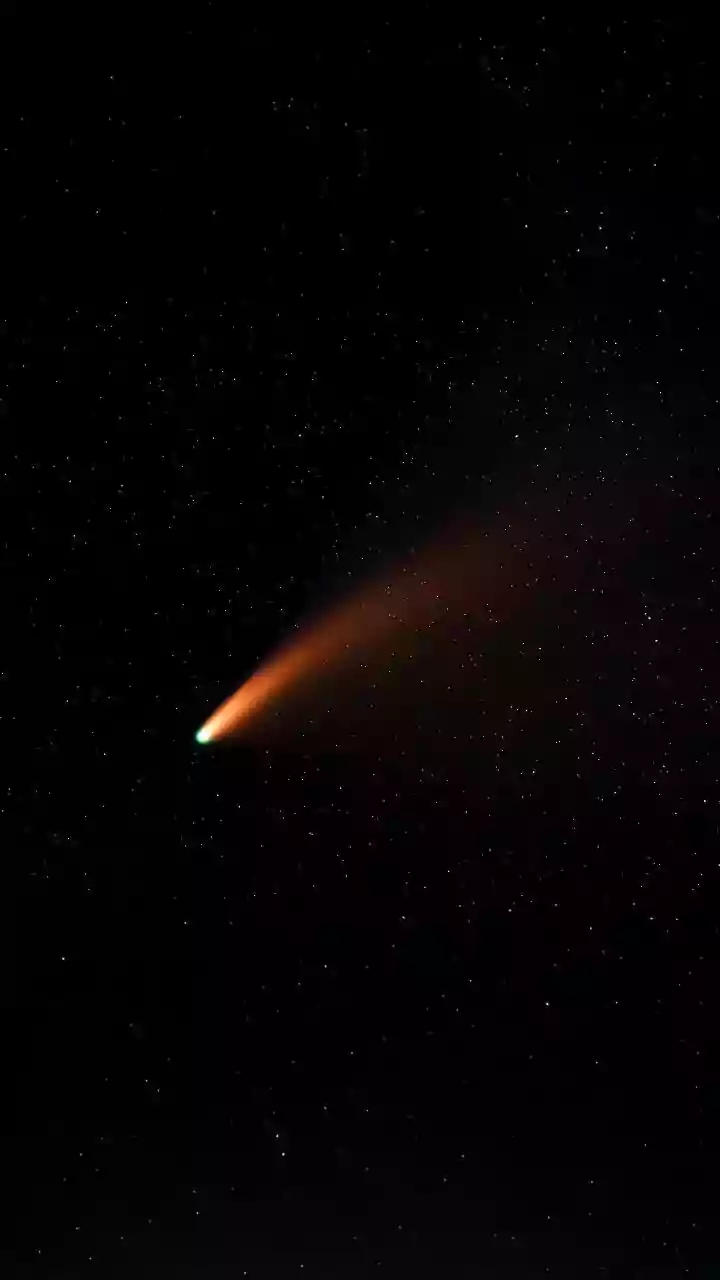
After running these complex simulations, the result is a heliocentric orbit—the elliptical path the meteoroid followed around the Sun before its fateful encounter with Earth. This orbit is like a cosmic address. Astronomers can then compare this calculated orbit to the known orbits of thousands of asteroids and comets catalogued in databases. Often, they find a match. This allows them to identify the meteoroid's 'parent body'. For example, the Perseid meteor shower, which graces our skies every August, consists of debris left behind by the comet Swift-Tuttle. By tracing a Perseid meteor's orbit backward, it leads directly to the path of that comet, solving the mystery of its origin.