




An Introduction to a Tropical Gem
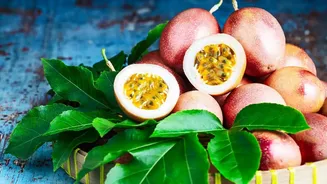
Originally from South America, the passion fruit is a type of berry that grows on a climbing vine. It comes in two main varieties: a smaller, purple version and a larger, yellow one. Inside its firm rind, you’ll find a juicy, aromatic pulp filled with
edible black seeds. The flavour is a unique blend of sweet and tart, making it a refreshing addition to any diet. In India, it is cultivated in various regions, including Andhra Pradesh and the Nilgiris, and is gaining popularity in home gardens and markets in cities like Bengaluru, Coimbatore, and Nashik.
A Profile Packed with Nutrients
For a small fruit, passion fruit offers an impressive nutritional profile. A single fruit is low in calories but dense in nutrients. It's an excellent source of dietary fibre, which is crucial for good digestion. The fruit is particularly celebrated for its high content of Vitamin C, a powerful antioxidant that supports the immune system, and Vitamin A, which is essential for healthy vision and skin. It also provides important minerals like potassium, which aids heart health, along with magnesium, iron, and calcium.
Boost Your Immune Defences
The high concentration of Vitamin C in passion fruit is one of its standout benefits. Vitamin C is vital for a robust immune system as it helps the body produce white blood cells that fight off infections. It also enhances the body's ability to absorb iron from plant-based foods, which is crucial for energy and preventing anaemia. Regular consumption can help your body defend against common illnesses and reduce cellular damage caused by free radicals.
Promote Healthy Digestion and Gut Health
Passion fruit is an excellent source of dietary fibre, particularly in its seeds. Just one small fruit provides a significant amount of the daily recommended intake. Fibre is essential for keeping the digestive system regular and preventing constipation. It also acts as a prebiotic, feeding the beneficial bacteria in your gut. A healthy gut microbiome is linked to improved overall health, from better digestion to a stronger immune system. The fibre also helps you feel full longer, which can aid in weight management.
Support for Heart and Skin Health
The nutrients in passion fruit contribute to a healthy heart and glowing skin. The fruit is rich in potassium and low in sodium, a combination that helps manage blood pressure. The fibre content can also help lower cholesterol levels. For your skin, the benefits come from Vitamin C and Vitamin A. Vitamin C is necessary for producing collagen, the protein that keeps skin firm and elastic, while Vitamin A helps protect skin cells from damage and premature aging.
How to Select and Enjoy Passion Fruit
Choosing a ripe passion fruit is simple: look for one that is plump and slightly wrinkled, which indicates it's at its sweetest. Smooth-skinned fruits are less ripe but can be left at room temperature for a few days to ripen. To eat it, wash the outside, cut it in half with a sharp knife, and scoop out the pulp and seeds with a spoon. You can eat it straight from the rind, seeds and all. The crunchy seeds are entirely edible. For a smoother texture, you can strain the pulp through a sieve to make juice. Passion fruit pulp is a versatile ingredient that can be added to yogurt, smoothies, desserts, or even used as a flavourful topping for fish or chicken.