


Why Venus Captivates Stargazers
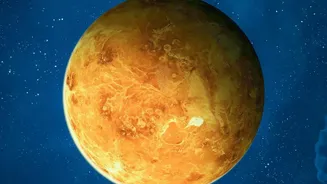
Venus is the brightest object in our night sky after the Moon. Its brilliance isn't its own, but rather the result of sunlight reflecting off its thick, dense layer of clouds. This cloud cover makes it shine with a steady, unwavering white light, distinguishing
it from the twinkling stars. Often called Earth's twin because of its similar size and mass, Venus is a world of extreme conditions, with surface temperatures hot enough to melt lead. For skywatchers, its appeal lies in its stunning brightness and the visible phases it goes through, similar to our Moon, which can be seen with a basic telescope.
When and Where to Look in August 2026
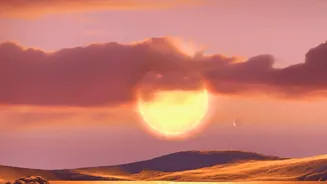
Throughout August 2026, Venus will be visible in the western sky shortly after sunset. The prime viewing window is typically 45 to 90 minutes after the sun goes down, as the sky darkens but before Venus itself sets. Around the middle of the month, specifically August 14-15, Venus reaches its 'greatest eastern elongation'. This is a technical term meaning it will be at its farthest apparent distance from the Sun, making it easier to spot against the twilight glow. On the evening of August 15, look for a thin crescent Moon appearing near the brilliant planet, creating a beautiful pairing in the west.
Special Celestial Encounters
August 2026 is a busy month in the sky. While Venus is the main evening attraction, it won't be alone. Towards the end of the month, from August 21 to 24, Venus will appear close to Spica, the brightest star in the constellation Virgo. You can watch night after night as the planet moves closer to this bright blue-white star, with their closest approach occurring in early September. This offers a great opportunity to witness the steady movement of a planet against the backdrop of distant stars.
A Simple Guide to Spotting Venus
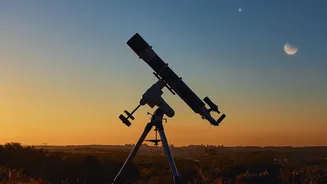
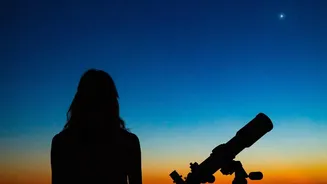
You don't need any special equipment to see Venus; its sheer brightness makes it unmissable. Find a location with a clear, unobstructed view of the western horizon, away from the glare of tall buildings and bright city lights if possible. About 30-45 minutes after sunset, scan the sky in the direction where the Sun disappeared. Venus will be the first and brightest point of light to appear. Unlike an airplane, it will appear stationary. For an enhanced view, a pair of binoculars can help cut through the twilight and make its glow even more impressive. A small telescope will reveal that Venus has a shape, appearing as a tiny, half-lit disc around its mid-August elongation.
Navigating the Monsoon Skies
For many in India, August means monsoon season, and cloudy skies can be a stargazer's biggest challenge. But don't be discouraged. The key is to be flexible and patient. Keep an eye on local weather forecasts for predictions of clear spells. Often, there are breaks in the cloud cover, especially in the hours just after a rain shower has passed. Venus is so bright that it can sometimes be seen through thin or hazy clouds when stars cannot. Be ready to take advantage of any clear window you get. Using a stargazing app on your smartphone can also help you pinpoint its exact location, so you know precisely where to look if a gap in the clouds appears.