



More Than Just a Walk with Poles
Originating in Finland as a summer training method for cross-country skiers, Nordic walking has grown into a global fitness activity. It involves using specially designed poles not just for support, but to actively propel yourself forward. This transforms
a simple walk into a comprehensive workout that engages up to 90% of your body's muscles, compared to about 50% with regular walking. The focus has shifted from a niche sport to an accessible form of everyday exercise, but its effectiveness is entirely dependent on mastering the specific movements that define it.
Why Technique Is the Real Workout
Simply carrying poles while you walk won't deliver the promised benefits. The magic of Nordic walking lies in the technique, which harnesses the power of the upper body. Without the correct form—the specific way you plant the pole, push off, and swing your arms—you're missing out on the core advantages. Proper technique is what activates the muscles in your arms, shoulders, chest, and back, turning your walk into a low-impact, high-reward session. It ensures you burn more calories, improve your posture, and strengthen your entire body, not just your legs.
Mastering the Fundamental Movement
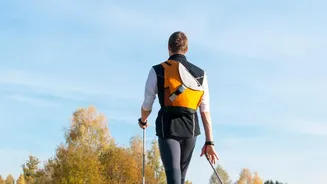
The core of Nordic walking technique is a coordinated, rhythmic movement that feels natural once you get the hang of it. It’s based on your normal walking pattern: as your right leg steps forward, your left arm swings forward with the pole. The key is to plant the pole at an angle behind you, roughly between your feet, and push back. Your arm should be relatively straight, extending from the shoulder, not the elbow. As your arm swings back past your hip, you open your hand to release the grip, letting the strap keep the pole attached. This push-and-release motion is what provides the propulsion and engages the upper body muscles effectively.
Avoiding Common Beginner Mistakes
Many newcomers make easily correctable errors that limit benefits and can even cause strain. A frequent mistake is planting the poles too far in front, like a hiking stick, which slows you down and can strain joints. Another is keeping the elbows bent, which tires out the arms quickly instead of engaging the larger, more powerful muscles of the back and shoulders. It's also crucial to maintain a natural, opposite arm-leg coordination; if you find yourself moving the arm and leg on the same side, simply drop the poles, let them drag by the straps, and walk normally for a few steps to reset your rhythm. Finally, using poles that are too long or too short can lead to poor posture and reduced effectiveness.
The Full-Body Benefits of Getting It Right
When performed correctly, Nordic walking is a powerhouse of health benefits. Research shows it can burn up to 67% more calories than regular walking, without necessarily feeling much harder. It improves cardiovascular fitness, increases upper-body strength and endurance, and enhances flexibility. The poles also provide extra stability, making it a great option for older adults or those with balance concerns. By distributing the effort across the entire body, it reduces the impact on joints, particularly the knees and hips, making it a sustainable and joint-friendly exercise for the long term.