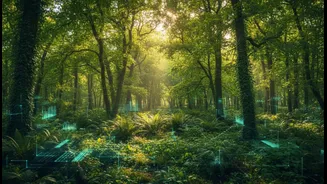




Decoding the Digital Forests
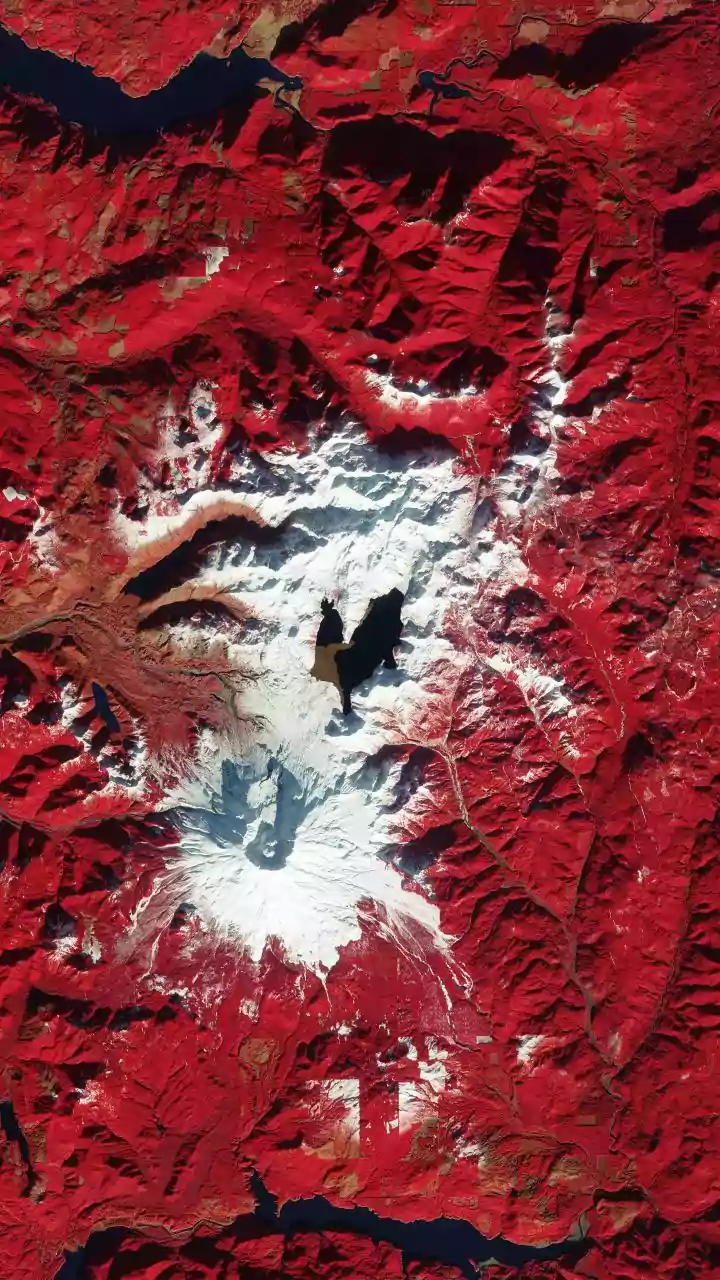
Scientists are no longer just observing present-day climate impacts; they are predicting the future of India's green cover with remarkable detail. Using powerful tools like satellite remote sensing, climate models such as CMIP6, and dynamic vegetation
models, researchers can project how our forests and fields will change by the end of the century. Institutions like the Indian Institute of Tropical Meteorology (IITM) and the Indian Institute of Science (IISc) are at the forefront, analyzing vast datasets to understand how factors like rising CO2 levels, temperature changes, and shifting rainfall patterns will reshape ecosystems. These forecasts measure indicators like Gross Primary Productivity (GPP), which is the amount of carbon plants absorb, to predict the health and spread of vegetation. This provides a dynamic blueprint of India's future ecological landscape.
A Greener, More Complicated India
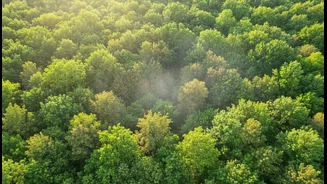
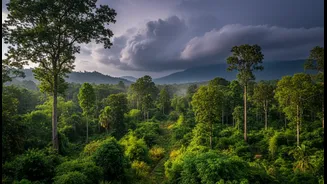
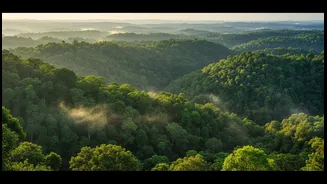
The forecasts offer a nuanced, and sometimes counterintuitive, picture. Many studies project that India, as a whole, could become greener. Increased carbon dioxide in the atmosphere, a phenomenon known as 'CO2 fertilization', alongside projected increases in rainfall in some areas, may boost plant growth. Some models predict India’s vegetation carbon storage could nearly double by 2100 in a high-emissions scenario. However, this 'greening' is not a simple good news story. This growth is not uniform. The most significant gains are expected in the Western Ghats, Northeast India, and even arid regions of Rajasthan and Gujarat. Conversely, rising temperatures and extreme weather events like heatwaves and droughts can severely stress plants, reduce biodiversity, and increase the risk of forest fires, potentially offsetting some of the gains.
Lessons for the Climate-Aware Citizen
For the general reader interested in climate change, these forecasts are a powerful tool for understanding the local impacts of a global crisis. It moves the conversation beyond abstract concepts like global temperature rise to tangible shifts in one's own backyard. These studies highlight that climate change will manifest differently across India. While some regions may see shifts from deciduous to evergreen forests, others may face degradation and loss of specific forest types. Understanding this complexity helps citizens appreciate the fragility of local ecosystems and the urgent need for region-specific conservation efforts. It shows that while India's forests might become a larger carbon sink, this benefit comes with serious risks to biodiversity and ecosystem stability that cannot be ignored.
A Living Textbook for India's Students
For students of geography, environmental science, and data science, these vegetation forecasts are a living, evolving textbook. Platforms that make district-level climate projections accessible are already changing climate education in India. By engaging with this data, students can move from rote learning to practical application. They can use Geographic Information Systems (GIS) to visualize how their own districts might change, fostering critical thinking and data literacy. These forecasts provide real-world case studies on ecosystem response, climate modelling, and the intricate balance of environmental factors. This hands-on engagement empowers students to become agents of change, grounding their understanding of climate resilience in local reality and preparing them for green jobs.
A Blueprint for Future-Proof Cities
Urban planners face the monumental task of making cities liveable and resilient in a warmer world. Vegetation forecasts are a critical, often underutilised, tool in their arsenal. As urbanisation reduces green cover, leading to heat island effects and pollution, these models can guide strategic interventions. For example, planners can use GeoAI and other tools to identify suitable areas for green belts and urban forests based on future climate suitability. Instead of planting trees arbitrarily, they can select native species that are predicted to thrive in the altered temperature and rainfall conditions of the future. Understanding which areas will become greener and which will become stressed allows for proactive land use planning, ensuring that cities grow in harmony with, rather than against, their changing natural environments.