

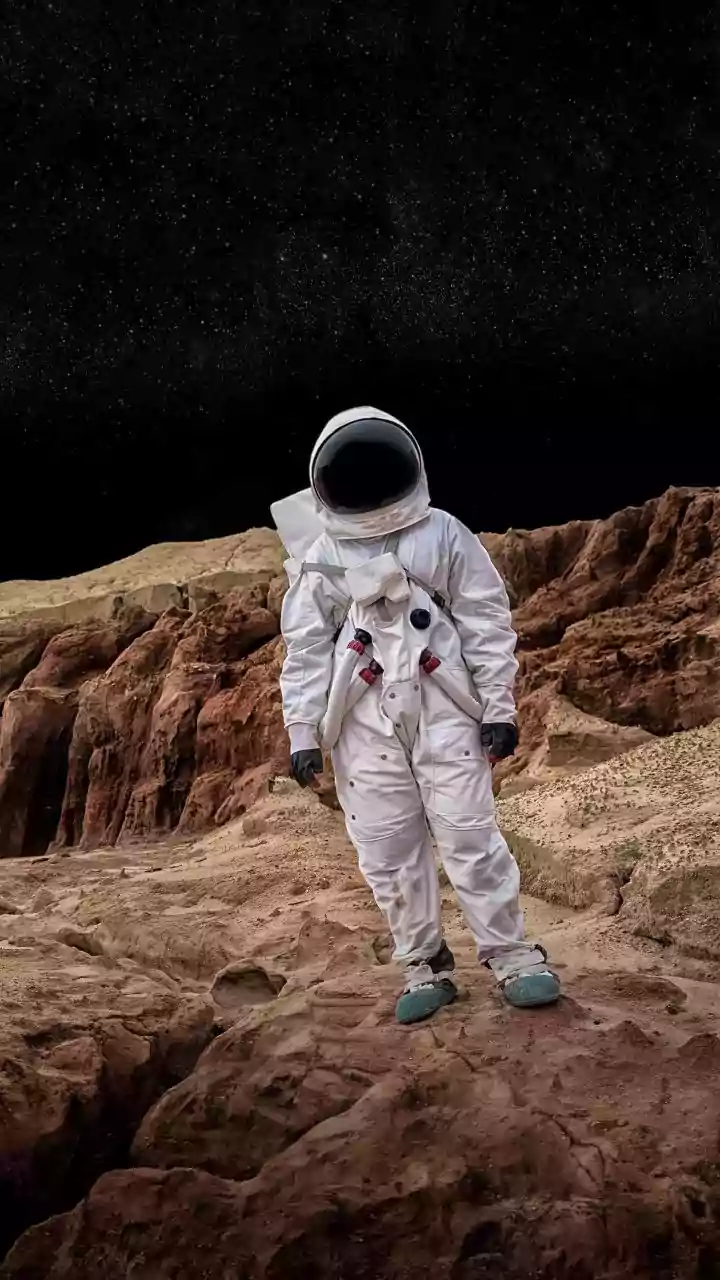




A New Era of Moonwalking
The iconic, yet clumsy, bunny hops of the Apollo astronauts are a relic of the past. NASA's Artemis program aims to establish a sustained human presence on the Moon, starting with the lunar south pole—a region vastly different from the equatorial sites
visited over 50 years ago. This area, with its long, dark shadows and cratered landscape, holds immense scientific promise but poses significant mobility challenges. To navigate this terrain, astronauts need more than a life support system; they need a suit that moves with them. This is where the next-generation spacesuit, known as the Axiom Extravehicular Mobility Unit or AxEMU, comes in.
The Challenge of a Lunar worksite
Walking on the Moon isn't as simple as it looks on old broadcasts. While lunar gravity is only one-sixth of Earth's, a pressurized suit creates significant stiffness, making every movement a workout. Now, imagine trying to bend over to pick up a rock, kneel to inspect a geological feature, or sidestep a crater's edge. The early Apollo suits severely restricted this kind of movement. The Artemis missions, however, are focused on complex scientific fieldwork. Astronauts will need to collect diverse samples, deploy instruments, and navigate unpredictable ground, all while potentially spending up to eight hours on a single moonwalk. This demanding work requires a suit that is less of a rigid shell and more of a flexible, high-performance tool.
Inside the AxEMU Enhancements
Developed in partnership with Axiom Space, the AxEMU is a significant leap forward from its predecessors. The key enhancement is a dramatic increase in flexibility and range of motion. Unlike the stiff Apollo suits, the AxEMU is designed with advanced joints that allow for greater mobility, enabling astronauts to bend, squat, and even perform lateral lunges. This is crucial for tasks like collecting geology samples without falling over. The suit builds upon NASA’s own research and is designed to fit a much wider range of body types, from the 1st to the 99th percentile of both male and female astronauts, a critical step in making space exploration more inclusive. Every component, from the pressure garment to the boots designed to withstand extreme cold, has been optimized for the harsh lunar south pole.
More Than Just a Walk in the Park
The enhanced flexibility of the AxEMU directly translates into better science. When an astronaut can easily kneel, they can get a closer look at the lunar regolith. When they can twist and pivot, they can operate tools more effectively. This agility means more ground can be covered and more complex tasks can be performed during each extravehicular activity (EVA). The suit also incorporates other modern features, including a portable life support system that can last for at least eight hours, a high-definition camera in the helmet for streaming video back to scientists on Earth, and improved protection against the abrasive lunar dust. These features, combined with the suit's modular design, make it a versatile platform for the next generation of lunar exploration.
The Road to Artemis and Beyond
The AxEMU is currently undergoing extensive testing to ensure it is ready for the rigors of a lunar mission. Teams from NASA and Axiom Space are running simulations in underwater environments, like the Neutral Buoyancy Laboratory, and in desert locations that mimic lunar terrain to refine procedures and evaluate the suit's performance. While originally slated for Artemis III, current plans target the Artemis IV mission in 2028 for the suit's lunar surface debut. This advanced spacesuit is not just a piece of clothing; it is a personalized spacecraft that represents a critical step in enabling long-term scientific and exploratory missions on the Moon and, eventually, Mars.