

Reading the Lunar Weather Report
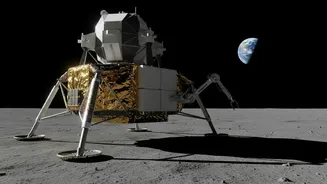
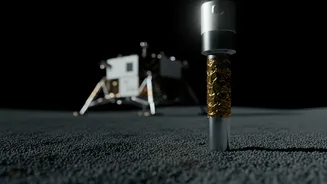
One of the first questions for any construction project is: what’s the weather like? On the Moon, this means understanding extreme temperatures. The ChaSTE (Chandra’s Surface Thermophysical Experiment) payload on the Vikram lander was designed to answer
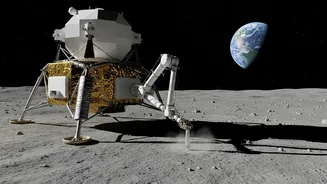
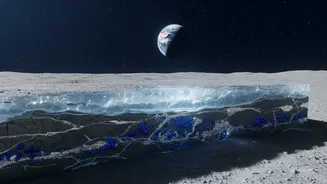
this. By drilling 10 centimetres into the lunar regolith (the Moon's soil), ChaSTE provided the first-ever in-situ measurements of the temperature profile near the south pole. The findings were startling: while the surface can be scorching, temperatures plummet dramatically just centimetres below. Data showed a potential 60-degree Celsius difference between the surface and a depth of 10 cm. This high thermal insulation means the lunar soil acts like a natural blanket, a crucial insight for designing habitats that can protect astronauts and equipment from the wild temperature swings between lunar day and night, which can range from 121°C to -133°C.
Checking for Shaky Ground
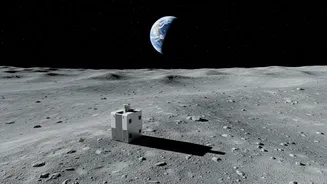
Just like on Earth, a stable foundation is non-negotiable. But is the Moon seismically active? The Instrument for Lunar Seismic Activity (ILSA) was sent to find out. This highly sensitive instrument, a first-of-its-kind MEMS technology-based device on the Moon, listened for ground vibrations. During its operational period, ILSA detected hundreds of vibrations, including those from the Pragyan rover's movements and, fascinatingly, a seemingly natural event on August 26, 2023, which is under investigation as a potential moonquake. Since the Apollo-era seismometers were switched off in 1977, this new data from a different lunar region is invaluable. Understanding the frequency and intensity of moonquakes is fundamental to selecting safe, stable sites for long-term stations and engineering structures that can withstand any lunar tremors.
Living Off the Lunar Land
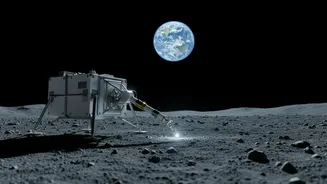
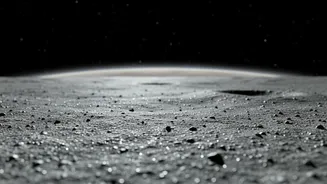
The single biggest hurdle to a permanent Moon base is cost, and most of that cost comes from launching materials from Earth. The solution is 'in-situ resource utilization' (ISRU), or using what’s already there. Payloads on the Pragyan rover, working in tandem with the lander's mission, provided key insights here. The Laser-Induced Breakdown Spectroscope (LIBS) and Alpha Particle X-ray Spectrometer (APXS) analysed the elemental composition of the lunar soil. They confirmed the presence of elements like aluminium, silicon, calcium, and iron, all potential construction materials. This data is the first step towards understanding how to turn lunar regolith into building blocks for habitats, landing pads, and radiation shielding. Future technologies could even use regolith to create solar cells or extract trapped water ice and oxygen, providing breathable air and rocket propellant, dramatically reducing dependence on Earth.
Navigating the Invisible Environment
Beyond the ground itself, a lunar station must contend with an invisible challenge: the near-surface plasma environment. The Moon has virtually no atmosphere to protect it from the constant stream of charged particles from the sun, known as solar wind. The RAMBHA (Radio Anatomy of Moon Bound Hypersensitive ionosphere and Atmosphere) payload on the lander was designed to measure the density of this plasma and how it changes over time. This environment poses a risk to electronics, communication systems, and astronaut health due to radiation. By characterising this plasma environment, ISRO’s data helps engineers design more robust systems and develop better strategies to protect future lunar inhabitants, ensuring the long-term viability and safety of any settlement.