





The Genome's Great Puzzle
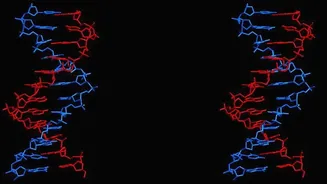
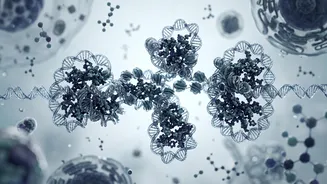
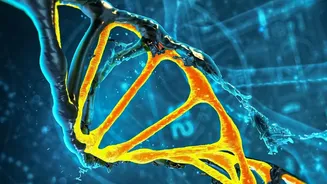
Every person has a unique genetic code, a book of life written in DNA. This code contains around three billion letters, and the average person has about 9,000 tiny variations, or 'mutations', that make their code different from others. Most of these are
harmless quirks of evolution. But a small fraction can disrupt how our bodies work, leading to diseases like cystic fibrosis, cancer, and rare genetic disorders. For decades, the monumental challenge for scientists has been sifting through these millions of 'variants of uncertain significance' to find the few that are truly pathogenic. It’s like trying to find a handful of typos in a library full of books, without knowing which words are misspelled or what language the books are even in.
Why Cell Type Matters
The latest breakthrough, embodied by AlphaGenome 2, adds a crucial layer of complexity and clarity: context. Every cell in your body, from a neuron in your brain to a skin cell on your arm, contains the same DNA blueprint. So why do they perform such wildly different jobs? Because different genes are switched on or off in different cells. This means a genetic variant that is perfectly benign in a liver cell might cause a catastrophic failure if it's in a heart muscle cell. Previous AI models could predict whether a variant was generally 'bad' or 'good', but they struggled to account for this cellular context. They gave a single verdict, when what doctors and researchers really needed was a tissue-specific weather forecast.
Enter AlphaGenome 2
AlphaGenome 2 is designed to solve this exact problem. It’s an evolution of DeepMind's earlier work, which included the revolutionary AlphaFold for predicting protein shapes. Trained on over 100 million individual cell profiles from 68 different tissues, this new AI model learns to predict how a specific DNA variant will impact gene activity in a specific type of cell. According to DeepMind, it can identify nearly twice as many gene-altering variants within specific cell types compared to previous models. Crucially, it can do this without needing to be completely retrained for new experiments. Researchers can feed it data from a new cell state, and the model can adapt its predictions, making it a powerful and flexible tool for discovery.
The AI Under the Hood
Like its predecessors, AlphaGenome 2 uses a form of artificial intelligence called deep learning. It was trained on massive datasets of genetic information from humans and other primates, learning the complex 'language' of healthy proteins and gene regulation. By studying which variants are common (and thus likely harmless) and which are rare (and potentially dangerous), it builds a sophisticated understanding of the genome. The key innovation is its ability to integrate this with single-cell data. It learns to recognize the molecular signatures of a 'neuron' or a 'T-cell' and then predicts how a given mutation will behave within that specific cellular environment, a major step beyond tissue-level averages.
A New Era for Precision Medicine
The implications for medicine are profound. By providing a much clearer picture of how variants function at the cellular level, AlphaGenome 2 could dramatically speed up the diagnosis of rare diseases that have stumped doctors for years. Instead of a long list of potential culprits, geneticists can focus on the variants most likely to be causing problems in the relevant tissue. This also opens new doors for personalized medicine and drug development. If a disease is caused by a gene misfiring only in the kidney, for example, researchers can focus on developing therapies that target that specific interaction, potentially leading to more effective treatments with fewer side effects.
The Road from Prediction to Cure
Despite the excitement, it's important to remember that AlphaGenome 2 is a research tool, not a doctor in a box. Its predictions are incredibly valuable for guiding scientific inquiry, but they are not a clinical diagnosis. Each high-risk variant it flags must still be validated through laboratory experiments and clinical studies. The path from an AI prediction to a proven cure is long and requires rigorous scientific and ethical oversight. However, by providing a high-resolution map of our genetic landscape, AlphaGenome 2 gives researchers a powerful new compass to navigate the cellular roots of disease, accelerating the journey toward understanding and, ultimately, healing.