



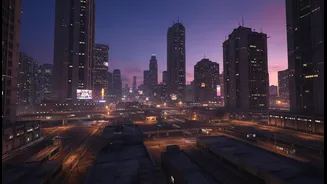




The City That Never Cools
This phenomenon is known as the Urban Heat Island (UHI) effect, where cities are significantly warmer than surrounding rural areas. During the day, the materials that build our cities—concrete, asphalt, and dark roofing—act like giant sponges, absorbing
and storing immense amounts of solar heat. While a village or a field cools down quickly after sunset, a dense urban core begins to slowly release all the energy it has soaked up, creating elevated temperatures that persist deep into the night. Studies show this can make urban neighbourhoods in India up to 4°C warmer at night.
Concrete and Asphalt: The Heat Batteries
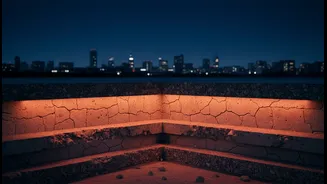
The primary culprits are the materials we use to build. Concrete and asphalt have a high thermal mass, meaning they can absorb and hold a lot of heat without their own temperature rising dramatically at first. Think of them as thermal batteries. Throughout the day, they charge up with the sun's energy. After sunset, the process reverses, and these surfaces start radiating that stored heat back into the air. This slow release is why a concrete wall can still feel warm to the touch hours after dark, constantly warming the air around it and inside buildings.
The Urban Canyon Effect
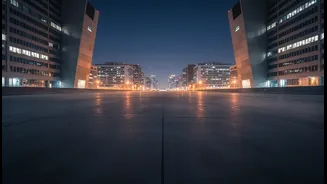
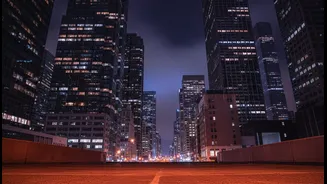
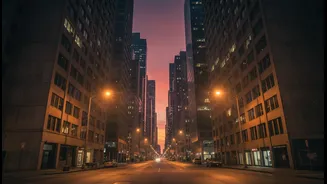
The layout of a city plays a crucial role. When tall buildings are packed closely together, they form what are called "urban canyons." This geometry is a perfect recipe for trapping heat. During the day, sunlight is absorbed by walls and streets. As the surfaces try to cool at night by radiating heat upwards, that energy doesn't escape into the clear sky. Instead, it gets trapped, bouncing between buildings. This drastically slows down the cooling process, preventing heat from escaping and keeping the lower levels of the city uncomfortably warm well past midnight.
Why Post-Midnight Temperatures Matter
The phrase "post-midnight temperature inflation" simply refers to this inability of a city to cool down during the crucial resting hours of the night. Nights are no longer providing relief from the day's heat, turning summers into a 24-hour challenge. This has significant consequences for public health in India, leading to poor sleep, which is linked to a host of health issues like hypertension and weakened immunity. It also places a greater strain on energy grids as air conditioners work overtime to combat heat that is being radiated from the very structure of the buildings they are trying to cool.
Pathways to a Cooler Future
Fortunately, cities are not doomed to bake forever. Smarter urban planning offers a range of solutions to mitigate the UHI effect. Strategies include increasing green spaces like parks and rooftop gardens, which provide cooling through shade and a process called evapotranspiration. Using 'cool' materials, such as light-coloured or reflective paints and paving, can significantly reduce heat absorption. Some Indian cities, like Ahmedabad and Hyderabad, have already begun implementing Heat Action Plans that incorporate some of these strategies, aiming to build more resilient and liveable urban environments for the future.