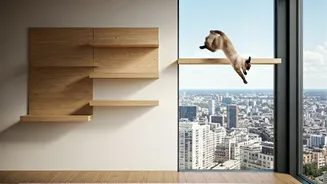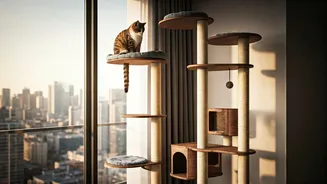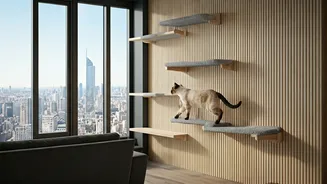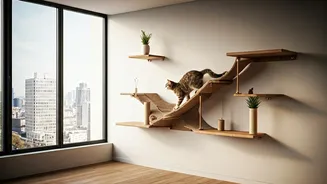






Why Cats Need to Climb
Before you start drilling, it’s important to understand why this project is more than just home decor. For cats, height is power, safety, and a biological necessity. In the wild, their ancestors climbed trees to survey their territory, spot prey, and escape
predators. This instinct is hardwired into your domestic house cat. Providing vertical space taps into this core need, offering a host of benefits. A cat with access to high perches feels more secure and confident. It gives them a safe retreat from household commotion, be it a noisy vacuum cleaner or an overly affectionate toddler. For homes with multiple cats, vertical territory can be a game-changer, reducing conflicts by providing more space and escape routes, which helps maintain peace.
Planning Your Cat Superhighway
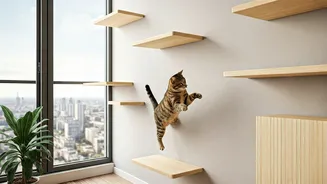
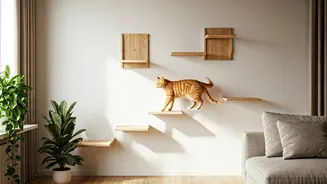
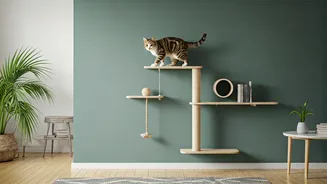
A great cat wall isn’t just a random collection of shelves; it’s a well-thought-out 'superhighway'. Start by observing your cat. Where do they already like to hang out? Is there a particular window they stare out of? These are prime locations. Your design should create a logical path with clear entry and exit points. A cat should never feel trapped on a high perch. Plan routes that allow them to get up and down easily, and ideally, move across a room without touching the floor. Consider the flow: a path could lead from a low shelf, up to a window perch, across a suspension bridge to a comfy hammock for napping. Sketch out your ideas on paper first. Measure your wall space and consider the size and agility of your cat. An older, less mobile cat will need shelves that are closer together than a young, athletic kitten.
The Essential Building Blocks
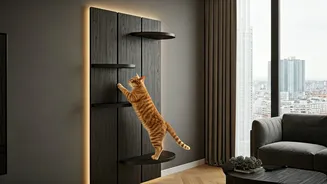
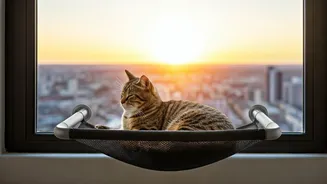
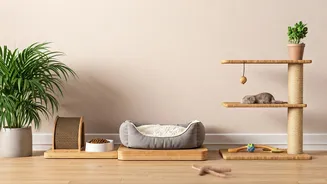
Your vertical world can be built from a variety of components, mixed and matched to suit your cat’s preferences and your home's aesthetic. * **Shelves and Perches:** These are the most basic elements. They act as steps and resting spots. Opt for wide, sturdy shelves covered in carpet or a non-slip material for secure footing. * **Hammocks:** These soft, suspended beds are perfect for cats who love a cozy, cocoon-like napping spot. * **Bridges:** Rope or wooden bridges connect different sections of your highway, adding an element of fun and adventure. They encourage balance and confidence. * **Vertical Scratching Posts:** Integrating a tall, wall-mounted scratching post is a brilliant way to encourage stretching and scratching in an appropriate place. Look for ones wrapped in durable sisal rope. * **Boxes and Cubbies:** Cats love enclosed spaces. A wall-mounted box gives them a hidden den to observe their kingdom from.
Safety First: Installation Is Everything
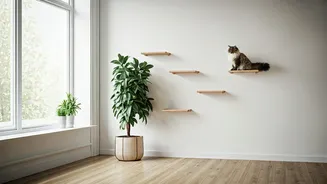
The success and safety of your cat wall depend entirely on proper installation. This is not a place to cut corners. Your primary goal is to anchor every single piece securely to the wall. Do not rely on simple drywall anchors; they will not hold a leaping cat. You must locate the wall studs (the wooden support beams inside your walls) using a stud finder. All heavy-duty screws should go directly into these studs. Use hardware that is rated to hold significantly more weight than your cat. Ensure the surfaces of your shelves are not slippery. You can add carpet remnants, sisal mats, or non-slip adhesive pads. Finally, check the spacing. The distance between shelves should be easy for your cat to jump, but not so close that it’s boring. A good rule of thumb is a vertical distance of 30-45 cm and a horizontal distance of 40-50 cm, but adjust this based on your cat’s age and ability.