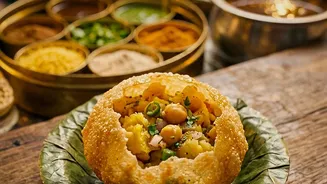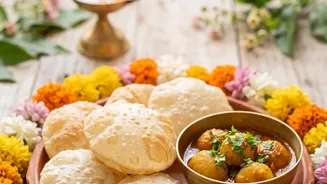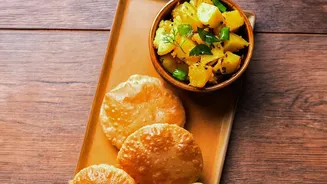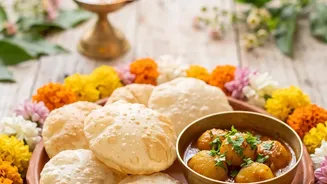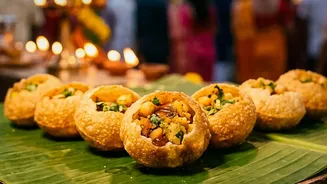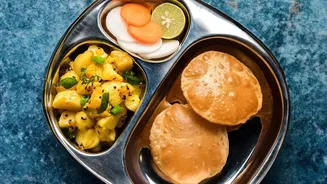

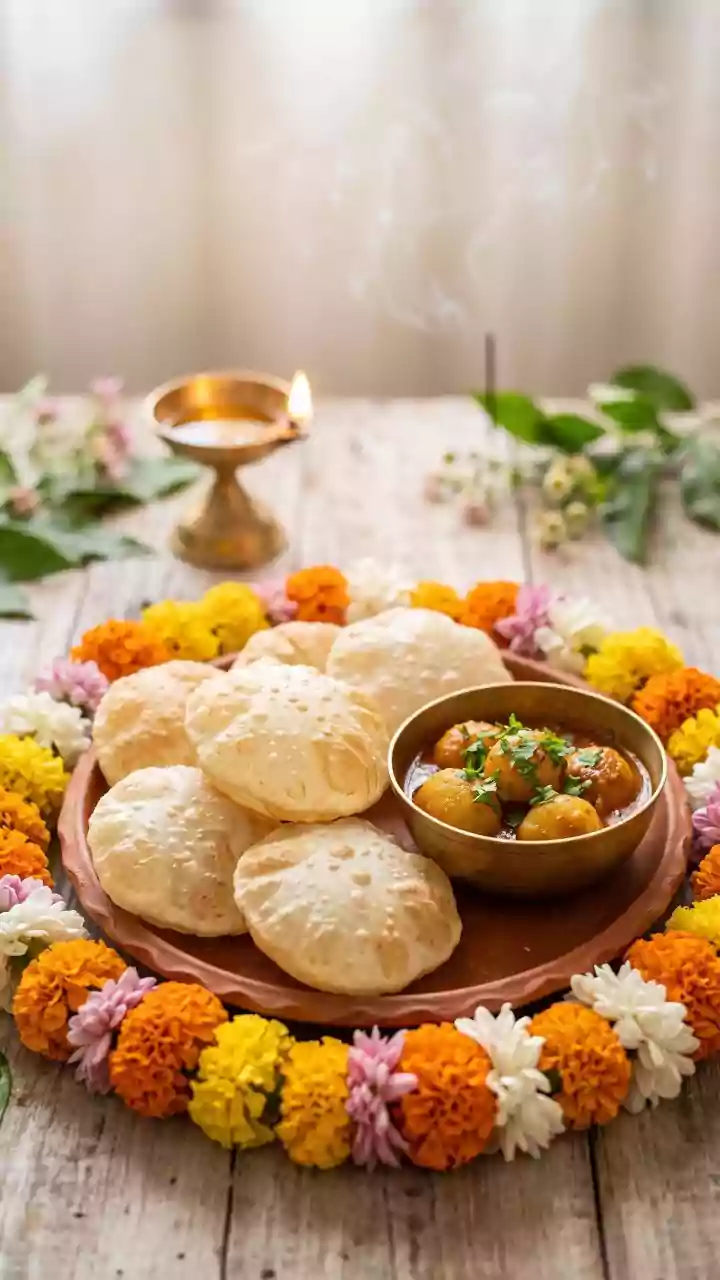

Few meals evoke the same sense of comfort and celebration as a plate of hot, fluffy puris served with a flavourful sabzi. This quintessential Indian breakfast is more than just food; it's a nationwide obsession woven into the fabric of daily life.
A Perfect Culinary Pairing
At its
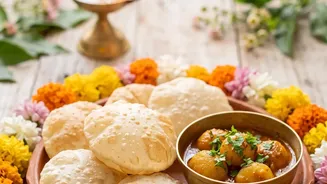
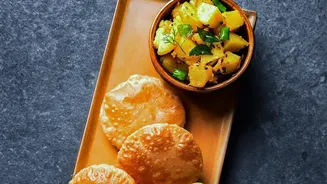
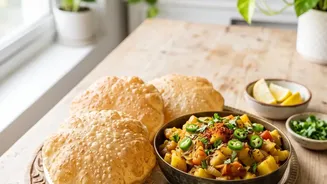
heart, puri sabzi is a study in delightful contrasts. The puri, an unleavened bread made from wheat flour, is rolled thin and deep-fried until it puffs up into a golden, airy sphere. It's simultaneously crispy and soft. The sabzi, its steadfast companion, is typically a spiced potato curry. This 'bhaji' or 'sabzi' can range from a semi-dry stir-fry to a more gravy-laden curry, seasoned with a symphony of spices like turmeric, cumin, mustard seeds, and fresh green chillies. The combination of the simple, satisfying puri with the aromatic, savoury sabzi creates a textural and flavourful experience that is both comforting and deeply satisfying. This pairing is a staple not just in homes but also at bustling street-side stalls and railway platforms across the country.
A Dish with Many Faces
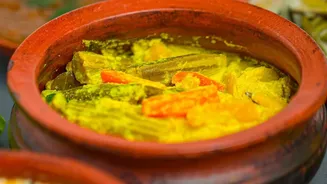
While the combination of fried bread and potato curry is the classic formula, puri sabzi is a culinary chameleon that adapts to local tastes and traditions across India. In North India, you'll often find it served with a spicy, tangy potato curry, sometimes without onion or garlic. Head east to West Bengal, and the puri transforms into 'luchi', a delicate version made with all-purpose flour (maida), often paired with a subtly spiced potato dish called 'aloo posto'. In Gujarat, the palate leans towards a hint of sweetness, and the puri itself might be a 'masala puri', with spices kneaded directly into the dough. The Maharashtrian 'batata bhaji' is milder, flavoured with curry leaves and ginger. In the south, pooris are often served with a potato masala similar to that used in dosas, or even with vegetable kurma or sambar.
Beyond the Aloo
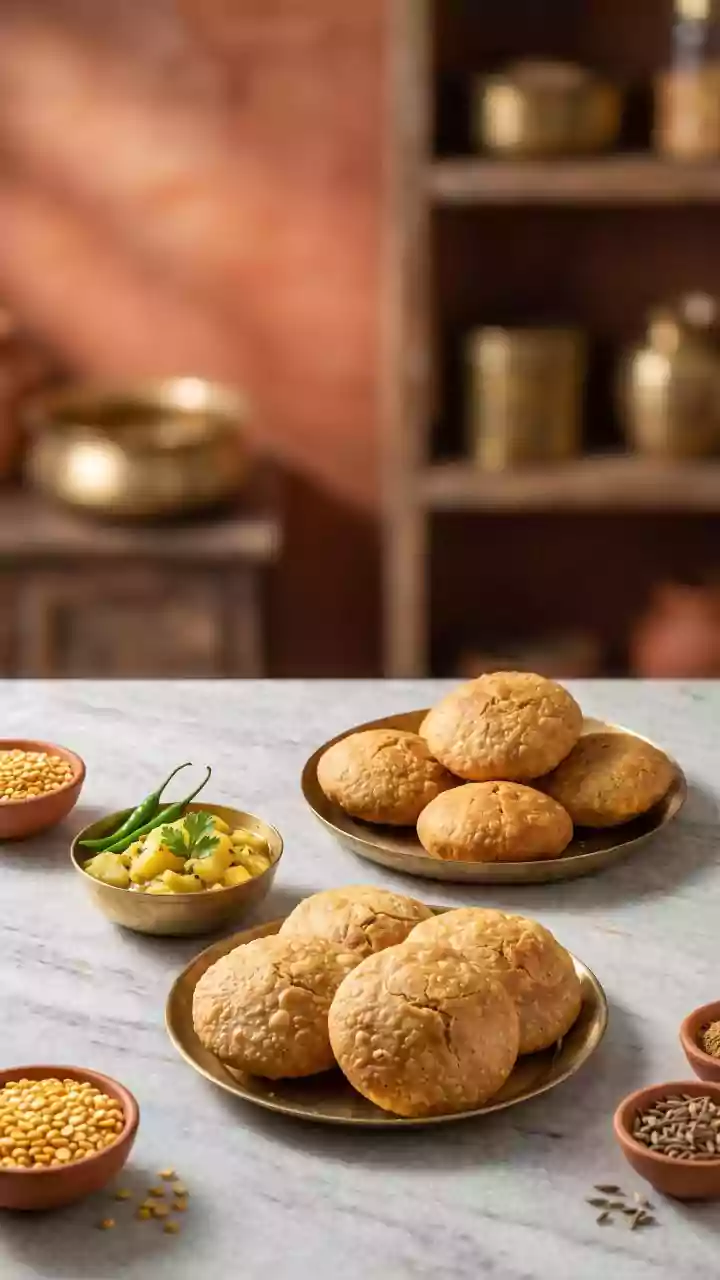
The diversity of this dish extends well beyond the standard potato curry. In Uttar Pradesh and Delhi, 'Bedmi puri' is a breakfast institution. This heartier puri is stuffed with a spiced lentil paste, usually made from urad dal, and served with a tangy aloo sabzi. Punjab adds a nutritious twist with 'Palak Puri', where spinach puree is mixed into the dough, giving the bread a vibrant green hue and an earthy flavour. During religious fasts, a special puri is made from buckwheat flour ('kuttu') and served with vrat-friendly curries. From puris made with beetroot paste to those incorporating semolina ('sooji') for extra crunch in Rajasthan, the variations are a testament to India's regional culinary ingenuity.
More Than Just a Meal
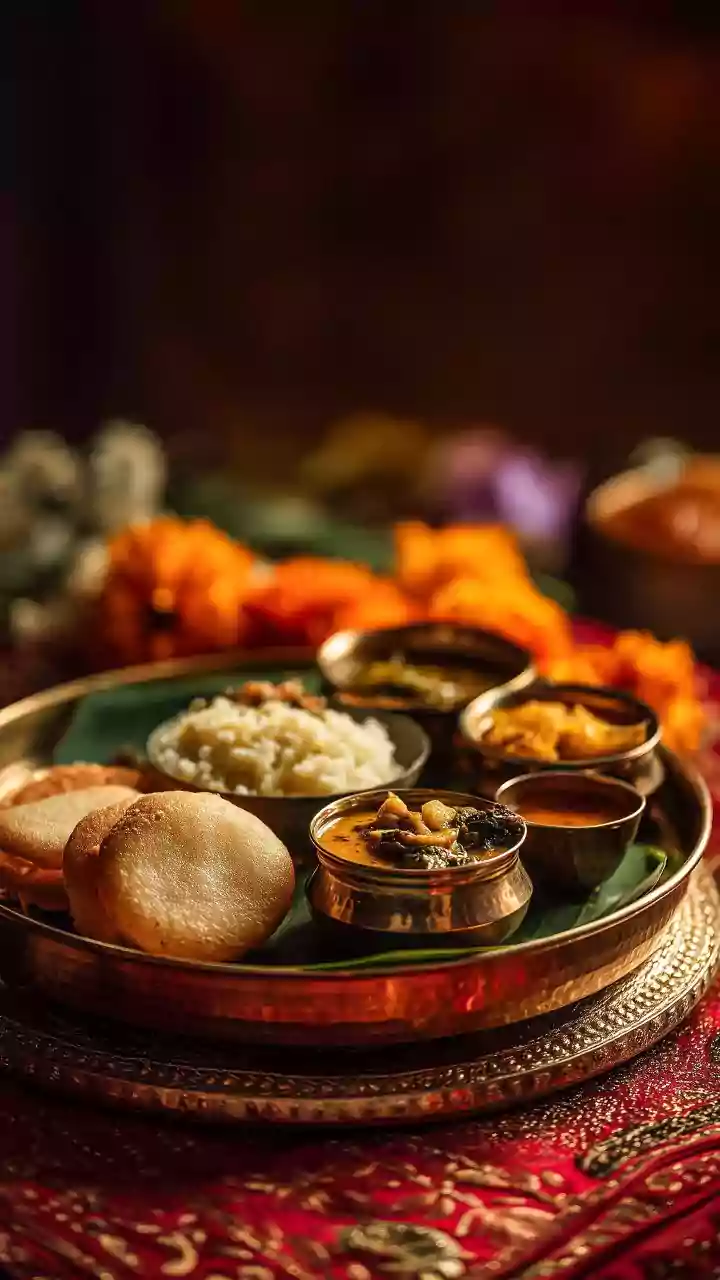
The significance of puri sabzi transcends the breakfast table. It's a dish deeply embedded in cultural and religious life. In Hindu traditions, food cooked in ghee, like puris, is considered 'pucca khaana'—pure food suitable for serving to guests and as offerings (prasada) during festivals and religious ceremonies. This is why you'll find puri sabzi at weddings, temple feasts, and festive occasions like Diwali. It is also a preferred travel food, as it has a good shelf life and is convenient to pack for long journeys. The act of preparing and sharing this meal is a ritual in itself, a symbol of community and celebration that brings families together.