

Saturn Makes Its Grand Entrance
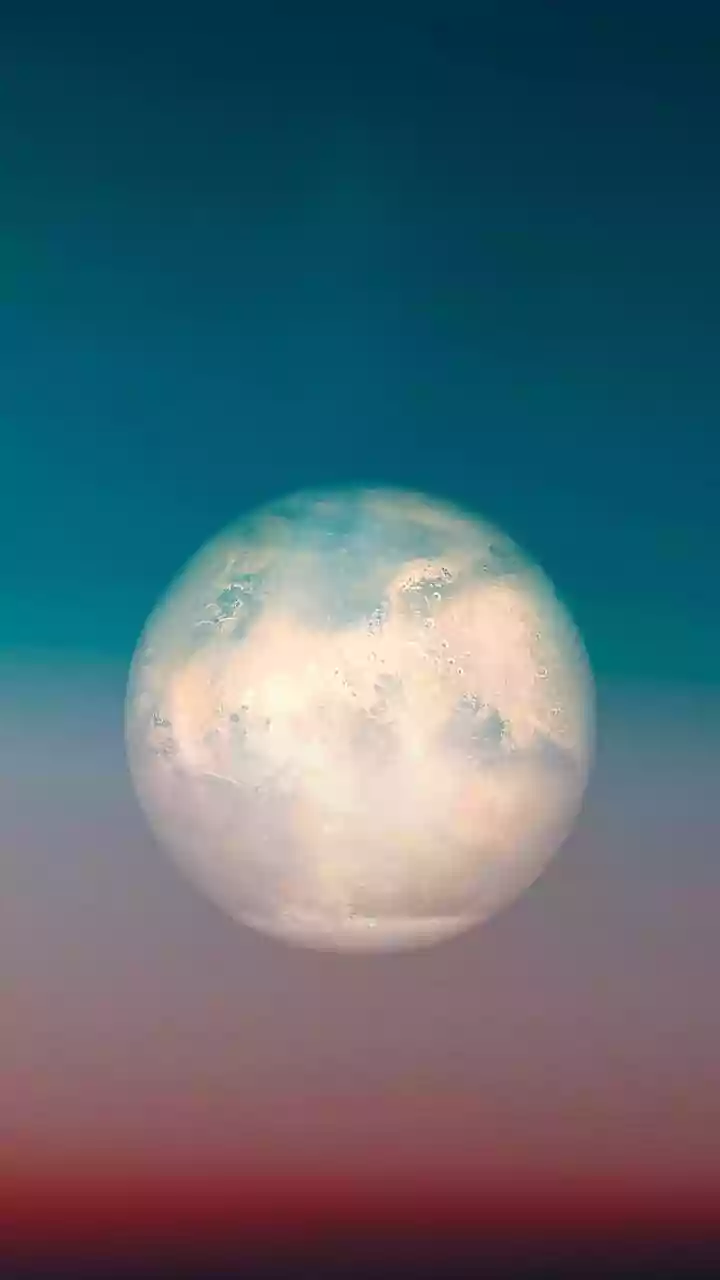
The star of the late August show is undoubtedly Saturn. While its official 'opposition'—when it is at its brightest and closest for the year—is not until early October, the planet becomes a fantastic target for viewing from late August onwards. Look for a bright,
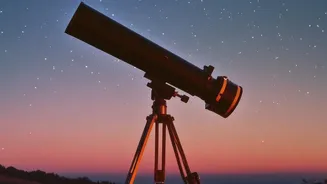
steady, yellowish point of light rising in the eastern sky shortly after sunset. It will be visible all night, trekking across the sky in the constellation Cetus. Unlike twinkling stars, planets shine with a constant glow. This year offers a special view: Saturn’s famous rings are tilted at a very narrow angle towards us, making them appear as a thin, elegant line through a telescope. This provides a different perspective from the wide-open rings seen in previous years, making it a unique sight for seasoned and new observers alike.
Venus, The Dazzling Evening Star
You do not need a map or an app to find Venus. Just look to the west after the sun goes down, and you will see a beacon of brilliant white light. It is by far the brightest object in the evening sky, outshining everything except the Moon. In mid-August, Venus reached its greatest elongation, meaning its greatest separation from the Sun in our sky. This ensures it remains a prominent fixture throughout the month's final weeks, staying visible for a good while after sunset before dipping below the horizon. Its sheer brightness makes it a perfect and rewarding target for city dwellers and anyone just starting their stargazing journey. It is an unmistakable and beautiful sight that requires no special equipment to enjoy.
A Final Glimpse of the Milky Way’s Core
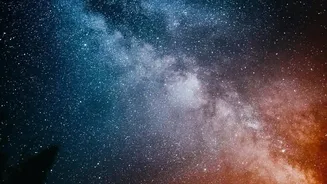
Late August provides one of the last prime opportunities of the year to witness the stunning core of our own galaxy, the Milky Way. To see it, you will need to escape city lights and find a truly dark location. Under these conditions, look towards the southern sky for the constellation Sagittarius, which famously forms the shape of a teapot. The 'spout' of this celestial teapot points directly at the galactic centre. What you will see is not a simple band of stars, but a dense, glowing cloud of cosmic dust and countless distant suns. As we move into September, this part of the sky will set earlier and be lower on the horizon, making it harder to view. So, a clear, dark night now is your best chance to see the heart of our galaxy in all its glory.
Catch the Last of the Perseid Meteors
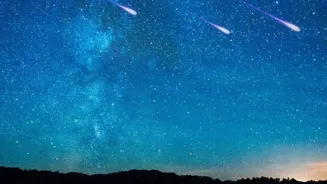
The spectacular Perseid meteor shower had its peak around August 12-13, offering a fantastic show under moonless skies. However, the shower remains active until the beginning of September. This means you can still catch some 'stragglers' in the final nights of August. The best time to look is after midnight, facing the northeastern sky. While you will not see the high rates of the peak, a patient observer may still be rewarded with the sight of a few bright meteors streaking across the sky. Think of it as a quiet encore to one of the year’s best celestial performances. Just remember to give your eyes at least 20 minutes to fully adapt to the darkness.
Navigate with the Summer Triangle
High overhead on August evenings, you will find a giant and easily recognisable pattern of three bright stars: the Summer Triangle. This asterism is made up of Vega, Deneb, and Altair, which are the brightest stars in the constellations Lyra, Cygnus, and Aquila, respectively. They are so brilliant that they can be seen even from light-polluted urban areas. The Summer Triangle serves as a perfect celestial landmark. Once you locate it, you can use it to navigate your way to other constellations and objects. It’s a great starting point for anyone wanting to learn the layout of the night sky, acting as a handy guidepost for your astronomical adventures.