

A Solar Eruption Heads to Earth
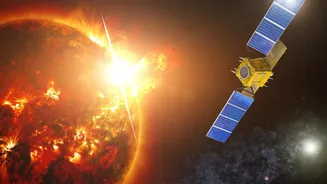
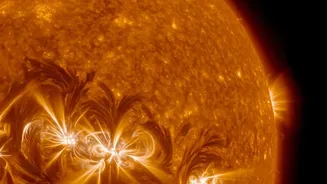
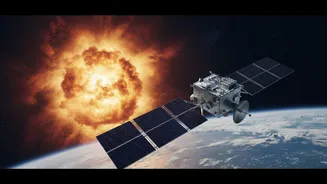
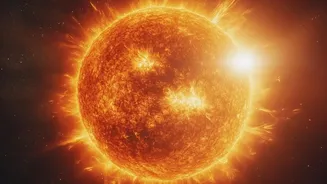
On August 8, 2026, the Sun unleashed a massive eruption of plasma and magnetic fields from its outer atmosphere, the corona. This cloud of solar material, called a Coronal Mass Ejection or CME, has been traveling through space and is arriving at Earth
today, August 12. Space weather agencies like the National Oceanic and Atmospheric Administration (NOAA) have been tracking this event since it occurred. Forecasts indicated the CME could spark a G1 (minor) to G2 (moderate) geomagnetic storm, a disturbance in Earth's magnetosphere. While this is expected to create beautiful auroras at higher latitudes, it also presents a genuine challenge for the technology our modern world depends on.
Why Our Satellites Are Vulnerable
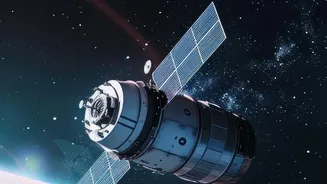
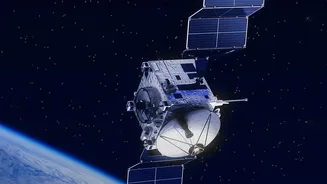
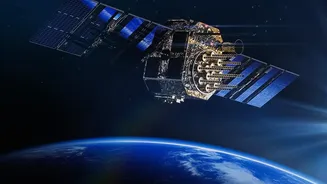
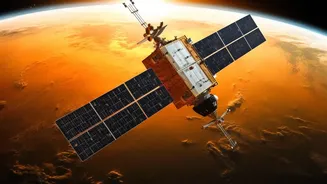
Satellites, our orbital sentinels responsible for everything from GPS navigation and telecommunications to weather forecasting, are particularly exposed during a geomagnetic storm. The influx of energetic particles can damage sensitive electronics and solar panels. It can also cause the Earth's upper atmosphere to heat up and expand, increasing the atmospheric drag on satellites in Low-Earth Orbit (LEO). This increased friction can alter a satellite's trajectory, requiring course corrections to prevent it from falling out of orbit. Furthermore, the charged particles can build up on a satellite's surface, leading to electrostatic discharge—essentially a small lightning strike that can disrupt or fry its electronic components.
The Power of Predictive Modeling
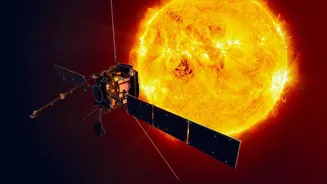
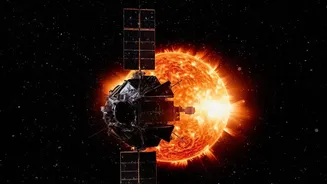
Thankfully, we aren't flying blind. Agencies like NOAA's Space Weather Prediction Center (SWPC) use a combination of satellite observations and sophisticated computer models to forecast a CME's path and potential impact. Spacecraft such as NASA's Solar and Heliospheric Observatory (SOHO) provide crucial data by imaging the CME as it leaves the Sun. This information is fed into models like the WSA-ENLIL, which simulate how the plasma cloud will travel through the solar system and interact with Earth's magnetic field. These models predict the arrival time, intensity, and duration of the storm, giving satellite operators critical hours or days of warning. This predictive capability transforms a potential crisis into a manageable operational event.
Executing the Safety Protocols
Armed with these forecasts, satellite operators are taking proactive steps today to protect their multi-million dollar assets. Based on the predicted severity of the storm, operators can execute a range of safety protocols. For a moderate event like the one occurring now, this may involve shutting down non-essential or particularly sensitive instruments to shield them from high-energy particles. In some cases, operators may reorient a satellite to present a smaller profile to the incoming solar wind or to protect key components. For more severe storms, a satellite can be commanded to enter a 'safe mode'—a minimal-power, hibernation-like state where only essential systems remain active to maintain stability and communication. These actions are carefully calculated to mitigate risks and ensure the long-term health of the spacecraft.