





A New Space Race, Fired by Startups
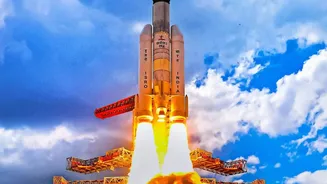
For decades, space exploration in India was the sole domain of the Indian Space Research Organisation (ISRO). But since the government opened the sector to private participation in 2020, a paradigm shift has begun. Today, over 400 space startups are active
across the country, tackling everything from satellite manufacturing to launch vehicles. This new landscape, energized by a combination of policy support and entrepreneurial spirit, has set its sights on the ultimate prize: the Moon. The goal is no longer just to participate, but to do so commercially and cost-effectively, building on the legacy of ISRO's famously frugal missions. The private sector's involvement is seen as crucial for India to scale its space economy, which is projected to grow from around $9 billion today to over $40 billion within the next decade.
The Frugal Innovation Playbook
How can a startup realistically aim for the Moon without a nation-state's budget? The answer lies in a philosophy of frugal innovation, often dubbed 'jugaad' in India. This isn't about cutting corners, but about ingenious problem-solving to achieve more with less. Startups are leveraging existing technologies from other industries, such as automotive and drone components, and adapting them for the harsh environment of space. They focus on smaller, lighter landers and rovers, which significantly cuts down on launch costs—the single biggest expense in any space mission. By repurposing proven designs and focusing on very specific, disciplined mission goals, these companies reduce development time and expenditure. This approach mirrors the strategy that allowed ISRO to send a mission to Mars for a fraction of the cost of NASA's equivalent and land on the Moon's south pole for just $75 million.
Meet the Moonshot Pioneers
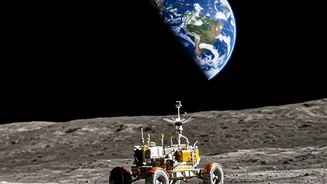
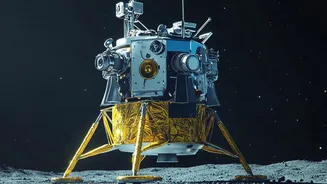
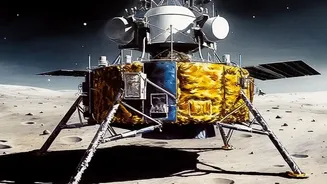
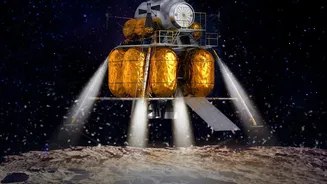
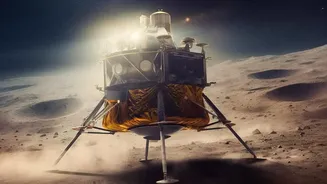
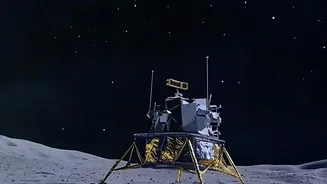
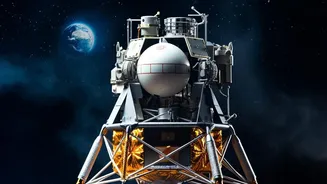
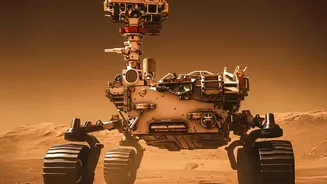
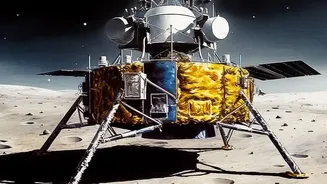
While many startups are active in the space sector, a few have made headlines with their lunar ambitions. One of the earliest pioneers was TeamIndus, a Bengaluru-based company that formed in 2010 to compete for the Google Lunar XPrize. Though the prize ended without a winner, the company developed designs for a lander and a rover, named ECA (Ek Choti Si Asha, or 'A Small Hope'). The experience and intellectual property gained have been foundational. For instance, the ECA rover design has been used as a basis for other projects. Other companies, like ORBITBeyond, have announced plans to establish facilities in India for building lunar landers and rovers, signaling a long-term vision for participating in the global lunar economy. These companies represent the first wave in what is expected to be a growing fleet of commercial lunar explorers.
The Government as an Accelerator
Private innovation doesn't happen in a vacuum. The Indian government and ISRO have played a critical role in nurturing this ecosystem. The creation of IN-SPACe (Indian National Space Promotion and Authorisation Centre) provides a single-window interface for private companies, helping them navigate regulations and gain access to ISRO's world-class testing facilities, launchpads, and technical expertise. This support is a game-changer, as building such expensive infrastructure from scratch would be impossible for a startup. Furthermore, policy changes allow these companies to not just build hardware but also to own and operate their missions, creating a sustainable business model. This symbiotic relationship—where ISRO focuses on pioneering research and deep space exploration while enabling the private sector to commercialise known technologies—is key to India’s accelerated space strategy.
Challenges Before Touchdown
The path to the Moon is far from smooth. The biggest hurdle for Indian space startups remains funding. Space technology involves long gestation periods and high risk, which can make it a tough sell for many domestic venture capital funds that prefer shorter investment cycles. While early-stage funding is available, securing larger, late-stage capital to scale from prototype to a flight-ready mission is a significant challenge. Another major issue is the talent crunch. While India has a vast pool of engineers, finding experienced talent in highly specialised fields like propulsion, avionics, and mission assurance is difficult. Finally, even with a successful launch, startups face the challenge of finding enough customers to create a commercially viable business, a common struggle in this nascent market.