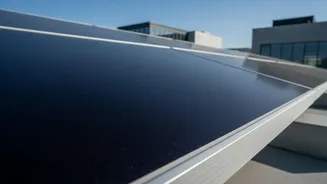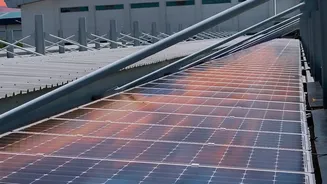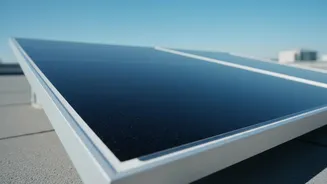









The Challenge of a Hot Sun
Solar panels are designed to capture sunlight, but there’s a catch: they don't like getting too hot. As a solar panel’s temperature rises, its efficiency drops. For every degree Celsius above its optimal temperature (usually around 25°C), a panel's output
can decrease. In a sun-drenched country like India, where summer temperatures can soar well above 40°C, this heat-induced efficiency loss is a major hurdle. Overheating not only reduces the amount of electricity generated but also accelerates the degradation of the panel’s components, shortening its lifespan. This creates a pressing need for a solution that can protect solar panels from the very heat they are exposed to daily.
Nature's Ultimate Sunscreen: Melanin
The answer, it turns out, might lie in melanin. This is the same pigment that gives colour to our skin, hair, and eyes, and protects us from harmful ultraviolet (UV) radiation. Melanin is a master of managing light and energy. It has an incredible ability to absorb a broad spectrum of light, from UV to infrared, and dissipate that energy safely as heat. This makes it a perfect candidate for a protective coating. Researchers have long been fascinated by melanin's properties, but producing it synthetically on a large scale has been difficult and expensive. This is where squid ink enters the picture. The dark, rich fluid is packed with a type of melanin called eumelanin, offering a natural and abundant source.
From Squid Ink to a High-Tech Coating
The process begins with extracting melanin from the ink sacs of squid, which are often a waste byproduct of the fishing industry. First, the raw ink is collected and purified through a series of washing and centrifugation steps to separate the melanin from proteins, polysaccharides, and other components. This raw melanin, however, is not easily usable as it is insoluble. To overcome this, scientists use processes like ultrasound-assisted degradation in an alkaline solution to break down the large melanin aggregates into smaller, water-soluble nanoparticles. These nanoparticles can then be formulated into a liquid coating. When applied to a surface, such as the glass on a solar panel, it forms a thin, transparent, yet powerful protective film.
How the Melanin Shield Works
The melanin-based coating functions in several remarkable ways. Its primary role is photothermal conversion. It absorbs the light wavelengths that cause heat, particularly UV and infrared radiation, and dissipates this energy, preventing the panel underneath from overheating. This keeps the solar cells operating closer to their peak efficiency. Furthermore, melanin is an excellent UV blocker. UV radiation is a major cause of material degradation in plastics and other polymers used in solar panel construction. By shielding the panel from UV rays, the melanin coating can extend its operational life. Its inherent antioxidant properties also help to neutralize damaging free radicals generated by sun exposure.
India's Solar Future and Beyond
For a nation aggressively pursuing ambitious solar energy targets, this innovation holds immense promise. A simple, low-cost coating that can boost efficiency and durability could make solar power more economically viable across the country. The raw material itself, derived from a common marine byproduct, aligns with goals of creating a circular, sustainable economy. The potential applications don't stop at solar panels. Such heat-resistant and UV-protective coatings could be used on building rooftops and facades to reduce indoor temperatures and lower air conditioning costs. They could be applied to vehicles, electronics, and even textiles to protect them from sun damage. This research, born from the simple observation of a natural defense mechanism, is a powerful example of bio-inspiration driving the next generation of sustainable technology.