


A New Golden Age of Astronomy
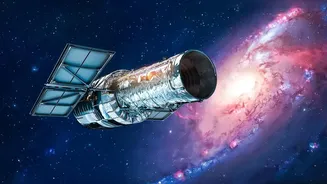
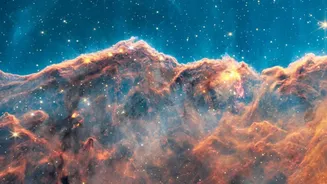
We are living in a revolutionary era for astronomy, spearheaded by a new generation of incredibly powerful space telescopes. The most famous of these is the James Webb Space Telescope (JWST), which launched on Christmas Day 2021. With its massive 6.5-metre
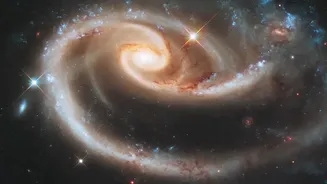
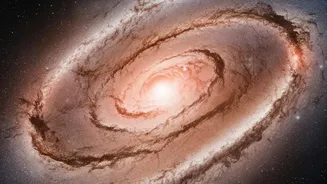
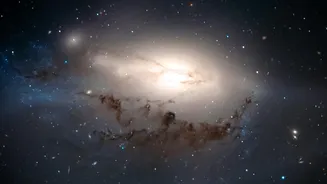
mirror, it can gather over six times more light than the Hubble Space Telescope. But its real game-changer is its sensitivity to infrared light. This allows JWST to pierce through cosmic dust and, crucially, to see light from the universe's most distant, earliest galaxies. It is joined by other powerful observatories like the European Space Agency's Euclid telescope, launched in 2023, which is creating a vast 3D map of the cosmos to understand the roles of dark matter and dark energy. Together, these instruments are providing unprecedented clarity and data, turning long-held theories on their head.
Peering into the Cosmic Dawn
To look at distant galaxies is to look back in time. Because light takes billions of years to travel across the vastness of space, the light we receive today from a faraway galaxy shows it as it was when the universe was young. However, there’s a complication: the universe is expanding. This expansion stretches the wavelength of light as it travels, shifting it towards the red end of the spectrum in a process called redshift. Light from the very first stars and galaxies, emitted as visible or ultraviolet light, has been stretched so much that by the time it reaches us, it's in the infrared. This is why JWST’s infrared vision is so critical. It can detect this faint, ancient light, allowing astronomers to witness the 'cosmic dawn'—the period just a few hundred million years after the Big Bang when the first galaxies ignited.
Galaxies Too Big, Too Soon?
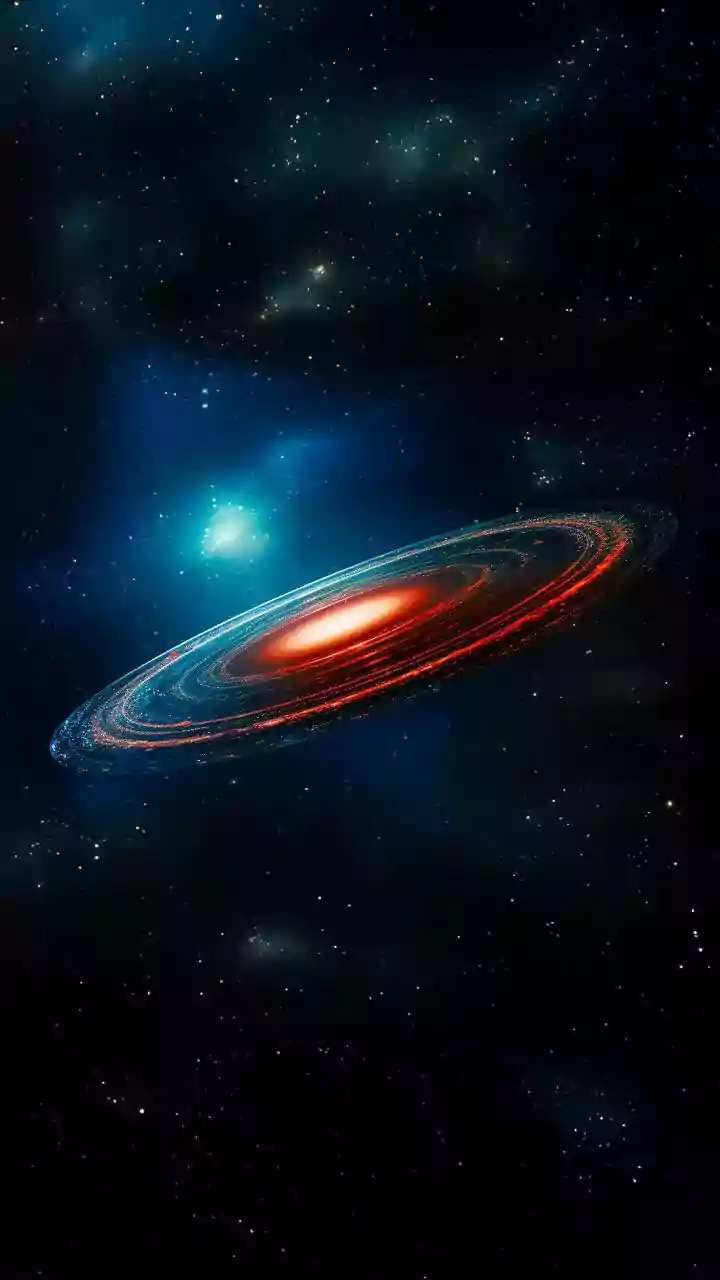
One of the most startling discoveries from JWST is the existence of surprisingly massive and well-formed galaxies in the early universe. According to the standard model of cosmology, galaxies should have built up gradually, starting small and merging over billions of years. Yet JWST has found multiple candidates for large, mature-looking galaxies just 500-700 million years after the Big Bang. Some appear to be more massive than our own Milky Way, a size they shouldn't have been able to reach so quickly. These 'impossible' early galaxies challenge our fundamental understanding of how cosmic structures form. Scientists are now grappling with what this means: Was galaxy formation much more efficient in the early universe? Or do our models of cosmology need a major revision?
Rewriting the Cosmic Story
The surprises don't stop there. Telescopes like JWST and Euclid are forcing a rethink of many cosmic processes. For instance, the Euclid telescope has recently discovered some of the oldest quasars—incredibly bright galactic cores powered by supermassive black holes—which adds to the mystery of how such massive objects could form so early in the universe's history. JWST has also identified mysterious objects dubbed 'Little Red Dots,' which could be the cores of primordial galaxies or supermassive early stars, further complicating the picture of the early universe. In another twist, recent simulations spurred by telescope data suggest that dramatic galaxy mergers may not be the primary reason galaxies stop forming stars, challenging a long-held theory of galactic evolution. Instead, slower, more gradual processes might be at play.
A Universe Richer Than We Knew
Beyond challenging big theories, these modern telescopes are painting a richer, more detailed picture of the early cosmos. JWST is able to analyze the chemical composition of distant objects, finding that even in the very early universe, there was more chemical complexity than expected. It has detected dust, a key ingredient for forming new stars and planets, in galaxies that resemble those from the universe's infancy. Researchers have even identified what may be the most chemically primitive galaxy ever seen, providing a 'cosmic fossil' that offers clues about how the first heavy elements were forged. These instruments are not just taking pictures; they are performing cosmic archaeology, uncovering the building blocks of the universe we see today.