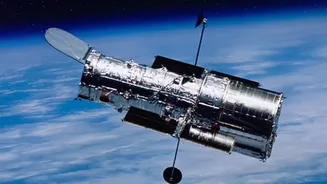





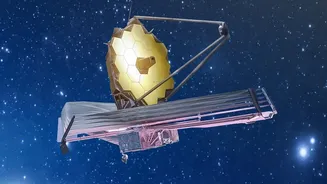
For over 35 years, the Hubble Space Telescope has been humanity’s eye on the cosmos. But its time is limited as its orbit slowly decays. Now, NASA is turning to the private sector for a novel solution to a multi-billion dollar problem.
A Slow But Steady Descent
Like every object
in low-Earth orbit, the Hubble Space Telescope is subject to atmospheric drag. Though the atmosphere is incredibly thin hundreds of kilometres up, it’s enough to gradually slow the school-bus-sized observatory, causing its orbit to decay. Since the final space shuttle servicing mission in 2009, there has been no way to push it back into a higher orbit. As of late 2026, the telescope is losing altitude at a rate of about 14.5 kilometres per year. This isn’t a sudden crisis, but a predictable slide. Current projections estimate Hubble will make an uncontrolled reentry into Earth’s atmosphere sometime between 2033 and 2038 if no action is taken.
NASA's Call for Commercial Ideas
Recognizing the approaching deadline, NASA issued a formal Request for Information (RFI) in late October 2026, asking the commercial space industry for solutions. The request is not a contract but a fact-finding mission to understand what is possible. The agency has outlined three potential mission profiles for which it is seeking ideas: boost Hubble to a higher, more stable orbit to extend its life; service it with potential upgrades; or conduct a controlled, safe de-orbit. Responses are due by November 30, 2026, with NASA anticipating any potential mission would need to occur by 2032.
The Business of Saving a Legend
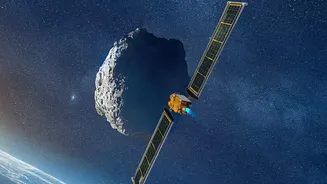
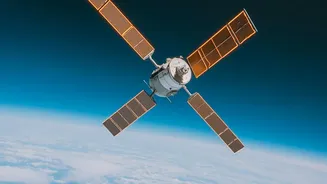
This new approach marks a significant shift from the past, when only a government-run Space Shuttle program could service the telescope. NASA now acknowledges that the commercial space sector has evolved rapidly, offering new capabilities for in-space servicing. A privately funded mission, such as the one previously studied by SpaceX and the Polaris Program, could save taxpayer money. For a commercial company, successfully docking with and moving Hubble—which was not designed for such a manoeuvre—would be a landmark achievement, demonstrating advanced capabilities and opening the door to future contracts for satellite servicing and debris removal.
High Risk, High Reward
Any mission to Hubble is fraught with risk. The telescope is a delicate, irreplaceable scientific instrument, and a botched rendezvous could damage it permanently. However, the rewards are immense. A successful reboost to a target altitude of at least 600 kilometres could add 15 to 25 years to Hubble’s operational life, allowing its unique scientific observations in the ultraviolet and visible light spectrums to continue. This would bridge a critical gap until a successor mission is potentially launched in the 2040s. The alternative, an uncontrolled reentry, carries its own risks; while low, the chance of debris causing harm on the ground is considered unacceptably high by NASA's own standards.
A Blueprint for the Future?
This initiative is about more than just one telescope. The recent failure of a mission to save the smaller Swift observatory highlights the difficulty and urgency of developing these capabilities before it's too late. How NASA and its potential commercial partners choose to proceed with Hubble could set a precedent for the entire space industry. It represents a test case for a new economic model in orbit, where private companies take on complex missions previously reserved for national space agencies. The decision will not only determine the fate of one of history's most important scientific instruments but will also help define the future of the commercial space economy.