



The Problem with Store-Bought Treats
Walk down the frozen aisle and you’ll find countless tubs marketing themselves as “healthy,” “low-fat,” or “guilt-free.” However, a quick look at the nutrition label often tells a different story. To compensate for lower fat, many commercial brands load
their products with artificial sweeteners, sugar alcohols that can cause digestive issues, and a host of fillers and stabilisers to mimic the texture of real ice cream. While these might be lower in calories, they are often nutritionally empty and can leave you feeling unsatisfied. The word “healthy” on a package is a marketing term, not a guarantee of quality. True health comes from real, unprocessed ingredients, which is where homemade alternatives shine.
The Magic of Fruit and Yoghurt
The beauty of a fruit and yoghurt base is its simplicity and nutritional density. Real fruit provides natural sweetness, meaning you need little to no added sugar. It is also packed with essential vitamins, minerals, and dietary fibre, which aids digestion and helps you feel full. Yoghurt, especially a strained variety like Greek yoghurt, serves as a fantastic foundation. It delivers a powerful punch of high-quality protein, which is crucial for muscle repair and satiety, as well as calcium for bone health. Furthermore, yoghurt contains probiotics, the beneficial bacteria that support a healthy gut microbiome. While the freezing process may impact the total number of live cultures by making them dormant, many survive and become active again once consumed.
Choosing Your Core Components
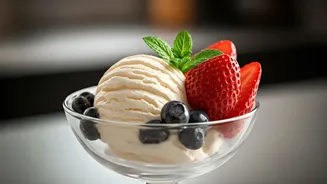
The quality of your finished product depends entirely on what you start with. For the creamiest result, opt for Greek yoghurt. Its lower water content and higher protein create a denser, less icy texture compared to regular yoghurt. While full-fat versions will yield the most decadent mouthfeel, a low-fat option still works wonderfully. When it comes to fruit, you have options. Frozen fruit is often the best choice as it helps to create an instant thick and frozen consistency when blended, eliminating the need for an ice cream maker. Bananas are a classic base for their creaminess when frozen, but berries, mangoes, pineapples, and peaches also work exceptionally well. If using fresh fruit, you may need to freeze the mixture for a few hours to achieve the right scoopable texture.
Your No-Churn Method
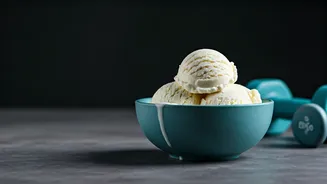
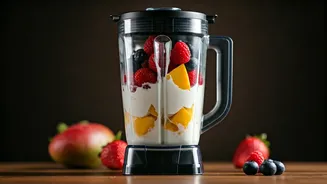
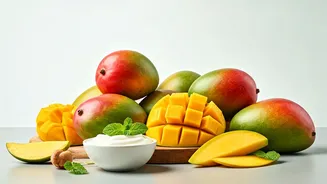
You don’t need fancy equipment to get started. The simplest method requires only a food processor or a high-powered blender. A basic ratio to start with is two parts frozen fruit to one part yoghurt, though you can adjust to your preference. For a single serving, try blending one cup of frozen mango chunks with half a cup of Greek yoghurt. Simply add the ingredients to your blender and process until smooth and creamy. You may need to scrape down the sides a couple of times. The result is a soft-serve consistency that can be enjoyed immediately. For a firmer, more scoopable ice cream, transfer the mixture to a loaf pan or a freezer-safe container, cover the surface to prevent ice crystals, and freeze for at least two to three hours.
Elevating Your Flavours
Once you have mastered the basic technique, the possibilities are endless. Think of your fruit and yoghurt base as a blank canvas for your culinary creativity. Experiment with different flavour combinations to find your favourites. Consider adding a tablespoon of unsweetened cocoa powder for a rich chocolate-berry blend, or a dash of vanilla extract to enhance the sweetness. A sprinkle of cinnamon or a pinch of cardamom can elevate the flavour profile significantly. You can also incorporate fresh herbs like mint with pineapple or basil with strawberries for a sophisticated twist. For added texture and nutritional value, feel free to fold in chopped nuts, seeds, or a swirl of nut butter before the final freeze.