






More Than a Spell Check
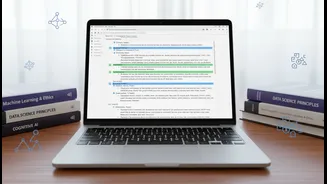
Forget the simple grammar and spell-check tools of the past. Today’s AI draft checkers are sophisticated writing assistants. Tools like Grammarly, QuillBot, and integrated assistants like Microsoft Copilot can generate ideas, restructure paragraphs, adjust
tone, and even paraphrase complex source material. For students, these features are a game-changer. They can transform a clunky, hastily written draft into a polished, articulate paper in a fraction of the time. Some tools are designed to work across the entire writing process, from generating a first draft from a prompt to applying the final polish. The promise is alluring: better grades, less stress, and more confidence in their written work.
The Student's Dilemma: Assistant or Cheat Code?
For many students, the motivation to use AI isn't necessarily to cheat, but to keep up. In a high-pressure academic environment, these tools can feel like a lifeline. They help students improve clarity, refine their vocabulary, and ensure their arguments flow logically. For non-native English speakers, in particular, AI can level the playing field, helping them express their ideas without being penalized for grammatical errors. However, the line between assistance and dishonesty is becoming increasingly blurry. Using AI to check for typos is one thing; using it to paraphrase large chunks of text or generate entire sections of an essay is another. This has created significant confusion, with students often unsure what is permissible.
The University Response: A Patchwork of Policies
Educational institutions are scrambling to adapt to this new technological landscape. Policies on AI usage vary dramatically from one campus to another, and even from one professor to the next. Some departments, particularly in the humanities, have banned AI-assisted writing entirely, viewing it as a violation of academic integrity. Others are taking a more integrated approach, allowing AI for specific tasks like brainstorming or editing, provided its use is properly cited. Complicating matters are AI detection tools, which universities sometimes use to identify AI-generated content. However, these detectors are not always accurate and can produce false positives, leading to a surge in academic misconduct allegations that are difficult to prove. This has led many institutions to conclude that they cannot rely solely on detection and must instead focus on education and transparency.
Beyond the Grade: The Real Stakes
The debate over AI checkers goes beyond academic integrity. Educators express concern that an over-reliance on these tools could prevent students from developing essential critical thinking and writing skills. Writing is not just about communicating ideas, but about forming them. The struggle to find the right words and structure an argument is a crucial part of the learning process. When AI handles the heavy lifting, students risk becoming passive editors of machine-generated text rather than active creators of their own work. This can lead to a lack of originality and a failure to engage deeply with the material. Presenting AI-generated work as one's own is widely considered plagiarism, and students are ultimately responsible for the accuracy and integrity of everything they submit.