


The Classic Divide: Asteroids vs. Comets
For generations, the distinction between asteroids and comets has been a foundational concept in astronomy. Asteroids are typically depicted as inert, rocky or metallic bodies, primarily residing in the asteroid belt between Mars and Jupiter. They follow
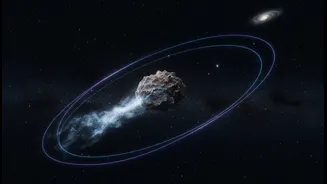
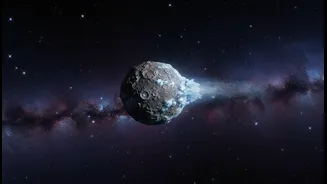
relatively stable, somewhat circular orbits. Comets, on the other hand, are the dramatic wanderers of the solar system. Composed of ice, dust, and organic compounds, they are often called 'dirty snowballs'. Their highly elongated orbits take them from the frigid outer reaches, like the Kuiper Belt or Oort Cloud, on a journey close to the sun. This solar approach heats the comet, causing its ices to sublimate—turn directly from solid to gas—creating the beautiful glowing coma and iconic tail that distinguish them in the night sky.
When Inactive Rocks Sprout Tails
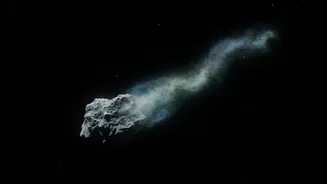
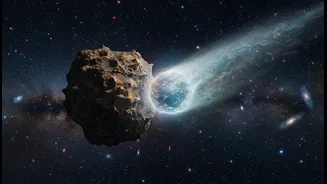
This neat division began to crumble with the discovery of objects that refused to fit in. Astronomers started noticing bodies with the orbits of asteroids that were unexpectedly showing comet-like activity, such as developing a coma or tail. These category-defying objects have been termed 'active asteroids' or 'main-belt comets'. They reside where asteroids should be but act like comets, challenging the idea that the asteroid belt is a static, icy-free zone. The activity can be caused by several things, including the sublimation of previously hidden subsurface ice, rotational forces causing the body to shed material, or even impacts from smaller objects. These discoveries proved that the line between a rocky asteroid and an icy comet was far blurrier than previously thought, suggesting a continuum of objects rather than two distinct classes.
Enter the Dark Comet
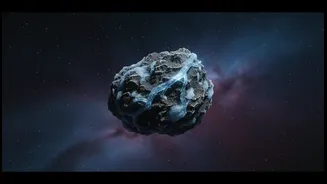
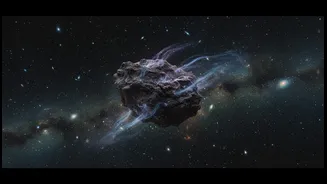
The mystery deepened with the identification of an even stranger class of object: the dark comet. These bodies behave like comets but look like asteroids. They exhibit what is known as non-gravitational acceleration—a slight change in their trajectory that cannot be explained by the pull of the sun and planets alone. In a normal comet, this push comes from outgassing. Yet, when telescopes look at dark comets, they see no visible coma or tail. The leading theory is that these are 'dormant' or 'extinct' comets. After many trips around the sun, their surface ice has been depleted, leaving behind a dark, insulating crust of dust and rock that makes them appear asteroidal. However, pockets of volatile ice may still be trapped beneath the surface. When warmed, this ice can sublimate and escape through cracks, providing a subtle thrust without creating a visible coma.
Two Families of Cosmic Ghosts
Recent research has sorted these enigmatic dark comets into two distinct populations. The 'outer dark comets' are larger, measuring hundreds of metres across, and follow more eccentric, stretched-out orbits similar to Jupiter-family comets. The 'inner dark comets' are much smaller, often just tens of metres in diameter, and have more circular orbits within the inner solar system. The first object to show this kind of behavior was the famous interstellar visitor 'Oumuamua, which sped up as it left our solar system without any visible outgassing, baffling scientists. This spurred a search for similar objects originating within our own system, leading to the identification of over a dozen dark comets to date.
Why This Classification Chaos Matters
The existence of active asteroids and dark comets is more than just a classification headache; it rewrites our understanding of the solar system's history. These objects serve as a potential bridge, linking the rocky inner solar system with the icy outer regions. They are prime candidates for having delivered water and organic materials—the building blocks of life—to the early Earth. If a significant fraction of near-Earth objects are actually dormant comets in disguise, it changes our assessment of both the resources available in space and the nature of potential impact threats. Studying them offers invaluable clues about the formation and evolution of our planetary system, revealing a much more dynamic and interconnected cosmic environment than the old, simple models allowed. These misfits and rebels of the cosmos are not just breaking the rules; they are showing us what the rules really are.