


Ghent, Belgium: The Authentic Alternative
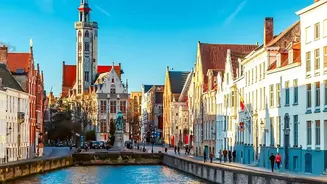
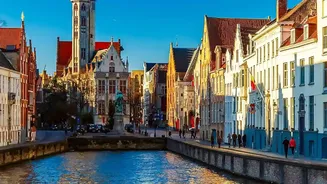
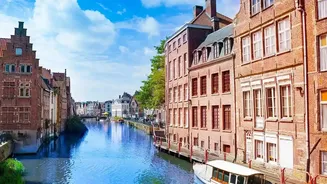
Often living in the shadow of nearby Bruges, Ghent offers an equally stunning, yet more authentic, Belgian experience. Its city centre is a captivating maze of canals and medieval architecture, including the formidable Gravensteen, a 12th-century castle
complete with a moat, right in the middle of town. Ghent was a major trading hub in the Middle Ages, and its wealth is still visible in the ornate guildhalls lining the Graslei and Korenlei quays. Unlike its more tourist-focused neighbours, Ghent is a vibrant university city, giving it a lively, lived-in atmosphere. You can climb the UNESCO-listed Belfry for panoramic views, explore the historic Patershol neighbourhood with its cosy restaurants, and enjoy the city's energy without feeling overwhelmed. It has the storybook looks of a Flemish old town, but with a real-world pulse.
Olomouc, Czech Republic: Moravia's Hidden Gem
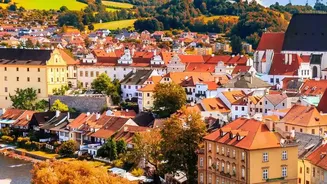
While most travellers flock to Prague, the city of Olomouc in the Moravia region offers a grand and tranquil alternative. It boasts the second-largest historic preservation zone in the country and a charm that rivals the capital's. The heart of the city is the magnificent UNESCO-listed Holy Trinity Column, a massive baroque monument that dominates the main square. The square is also home to an astronomical clock, but one with a unique twist: it was rebuilt during the communist era to feature proletarian workers instead of saints. As a university city, Olomouc has a youthful energy, but its pace is relaxed. You can wander through its beautiful squares, admire numerous baroque fountains, and explore grand churches like St. Wenceslas Cathedral, all without the endless crowds of Prague.
Guimarães, Portugal: The Birthplace of a Nation
For a deep dive into Portuguese history away from the bustling crowds of Lisbon and Porto, head to Guimarães. This is proudly known as the 'birthplace of Portugal', as it was the home of the nation's first king, Afonso Henriques. The inscription 'Aqui Nasceu Portugal' (Portugal Was Born Here) on an old town wall confirms its national importance. Its remarkably well-preserved medieval centre is a UNESCO World Heritage site, featuring a 10th-century castle, the impressive Palace of the Dukes of Braganza, and picturesque squares like Largo da Oliveira. Strolling through its narrow, winding streets, you'll find traditional houses and charming plazas perfect for sipping coffee. For a change of scenery, a cable car can whisk you up to Monte da Penha, a forested hill offering panoramic views and peaceful walking trails among giant granite boulders.
Bamberg, Germany: The Franconian Rome
Miraculously escaping damage during World War II, Bamberg's old town is a UNESCO World Heritage site and one of Germany's best-preserved medieval cities. Built on seven hills, much like its Italian counterpart, it's often called the 'Franconian Rome'. The city's most iconic landmark is the Altes Rathaus (Old Town Hall), uniquely built on an artificial island in the middle of the Regnitz river. The city is a warren of cobblestone streets, half-timbered houses, and scenic river views, especially in the area known as 'Little Venice', a collection of old fishermen's houses along the waterfront. Bamberg Cathedral houses the tombs of an emperor and a pope. The city offers a rich historical tapestry without the intense crowds of larger Bavarian cities.
Albarracín, Spain: The Pink-Hued Fortress Town
Perched dramatically on a rocky outcrop above the Guadalaviar River, Albarracín is often named one of Spain's most beautiful villages. This small town in the Aragón region has preserved its Islamic and medieval character, with pink and reddish-hued buildings that seem to defy gravity. Once the capital of a Moorish kingdom, its winding, narrow streets, ancient fortified walls, and historic castle transport you back in time. The entire town is a maze of charming, well-preserved architecture that has been painstakingly restored. Visiting Albarracín feels like stepping into a living museum. Due to its relatively remote location, it remains an authentic destination where you can explore its historic plazas and defensive towers in relative peace, especially if you arrive early before any tour buses.